Plus 500-600 MW: this is how much capacity new wind farms will add to the country’s power grid this year.
25 February 15:02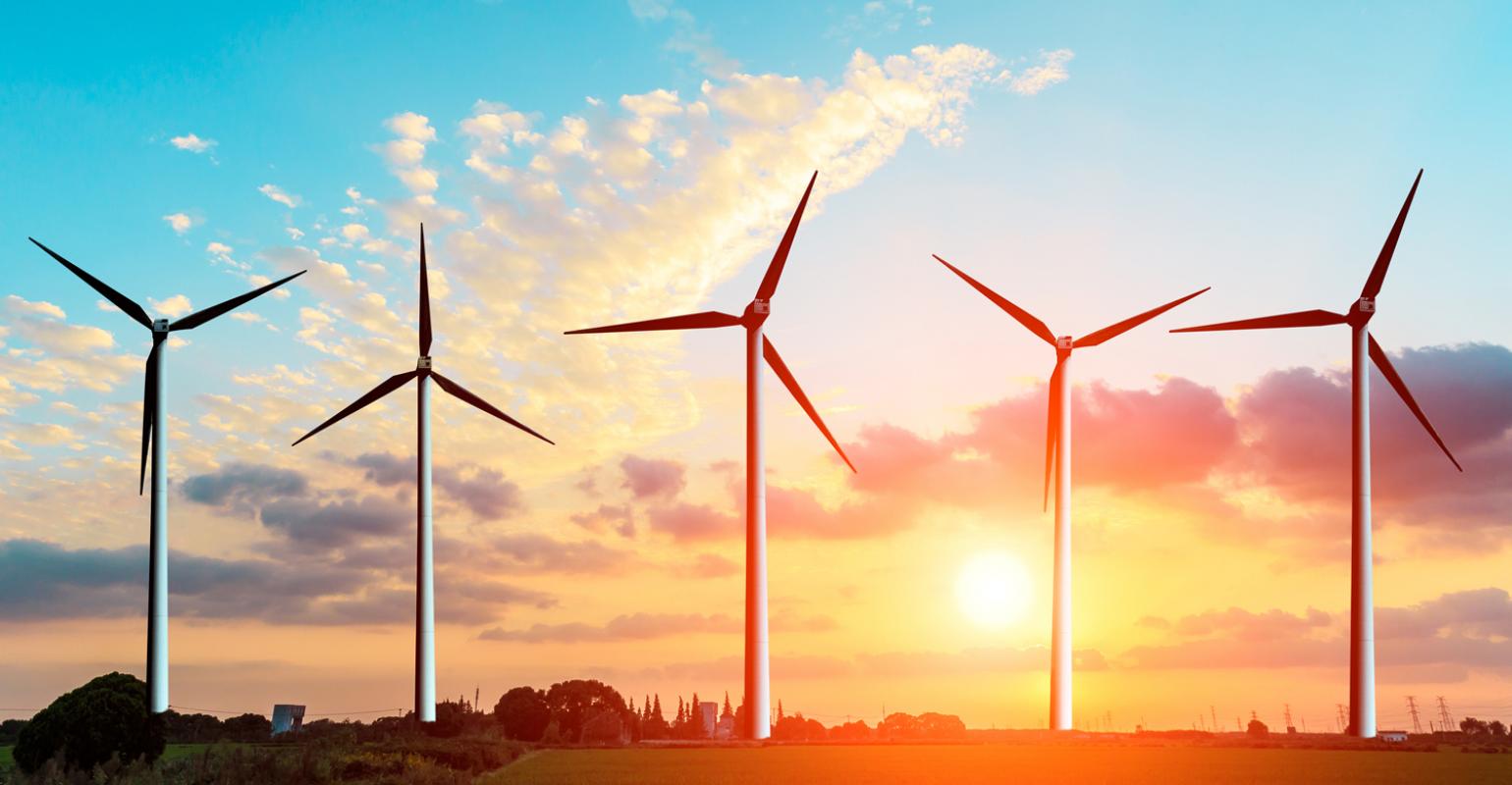 ANALYSIS FROM
During the war, distributed generation has repeatedly proven how important its energy is for supporting the Ukrainian power grid. Wind farms have been contributing hundreds of megawatts to it all this time. Komersant investigated how wind energy has helped and will continue to help Ukrainians.
Odessa and the Odessa region have been in a state of blackout more than once as a result of enemy shelling. And then wind farms, among others, “lent a helping hand.” This is how energy expert Stanislav Ignatiev explained the specifics of the Odessa situation in an interview with our publication:
“There are three large Ukrenergo substations around Odessa. But they are mostly ‘dead ends’ because the Black Sea cuts them off. And the enemy constantly attacked these substations. So, when the Odesa region became so energy-isolated, the large number of solar power plants and wind farms there allowed the city and the region to continue to exist even during blackouts, albeit with some power supply schedules.”
This is confirmed by Andriy Konechenkov, chairman of the board of the Ukrainian Wind Energy Association. He recalls:
“We had a telling example when, in December 2022, the Odesa region was in a blackout, as was Kyiv, and two wind farms provided 25% of the generation in the Odesa region. It was from that moment that people began to talk about decentralized generation. There is already an awareness that decentralized generation in wartime is what can save Ukraine and provide electricity to the local population. Ukraine’s modern energy system faces two critical challenges: excessive centralization and dependence on large generating facilities. Damage to any of them as a result of shelling instantly causes a power shortage. Decentralized generation, on the other hand, is much more resilient: the failure of a single facility does not stop the entire system from working, ensuring its stability and survivability,” the expert notes.
Wind farms are one of the important components of the distributed generation system currently being developed in the country. For example, in 2025, wind energy companies built 324.4 MW of capacity. This is primarily in the Mykolaiv, Lviv, Volyn, and Zakarpattia regions. These figures were provided by Andriy Konechenkov, chairman of the board of the Ukrainian Wind Energy Association. According to him, there are plans to build even more this year.
“We surveyed 37 companies that are members of the association and found that approximately 500-600 MW of new capacity is expected to be built by 2026. This primarily includes the second phase of DTEK VDE’s Tiligul wind farm and the completion of Eco-Optima’s Sokal wind farm in the Lviv region. Friendly Wind Technology has a factory that manufactures wind turbines, and they will definitely be installing them. OKKO is also continuing to build. We expect the first projects to be built by Elementum Energy and Energy Trade Group. And there is also the German company Notus Energy, which has attracted financing from the Horizon Capital investment fund for the construction of a wind farm in the Odesa region,” said the expert.
Another important area directly related to the development of wind energy capacity is the introduction of electricity storage systems. Companies involved in the installation of energy storage systems (ESS) also participated in the aforementioned survey organized by the Ukrainian Wind Energy Association. Andriy Konechenkov continues.
“This is an important and promising area. We can say that in 2025, 512 MW of installed ESS capacity was commissioned by companies participating in the association. Of this, 200 MW was built by DTEK. The implementation of energy storage facilities in Ukraine is currently developing according to two strategic scenarios. The first is the provision of ancillary services to NPC Ukrenergo to balance the system during peak periods. The second scenario involves the creation of hybrid facilities, where ESS are built directly in conjunction with wind or solar power plants. The expected implementation of the first pilot projects will allow us to assess the economic efficiency of such solutions and lay the foundation for further development of the sector,” the expert notes.
There are many factors that determine how quickly commercial wind power generation can be launched.
“If there is a ready-made project that has received a construction permit, if the contract has been signed and the turbines have already been delivered to Ukraine, then it is a matter of a few months before they can be put into operation,” explains Andriy Konechenkov.
However, according to him, there are still issues with connecting to the grid and testing the turbines, which may take some time.
“For example, 324.4 MW of capacity was built in 2025, but only half of it was able to connect and start commercial generation by the end of December last year. And, by the way, we are currently working with Ukrenergo and the NEURC to ensure that the construction and reconstruction of transmission lines, as well as the reconstruction of substations, are carried out by contractors proposed by the companies that build wind farms. This will reduce the time required for tenders and speed up the launch of generation facilities,” the expert believes.
Ukrainians are already looking forward to sunny days, which should increase in the spring. And this is not only because they are tired of the usually gloomy winter weather. There is also a logical assumption: more sun means more electricity and fewer power outages. The efficiency of wind and solar power plants does indeed depend on the season. But who is leading in this hypothetical competition? Andriy Konechenkov, chairman of the Ukrainian Wind Energy Association, explains.
“In winter, if there is sun and the solar panels are not covered with snow, then solar power plants work more efficiently than in summer. But there are far fewer “light” hours in winter, so overall, the winter efficiency of solar power plants is lower than in summer. In contrast, wind energy works both day and night. And that is its advantage. Ukraine also has a pronounced seasonality of wind generation: the peak of activity falls between September and May, reaching its maximum in winter. In contrast, in the height of summer, especially in July and August, there is a certain lull, and this decline is effectively offset by peak solar generation, creating an ideal balance in the RES structure,” the expert emphasizes.
Wind energy also works very effectively in steppe regions or near reservoirs. For example, as Andriy Konechenkov notes, it is the southern regions — Mykolaiv, Odesa, and Zaporizhzhia — that are traditionally considered the most promising for wind generation. This is because the temperature differences between the land and the Black and Azov Seas ensure a stable air flow. However, as the expert notes, the central and western regions of the country also have significant potential for the development of wind energy. And the experience of 2025, for example, confirms this: new wind energy facilities appeared last year not only in the Mykolaiv region, but also in Lviv, Volyn, and Zakarpattia.
Author: Serhiy Vasilevych