Air after shelling: what toxic substances Kyiv residents inhale and how it affects their health
7 September 2025 09:15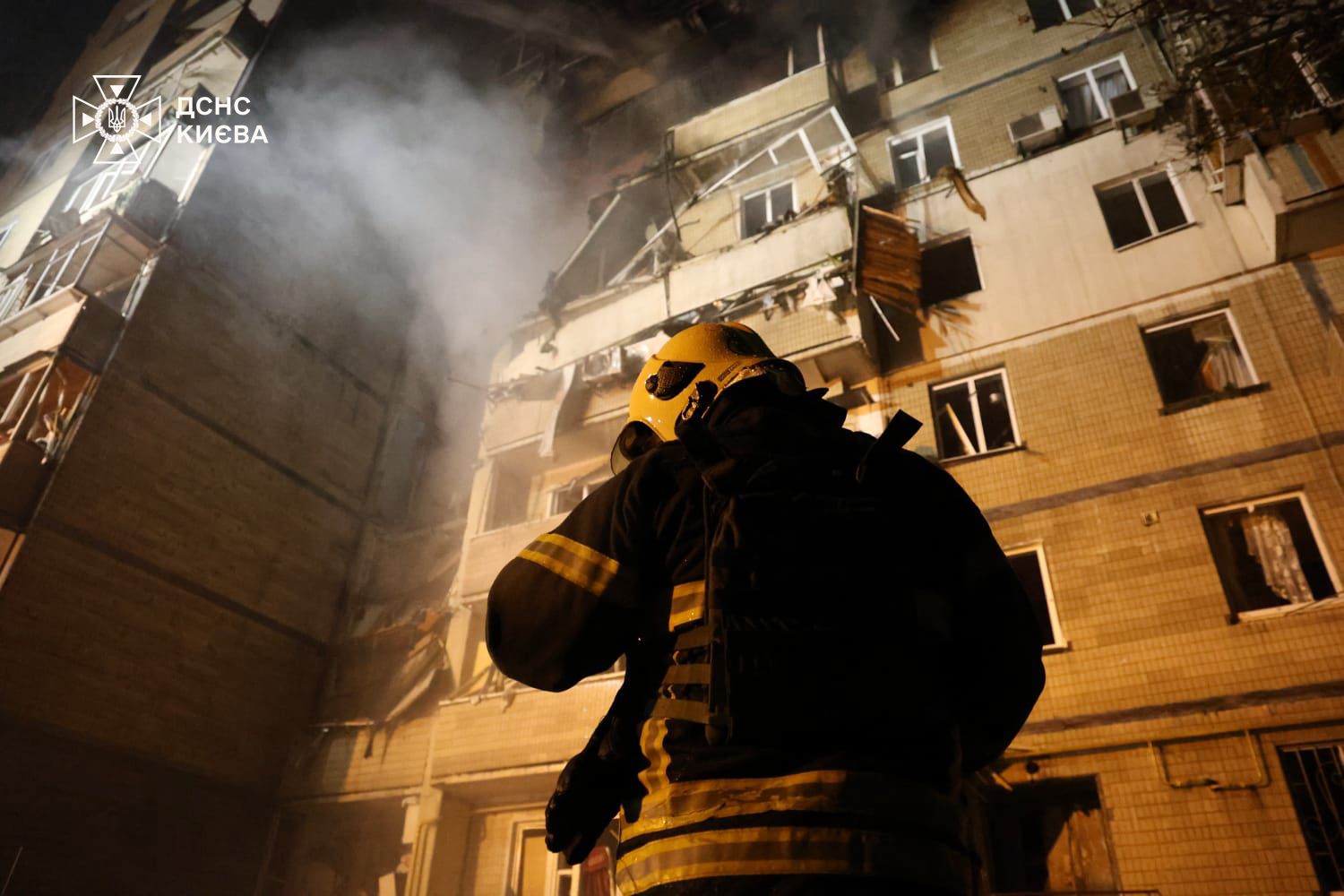
After the massive shelling of Kyiv, dozens of toxic substances have been detected in the air: combustion products, nitrogen and sulfur oxides, carbon monoxide, etc. Some of these substances can be harmful after just a few breaths, while others accumulate in the body and cause damage over time. How to monitor the level of air pollution, why you can’t rely on average indicators, and what to do in the first hours after the attack – in a commentary to "Komersant Ukrainian", Konstantin Fedorov, an expert at SaveDnipro, told.
The problem of hazardous air after shelling has several levels – physical, informational and systemic. According to Fedorov, most Kyiv residents do feel the effects of the attacks: the smell of burning, smoke, and throat irritation. But the main danger is in microparticles, which are the most dangerous type of air pollution.
“The fact that Kyiv residents feel the consequences of the shelling is clear. Especially when someone is very close to the fire sites. After all, the highest concentration of harmful substances is near such centers, and then they dissipate. Therefore, the situation in the city is very heterogeneous,” he comments.
The expert emphasizes that the air quality should be assessed based on local data, not averaged figures. Monitoring systems, such as SaveEcoBot or the Kyiv Digital app, which has an interactive map with air quality indicators in different districts of the capital, help with this.
The main indicator is the concentration of fine particulate matter (PM2.5), which is a microscopic combustion product that hangs in the air after fires.
“These particles are very small, and that is why they are the most dangerous. They penetrate the body’s natural barriers, enter the bloodstream and then affect various organs. Their impact has been proven – they can provoke cardiovascular, oncological, and mental disorders,” says Fedorov.
The air also contains sulfur and nitrogen oxides, carbon monoxide (CO), and volatile organic compounds. However, these substances are not recorded by online monitoring stations. Some of them are measured by the Ukrainian Hydrometeorological Center, but its data is not published promptly – the results of measurements appear after the situation has changed. So it is inefficient to rely on them in the moment. Fedorov emphasizes that the greatest risk from harmful emissions is for people who are in confined spaces where a fire has occurred.
“For example, carbon monoxide can reach such concentrations in enclosed spaces that it is already fatal. Its effects are not always immediately apparent, but it can cause fainting or immobilization, and ultimately lead to death,” the expert warns.
But even outdoors, staying near fire centers can be very harmful.
“If you are not involved in rescue operations, do not approach the fire sites. Stay away from them. It is dangerous not only because of the flames, but also because of the air you breathe. The damage to your health is critical,” emphasizes Fedorov.
Another issue is long-term exposure. After combustion, all harmful substances do not disappear – they settle on surfaces, penetrate the soil, can get into water, food, and accumulate in the body.
“The dispersion of combustion products in the atmosphere is not the end. Toxic compounds get into the soil, then into groundwater, accumulate in plants, and eventually end up on our plates. This is a long-term risk, and we need to keep it in mind,” he summarized.
What to do after the shelling:
- Avoid staying near the fire areas. If you are not involved in the aftermath, do not approach.
- Close windows and turn off ventilation, turn on air purifiers to the maximum. Especially in the first hours after the shelling.
- Drink more water. Monitor the air quality. The most convenient way is through SaveEcoBot or the Kyiv Digital app.
- Use respirators if you need to go outside.
- Do not take children, the elderly or animals for a walk on the day of the shelling until the air quality improves.