Setback for Trump: US Supreme Court overturns part of his tariffs — what does this mean for the economy and the world?
21 February 01:14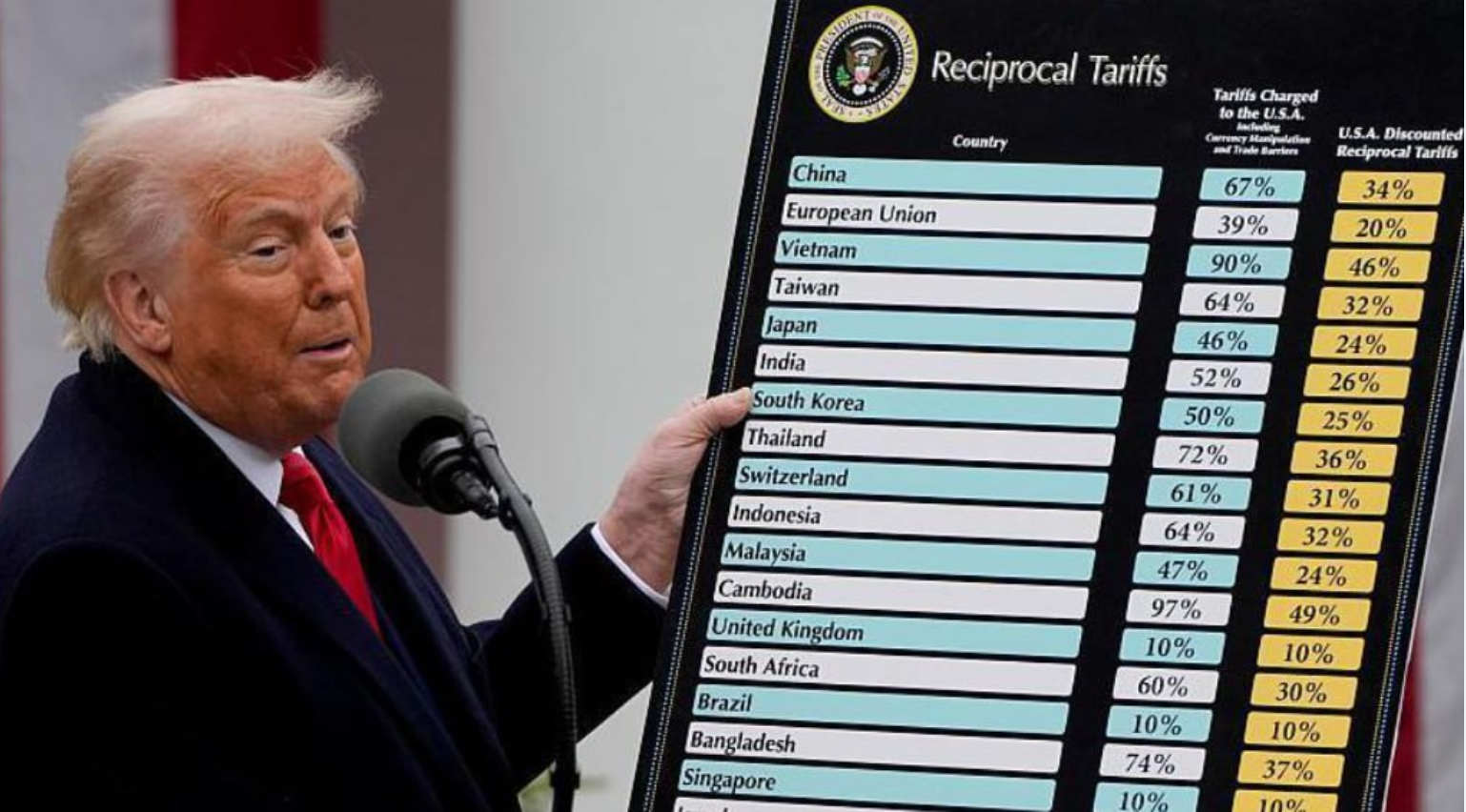
The US Supreme Court has handed down a landmark ruling that deals a serious blow to President Donald Trump’s trade policy. The judges ruled that the president exceeded his authority when he imposed tariffs on other countries, citing the International Emergency Economic Powers Act. This was reported by CNN, Reuters, and the Associated Press, according to "Komersant Ukrainian".
The decision was passed by a majority vote of 6 to 3 and became one of the most important legal challenges to Trump’s economic policy since the beginning of his second presidential term.
Why the Supreme Court overturned Trump’s tariffs
As stated in the court’s decision, the president used the 1977 International Emergency Economic Powers Act (IEEPA) to justify imposing tariffs on foreign goods. However, the judges concluded that this law does not give the president the direct right to impose customs tariffs.
Supreme Court Chief Justice John Roberts, who wrote the decision, emphasized that the U.S. Constitution clearly states that the power to set tariffs belongs to Congress, not the president.
Three liberal judges and two conservatives, Neil Gorsuch and Amy Coney Barrett, joined the decision.
Which tariffs remain in effect
It is important to note that the Supreme Court’s decision does not repeal all tariffs imposed by the Trump administration. It only applies to tariffs imposed under the IEEPA.
In particular, tariffs remain in effect on:
- steel
- aluminum
- other goods for which other legislative mechanisms were used
This means that the president’s administration retains the ability to use alternative legal instruments to continue its tariff policy.
Why this decision was a serious blow to Trump
The Supreme Court’s decision was a rare case in which a court with a conservative majority ruled against the Trump administration.
In response, he announced the introduction of an additional 10% tariff on top of existing tariffs.
“Today, I will sign an order imposing a 10% global tariff under Section 122, on top of our existing tariffs, and we are also launching several investigations under Section 301 and others to protect our country from unfair trade practices by other countries and capitals,” Trump said.
The American leader assured that the US would “make more money” despite the court’s decision.
Can Trump reverse the tariffs?
Despite the Supreme Court’s decision, the US president has several options:
- use other laws to impose tariffs
- obtain support from Congress
- change the legal basis for the tariff policy
Therefore, the final fate of the tariffs will depend on the administration’s further political and legal steps.
Large-scale US tariffs against all countries: what Trump introduced in 2025
The Supreme Court’s decision became particularly important in light of Donald Trump’s large-scale tariff policy, which he began to implement in 2025.
On April 2, 2025, the US president announced the introduction of universal tariffs of at least 10% on almost all goods imported into the country. The new tariffs came into force on April 9 and became one of the most radical steps in modern US trade policy.
Trump explained this decision by the need to
- increase the competitiveness of the American economy
- protect national sovereignty
- strengthen economic and national security
To implement this policy, the president even declared a state of economic emergency.
US Treasury Secretary Scott Bessent urged other countries not to respond with mirror sanctions, warning that this could lead to a global trade war.
The global economy reacted immediately: losses of $208 billion and the departure of automakers
The reaction of global markets was immediate and negative. The day after the tariffs were announced, the combined wealth of the world’s 500 richest people fell by $208 billion, one of the largest one-day declines in history.
A number of large companies began to review their strategy for working with the US:
- British carmaker Jaguar Land Rover suspended car deliveries to the US for a month
- German automaker Audi made a similar decision
- other companies began to prepare to relocate production or revise prices
This was a direct signal of the beginning of a global restructuring of trade relations.
Read us on Telegram: important topics – without censorship
US-China trade war: tariffs of up to 100%
The confrontation between the US and China became particularly acute.
On April 7, 2025, Donald Trump said that if China didn’t drop its 34% tariffs on American goods, the US would slap on even bigger tariffs.
Subsequently, on October 11, 2025, Trump announced his intention to impose an additional 100% tariff on Chinese goods in response to Beijing’s export restrictions.
This effectively meant a full-scale trade war between the world’s two largest economies.
The EU and India were forced to negotiate with the US
The European Union tried to avoid escalation. European Commission President Ursula von der Leyen offered the US zero tariffs on industrial products in order to preserve trade relations.
At the same time, India made concessions by reducing imports of Russian oil. After that, the US agreed to lower customs tariffs on Indian goods.
This showed that Trump’s tariff policy had become an instrument of global economic pressure.
Why the Supreme Court’s decision could change the entire US trade policy
It was these large-scale trade restrictions that became the subject of legal disputes. The US Supreme Court effectively questioned the president’s right to impose tariffs unilaterally using emergency powers.
This decision could have long-term consequences:
- limiting the president’s ability to use tariffs as a political tool
- strengthening the role of Congress in trade policy
- potentially reviewing some of the tariffs imposed in 2025
- reducing the risk of new global trade wars
At the same time, Donald Trump still has the option of using other laws to impose tariffs and continue his protectionist economic strategy.
Read us on Telegram: important topics – without censorship