Russian attack halts gas production in Poltava region: what is known and what are the consequences for the power grid
3 October 2025 15:30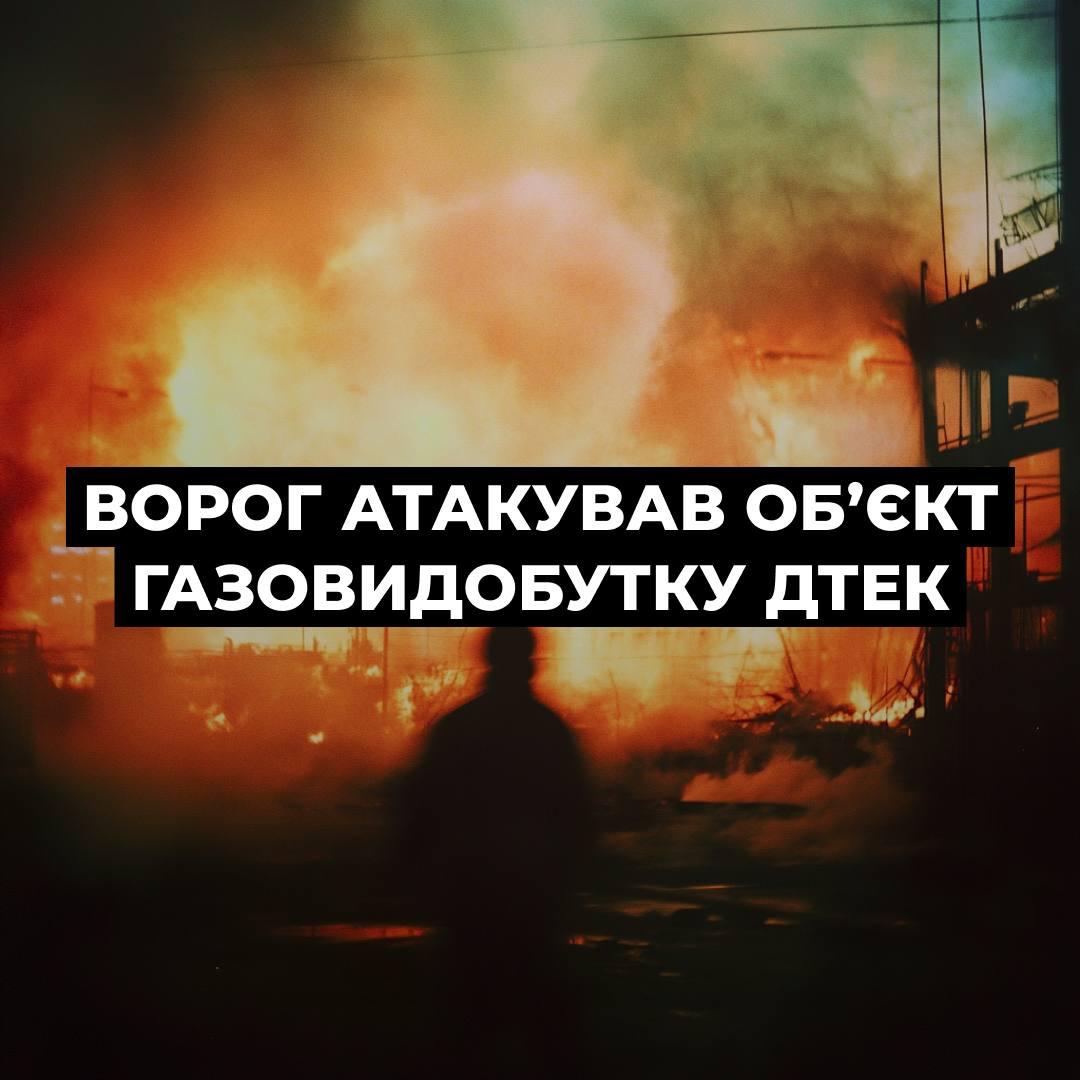
On the night of October 3, Russia launched a new massive drone and missile attack on Ukraine’s energy infrastructure.
According to DTEK Oil&Gas, the strikes led to the shutdown of a number of gas production facilities in Poltava region, "Komersant Ukrainian" reports.
“At night, the enemy once again attacked the energy infrastructure of DTEK Oil&Gas with drones and missiles. As a result of the attack, the operation of a number of gas production facilities in Poltava region was suspended,” the company’s press service said.
Implications for the regions
Poltava region is one of the key centers of natural gas production in Ukraine, so the attack has not only a local but also a strategic impact.
Although the company did not specify the extent of the damage, it is said to have temporarily suspended the operation of some wells and facilities.
At the same time, serious problems with power supply have been reported in other regions:
- parts of Konotop and Shostka districts in Sumy region are without power;
- emergency blackouts were announced in a number of regions.
What Naftogaz says
Naftogaz CEO Serhiy Koretsky says that the October 3 strike by Russian troops on the gas infrastructure was the largest since the beginning of the full-scale war.
“Targeted terror against civilian facilities that ensure the production and preparation of gas used to ensure normal life. It makes no military sense. Another manifestation of Russian meanness aimed solely at disrupting the heating season and depriving us of the opportunity to heat Ukrainian homes in winter,” he said.
The company noted that on the night of October 3, the Russians fired 35 missiles, including a significant number of ballistic missiles, and 60 drones at Naftogaz facilities in Kharkiv and Poltava regions. Some of them were shot down. Others hit.
“As a result of this attack, a significant number of our facilities were damaged. Some of the damage is critical. We are continuing to eliminate the consequences of the attack,” the statement said.
The company’s CEO also noted that Naftogaz is working with Ukraine’s partners to ensure that the response to this attack and its impact on the overall situation is prompt and sufficient.
“Terror should not achieve its goal anywhere,” said the head of Naftogaz Group.
Why Russia is attacking Ukraine’s energy infrastructure
With these attacks, Russia is trying to undermine Ukraine’s energy security before the heating season.
Despite the war, the gas production industry meets up to 70% of the country’s natural gas needs. Any shutdowns of facilities could have consequences for the balance between domestic production and imports.
What experts say
Energy analyst Oleksandr Kharchenko believes that the attacks on gas production infrastructure are an attempt by Russia to “reduce Ukraine’s energy autonomy.”
“Each disconnected facility is a minus in the balance of domestic production. If the attacks continue on a regular basis, Ukraine risks increasing gas imports in winter,” he explains.
According to former Energy Minister Ivan Plachkov, even partial damage in Poltava region may have a delayed effect:
“The main problem is not only a temporary shutdown, but also the risk of long-term repairs. This means additional costs for the state and business.”
At the same time, the Ministry of Energy has previously stated that gas reserves in underground storage facilities exceed 16 billion cubic meters, which should be enough to ensure a stable heating season even in the event of new attacks.
As a reminder, in 2022-2023, Ukraine lost part of its gas capacity due to hostilities and the occupation of territories. According to Ukrgasvydobuvannya, in 2023 the country produced about 18.9 billion cubic meters of gas, which allowed it to almost completely cover domestic consumption without imports.
Since the beginning of 2024, Russia’s attacks have increasingly targeted gas production infrastructure, which is critical for getting through the winter.