Russia’s Burevestnik missile: why it is dangerous
26 October 2025 22:12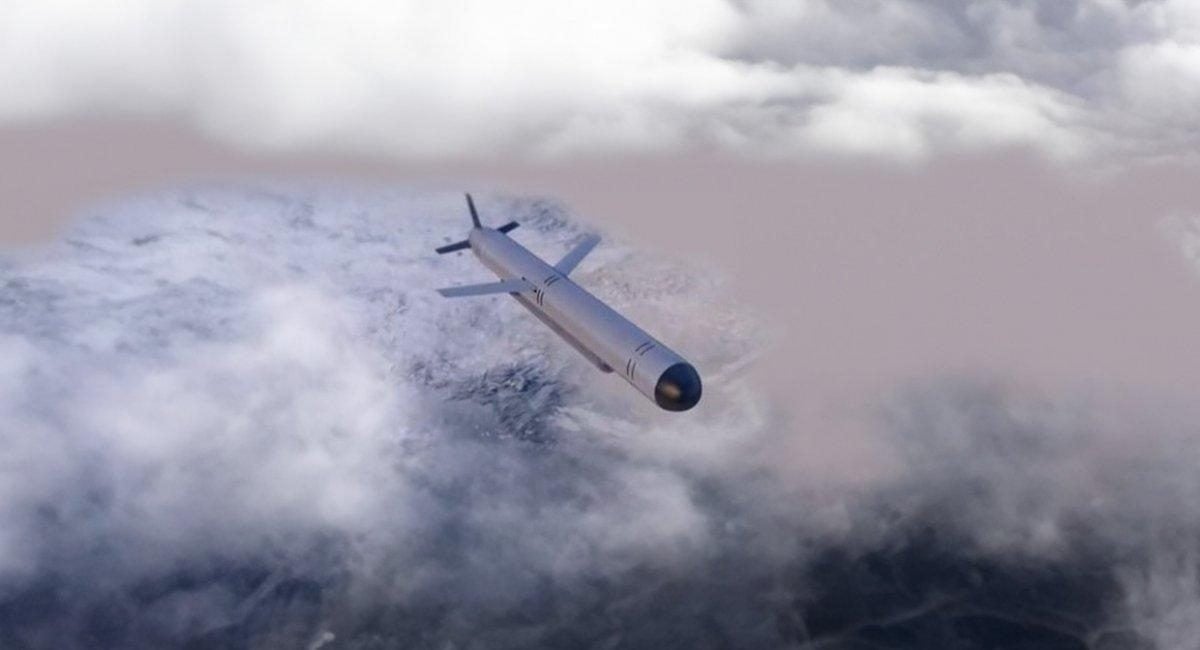
Russia has tested its Burevestnik cruise missile with the participation of Russian dictator Vladimir Putin. According to Russian Chief of Staff Valery Gerasimov, the test took place on October 21: the flight lasted 15 hours, the missile flew 14,000 kilometers at a speed of about 933 km/h.
Note that there is no confirmation of this data.
This was reported by "Komersant Ukrainian" with reference to Defense Express.
The Kremlin’s long-term construction project
The publication reminded that the Russian 9M730 Burevestnik cruise missile, which the Kremlin presents as an “unlimited range weapon,” is actually a long-range project. Its development has been going on for almost a quarter of a century. Work on it with the participation of the Novator Design Bureau began in December 2001, and the project was first officially announced only in 2018.
According to Western researchers, Russia has conducted several dozen tests of the Burevestnik, but no more than one or two are considered successful. The most famous incident occurred on August 8, 2019, at a test site in the Arkhangelsk region, when an experimental nuclear-powered missile exploded. Five Russian scientists were killed in the accident, and short-term spikes in radiation levels were recorded within 30 km of the site.
“The Burevestnik is positioned as an intercontinental cruise missile with a global range. The Kremlin calls it an “unlimited-range missile,” meaning that it is allegedly capable of hitting targets anywhere in the world. The main feature of the project is a nuclear power plant that heats air to ultra-high temperatures to create jet propulsion. A classic solid-fuel accelerator is used for launch.
Characteristics of the Burevestnik
Other characteristics remain classified. It is only known that the length of the missile fuselage reaches 12 meters (about 9 meters after the accelerator is separated), and the speed is from 850 to 1300 km/h. These figures show that Russian propaganda claims of “impossibility of interception” are an exaggeration, although the high level of maneuverability does make it difficult to destroy.
Another danger is that the Burevestnik, according to Russia, can stay in the air for “months,” which creates a risk of surprise strikes. At the same time, its long flight time makes it vulnerable to fighter aircraft.
Currently, the 9M730 Burevestnik missile is not in service with the Russian army. According to open sources, the Kremlin plans to put it on combat duty no earlier than 2027.
Comparison with Chernobyl
According to the Russian media, the Russian director’s envoy Kirill Dmitriev claims that Russia has informed its US counterparts about the successful testing of the Burevestnik with a nuclear warhead.
At the same time, it is worth recalling that back in 2020, US Special Envoy for Arms Control Marshall Billingsley compared the Russian Burevestnik to Chernobyl.
“We believe that such a weapon should not exist at all. Why have a nuclear-powered cruise missile? This is nothing more than a flying Chernobyl,” he said.
Billingsley also called the missiles “doomsday systems” because of the radioactive emissions they can produce during flight.