Shooting of the Maidan: what role did the Kremlin’s top security officials play and what suspicions did they receive from the SBI?
10 September 2025 18:32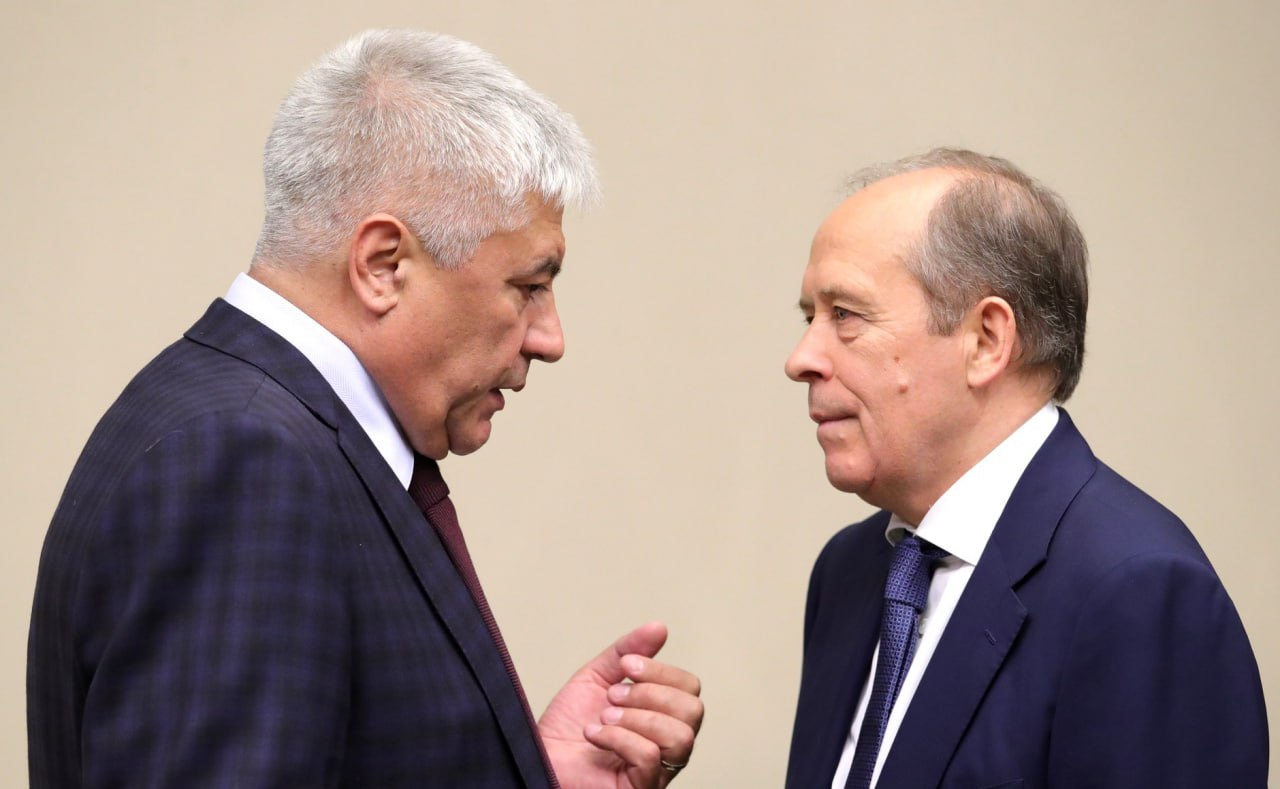
Employees of the State Bureau of Investigation (SBI) have served suspicion notices on Russian FSB Director Alexander Bortnikov and Russian Interior Minister Vladimir Kolokoltsev. This was reported by "Komersant Ukrainian", citing information from the agency.
Along with the officials, their subordinates became defendants in the “Maidan case.” The Russians are suspected of aiding and abetting Ukrainian law enforcement during the violent suppression of protests in Kyiv in November 2013 – February 2014.
Coordination of the violent crackdown
According to the investigation, Russian officials, through their subordinates, facilitated the abuse of power by Ukrainian law enforcement officers, the use of excessive force, special means and weapons. This led to the killing and injury of participants in the Revolution of Dignity.
Bortnikov and Kolokoltsev acted in collusion with the then leadership of the SBU and the Ministry of Internal Affairs. Groups of Russian FSB and MIA officers arrived in Ukraine and participated in the planning of military actions. They advised to deploy additional Berkut units and internal troops, and personally visited Maidan Nezalezhnosti and the surrounding areas to assess the situation. Later, they adjusted the so-called “operational plan to neutralize the protests”.
On the recommendations of the Russians, a backup command post was set up in Kyiv to manage security operations.
In addition, Bortnikov and Kolokoltsev organized the supply of special munitions from Russia: Drift-2 hand gas grenades, Zarya-2, Fakel-S, Flame-M, and smoke grenades. In January-February 2014, these munitions were illegally used against the protesters.
Dispersal of protests and consequences
on February 18-19, 2014, the plan for a violent dispersal under the guise of an anti-terrorist operation was implemented. As a result of the actions of the security forces, 13 people were killed and more than 250 were injured.
After the victory of the Revolution of Dignity, Russian officials helped the Ukrainian security forces involved to escape. They received passports and positions in the Russian Federation.
See also: Maidan cases: SBI finds out who fired the first shots in February 2014
Directly influenced the beginning of the Russian war with Ukraine: what you need to know about Oleksandr Bortnikov
Oleksandr Bortnikov was born on November 15, 1951, in the city of Molotov (now Perm), which was then part of the RSFSR. In 1973 he graduated from the Leningrad Institute of Railway Transport Engineers, and in 1975 he joined the KGB, continuing his service in its successors, the FSK and FSB, in Leningrad (St. Petersburg).
Starting in June 2003, Bortnikov became the head of the FSB’s Border Directorate in St. Petersburg, and in February 2004 he was transferred to Moscow, where he became the deputy director and head of the FSB’s economic security. on May 12, 2008, he was appointed FSB director, simultaneously serving as chairman of the National Anti-Terrorist Committee and a permanent member of the Russian Security Council.
Bortnikov is known as one of the most influential representatives of the security forces in Vladimir Putin’s environment. In 2019, he was awarded the title of Hero of Russia, one of the country’s highest state honors. He was also promoted to the rank of “General of the Army.”
Despite his limited publicity, Bortnikov plays a significant role in shaping Russia’s security policy. Analysts believe that he, along with Nikolai Patrushev, belongs to the group that influenced the Kremlin’s decision to invade Ukraine on a full-scale basis in 2022.
In addition to his managerial activities, Bortnikov has repeatedly been subject to international sanctions: The EU, the UK, the US and other countries have included him in sanctions lists for his connection to the cases related to the poisoning of Alexei Navalny and other crimes, including those related to chemical weapons.
Sanctioned person and perpetrator of repression: who is Vladimir Kolokoltsev?
Vladimir Kolokoltsev was born on May 11, 1961, in the city of Nizhny Lomov, Penza Oblast, into a working-class family. As a young man, he worked at a local factory and the Agricultural Machinery Association, and later served in the border troops on the border with Afghanistan.
In 1982, he began his career in the police force, guarding diplomatic missions, working as a platoon commander of the PPS and as an investigator at the Moscow police department. A few years later, he graduated from the Leningrad Higher Political School under the USSR Ministry of Internal Affairs (1989). During the 1990s and 2000s, he held various senior positions in the Ministry of Internal Affairs, including chief of police of the Oryol region and the criminal investigation department.
on September 7, 2009, he became the head of the Main Department of Internal Affairs in Moscow, and held this position until May 21, 2012. It was then that he was appointed Minister of the Interior in Dmitry Medvedev’s cabinet; he retained this position until 2025, being re-elected three times (2018, 2020, 2024).
Kolokoltsev holds a doctorate in law and the current rank of police general. In 2013, he was promoted to the rank of Colonel General, and later to the rank of General of the Russian Police. He was also awarded the title of “Honored Officer of the Internal Affairs of the Russian Federation”.
Kolokoltsev was twice included in the sanctions lists – in 2018 and 2022 – due to his role in the Putin regime and his involvement in repressive practices.
He is married and has two children. His personal life is kept private, and he receives little media coverage.
Status of the ‘Maidan case’: suspects, verdicts and prospects for investigation
According to the Office of the Prosecutor General, as of February 20, 2025, pre-trial investigations were underway in 57 criminal proceedings against 55 people. These cases cover more than 3,600 episodes of violations related to the Revolution of Dignity.
The Prosecutor’s Office is conducting public prosecution in 158 proceedings involving 309 people. In 2024, the courts delivered only three guilty verdicts, which resulted in the conviction of three people.
In 2024-2025, 73 people were notified of suspicion, including:
- 10 high-ranking officials and heads of law enforcement agencies;
- 39 law enforcement officers (including 10 investigators)
- 21 FSB officers;
- 3 civilians.
Twenty-eight indictments against 70 people were sent to court. Among them are former ministers, heads of the SBU and the MIA, 42 law enforcement officers, one judge, and 21 representatives of the FSB.
In 2023, prosecutors served suspicion notices to 63 people. They sent 26 indictments against 51 people to court. That year, the courts handed down 13 verdicts, convicting 18 people (one verdict was later overturned).
In total, over the 10 years of investigation, 540 people were notified of suspicion, 318 indictments against 495 people were sent to court, and 76 people were sentenced, 26 of whom received actual prison terms.
However, there are cases where cases were closed due to the expiration of the statute of limitations: this happened to former Berkut officers accused of the November 30, 2013, crackdown. The case never came to a court decision.
The “Maidan case” also includes an investigation against the current Minister of the Interior, Vitaliy Zakharchenko, his deputies and the heads of the Interior departments in Kyiv, Cherkasy and Sumy. The investigation has established their involvement in violence and illegal detentions, and the indictments have already been sent to court.
It should be noted that in March 2024, the case against several former leaders of special police units in Cherkasy region involved in the dispersal of protests in February 2014 was brought to court. The defendants are charged with unlawful obstruction of protests and abuse of power.
Дивіться нас у YouTube: важливі теми – без цензури
The Maidan investigation remains active, but progress has been slow: hundreds of suspicions have been announced over the course of a decade, and as many indictments have been issued, but the court has delivered only a handful of verdicts.
Читайте нас у Telegram: головні новини коротко