Rustem Skibin: “The Office of the President and the Mejlis asked to prepare a memorial to the deportees in a short time”
2 April 2024 09:57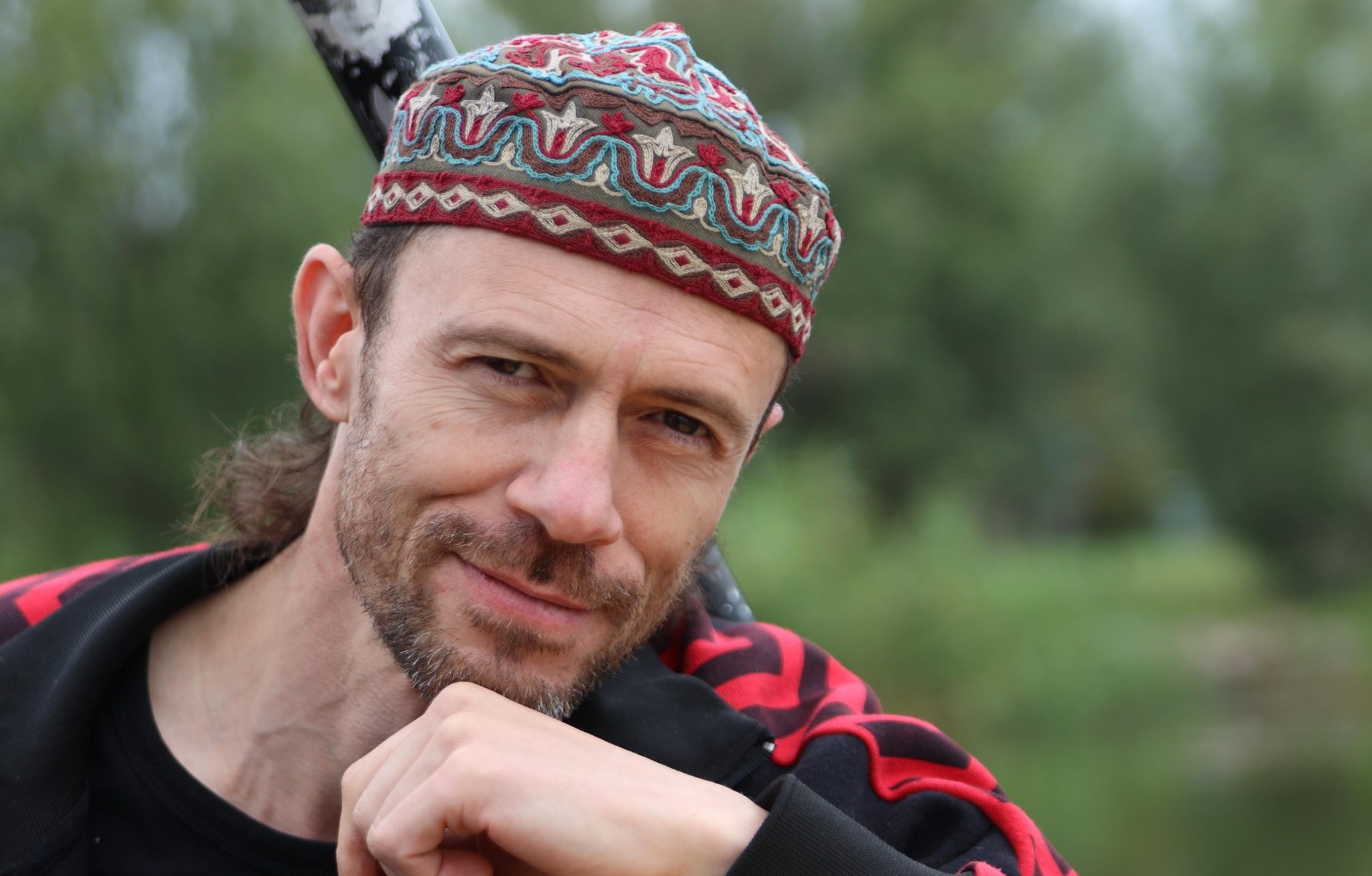 ІНТЕРВ'Ю
The Crimean Tatar artist Rustem Skybin gained nationwide fame at the same time as he was in trouble, when Putin’s men seized Crimea. The occupation had just begun, and it was still possible to freely leave and enter the peninsula. In May 2014, several Crimean Tatar artists took part in a major exhibition at the International Exhibition Centre on Livoberezhna Street in Kyiv. Among them were Mamut Churlu and Rustem Skybin, already well-known on the peninsula. Both are masters of applied art. From a short conversation with both of them, I got the impression that the older one, Churlu, is a deeply Soviet man. It was strange to have survived deportation, but to have a good attitude towards the Soviet past…
Skibin, on the other hand, gave the impression of a progressive man with an optimistic outlook on the future despite the occupation of his native land. His earthenware plates, cups, teapots, and jezves with Crimean Tatar ornaments made an indelible impression on visitors. When Mr Skybin moved to Kyiv shortly afterwards, his work was already well known in the capital. In 2016, he felt confident in his new city. He opened a studio in a rented room in the centre of the city, took an active part in exhibitions, taught amateur ceramists, and gave interviews to interested journalists.
However, Kommersant’ s conversation with the artist  conversation with the artist began with what he is doing today. All his thoughts are now connected with urgent work. The President’s Office and the Mejlis asked him to prepare a memorial to the deportees. It is to be erected in the centre of Kyiv, near the Mystetskyi Arsenal. Rustem Skibin reminded the customers of the project by his countryman Erfan Shamsiddinov.
“There was a famous architect, a Crimean Tatar Erfan Shamsiddinov, who is now deceased. There are his designs for metro stations in Kyiv. He also designed the memorial complex. No matter how many times he went with it, it was useless…. It was planned to be installed in Crimea. For the last 5-6 years, I have been explaining to everyone that this should be done. But the complex there is large, and now we are talking about a small architectural form. I proposed to continue this work and turned to his descendants. His granddaughter agreed to provide materials, we assembled a team of architects and his students and offered a finished version: Shamsiddinov’s concept, but with a modern perspective from artists from Kyiv. It was approved by the Mejlis and shown to the President’s Office. They also approved it. Now we are working on how to do it technically….
We did it as a mock-up presentation, but the Presidential Office wants it to be physically made. Now we are looking for manufacturers. They provided a small space and planned a small architectural form – 1.5-2 metres. We offered more: seven metres high, we shifted the location a little bit, the intersection of paths. A person walks through and gets into the middle of this monument. There are three steles, and we put in a lot of meanings: hands, tracks, trains… We add place names, the names of all the villages from which they were deported… There is an installation of large metal forms, other materials, a part will be cast in brass, stone processing, steles in sheet metal. It is stabilised and will not rust….
We need to keep Shamsiddinov’s concept, but we are adding some additional details, increasing the number of meanings. This is the Holodomor Museum, opposite the Mystetskyi Arsenal, between the Alley of Heroes and the monument to the girl with the spikelet. As an artist, I am very interested in this work, although it is a difficult task. I need it to fit harmoniously into the cityscape.
I suppose you would like to see such a memorial sign installed in the liberated Crimea?
I have been keeping track of what monuments have already been erected for more than 15 years. There are some in Crimea, some in Turkey. The one in Crimea was made by Russia – it’s just horrible. It does not meet any requirements. The author of the monument to these Russian ‘liberators’ is a Kazan Tatar. There, people are walking into the carriages by themselves, there are no soldiers chasing them. Young men with suitcases are walking as if they were just moving…. They have mastered the big money… Near the Tauride University in Simferopol, we also made a memorial to the university in a way that no one could see it – there are slabs with inscriptions on the ground.
Do you have time for ceramics with such a busy schedule?
I’ve been working on projects for four years now, so I hardly have any time left. Last year, I had a large-scale project called “The Way – Yol”, with kalkans (Crimean Tatar war shields), ornaments, and four countries invited me to make an exhibition. My research is about ornamentation on weapons from the Crimean Khanate. I find artefacts and modernise them on ceramic shields. We have made exhibitions at the NATO Information Headquarters, the Lithuanian Embassy, the Presidential Office (in the Autonomous Republic of Crimea), now it is in the Chocolate House in Kyiv, then we are taking it to Sofia, then Denmark, Lithuania, Sweden.
Do you travel a lot?
I have not travelled anywhere during the great war, and I had no desire to. We’ll see how it goes – I’m at a low starting point in the military enlistment office, I have a reservation, but will it be extended?
And you don’t do ceramics at all?
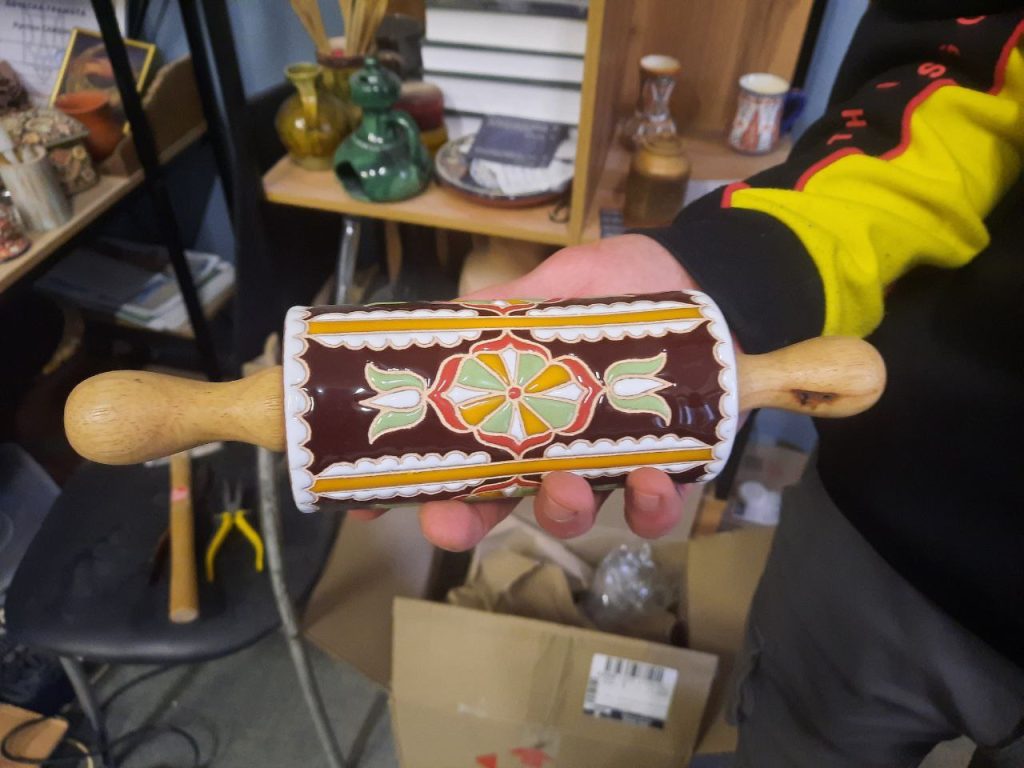
When I have free time… Because somehow I have to live, to pay the rent for the studio. I came here when I was 14, and I’ve been here ever since. My students, three or four of them, went abroad. And so I give consultations in different directions, as well as exhibitions. Now the National Academy of Art and Architecture is hosting our exhibition, which we organised last year – Crimean Tatar ceramics. I have restored 18 everyday objects, here is an album with illustrations of how they were used. I had exhibitions in Kyiv and Lviv, and now I’m back in Kyiv again.
How did you survive the outbreak of the great war?
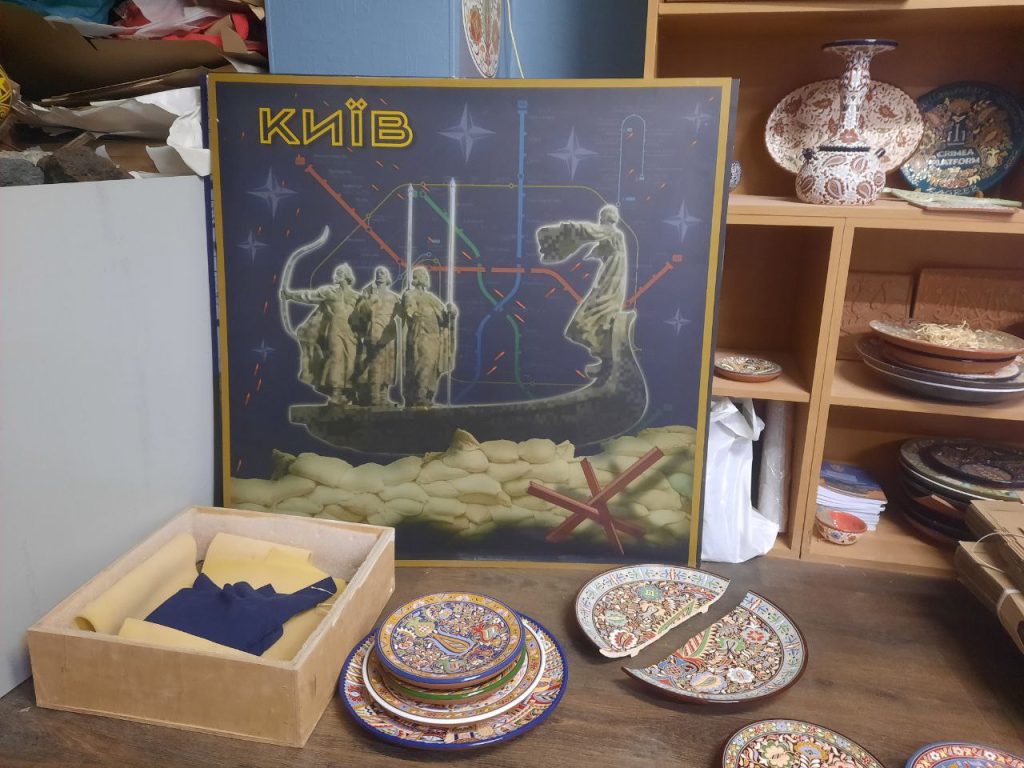
Two projects last year, and at the beginning of the war I made ten posters. These are Ukrainian cities that were either under occupation or surrounded… These are my correspondences with those who were there. I collected all the thoughts, and they wrote on their own behalf… Behind each story is a person who told it and who was there… Mariupol, Kherson, Bucha, Irpin, Crimea (my story), Kramatorsk, Kyiv. There are ten stories in total – in electronic form and posters… This exhibition was in Berlin during the first 15-20 days of the war. During the day, I went out and evacuated people to the train station, and in the evening, during the curfew, I recorded it in this way.
Rustem Skybin explores the past of his people. Being far away from his native Crimea, he looks everywhere for traces of his ancestors' presence. And he manages to find them in places where Crimean Tatar artefacts are either ignored or known to a tiny number of narrow specialists. He is happy to see every interested look and takes every opportunity to share his finds and discoveries... Sitting in the studio, he flips through an album, showing the finds that gave him the impetus to creatively rethink the artistic heritage of the Crimean Tatars.
This is a 17th-century Crimean Tatar helmet from the Metropolitan Museum of Art. The axes are even older. I transfer the ornamentation from the helmet to Vector (software – ed.), and then reproduce it in ceramics. There was a very positive response… I also made a reconstruction of a bunchuk. It’s the first time in 200 or 300 years that I’ve seen it in space, in reality. The Cossacks had their bunchuks confiscated earlier than the Crimean Tatars. They are kept in Russia. I found two bunchuks in mainland Ukraine. I am studying them now. One is kept in a historical museum. It is one to one with the Ottoman ones. There is one in Dresden… This one (shows an image on his smartphone – ed.) has a very interesting story: in 1948, it was transferred from the Kherson Museum to Kyiv. After the deportation, it was like this: all the collections of Crimean museums were transferred to the mainland (Ukraine – ed.) or to Russia. Since then, the largest collection of Qurans has been located near Lviv, in the Museum of Books in Vynnyky. They are in storage, in such a state that they need restoration.
Recently, Skibin created an exhibition entitled "Qurans that Survived Deportation," which was widely covered by Ukrainian and international media. Despite his busy schedule, he keeps an eye out for examples of Crimean Tatar heritage at auctions. Although the prices there are difficult to access, the information about the existence of little-known examples is valuable.
An ancient Crimean Tatar dagger in perfect condition from the 17th and 18th centuries appeared at an online auction. I showed it to Denys Toichkin, who is the only expert on ancient weapons in Ukraine. We regretted that we would not be able to buy it. This is a sabre by Shahin Giray. Decorative weapons are the most difficult art, the highest level.

Finally, it’s time for skullcaps.
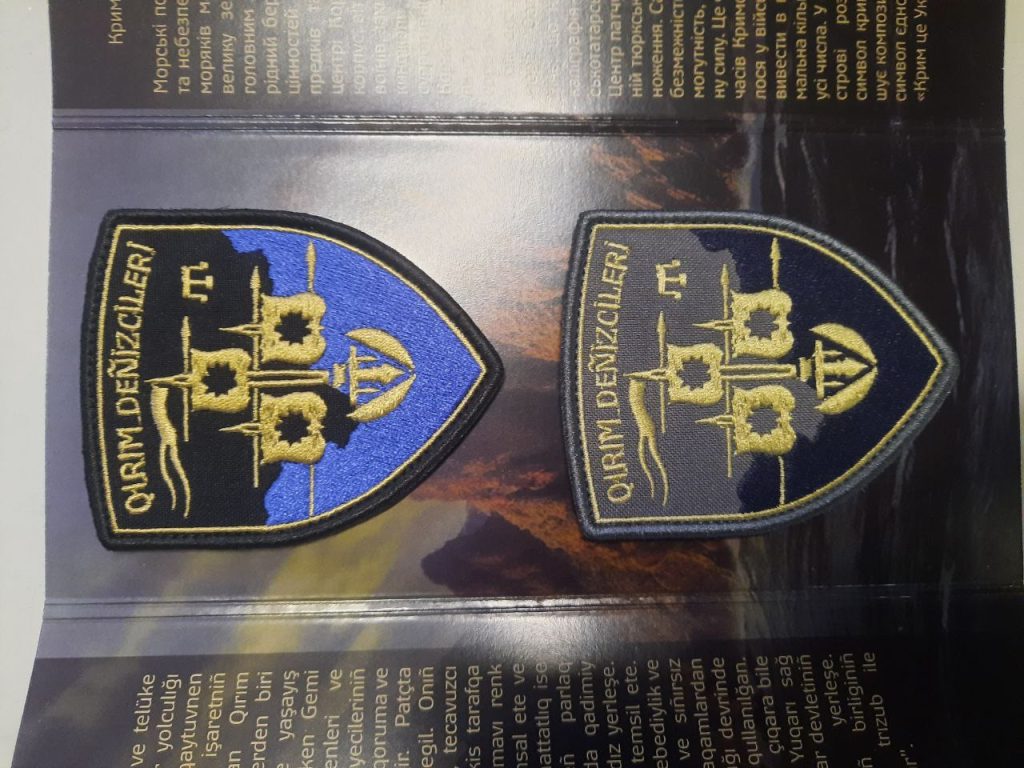
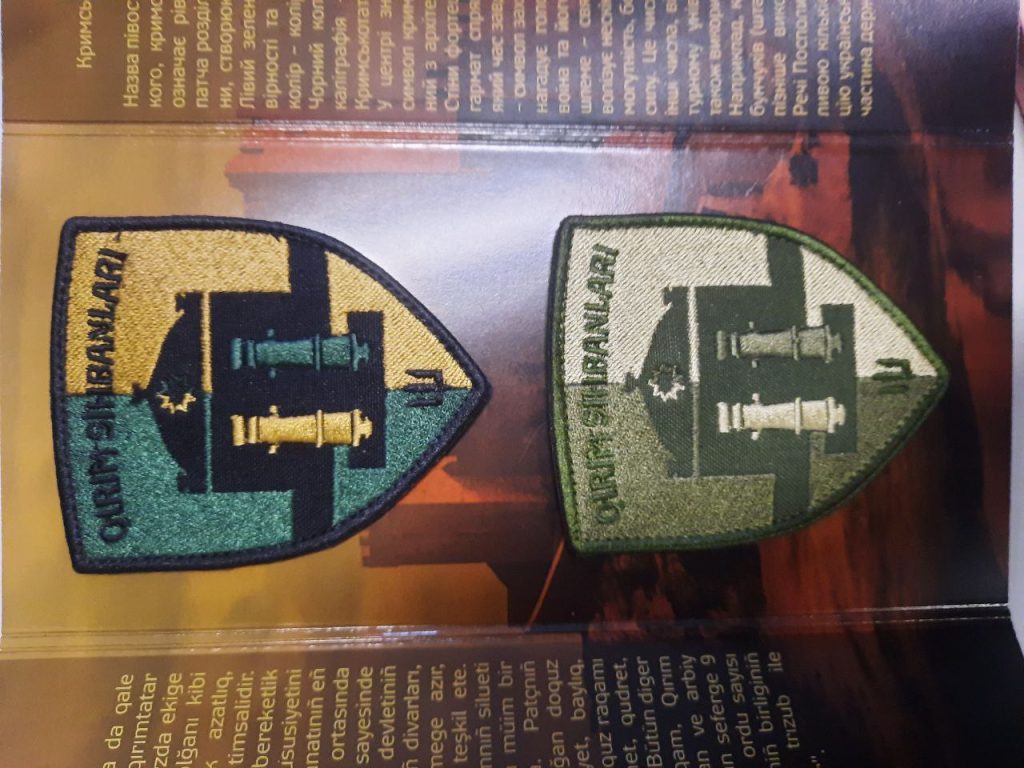
Of the numerous patterns on the traditional namaz mats, called namazlyk, only one remains in the workshop. These are leftovers, many have already been sold out. The problem is that the only workshop that suited me with the level of workmanship no longer exists. They made machine embroidery that was close to handmade in quality. It was a private enterprise, but they closed down because of the war. There were almost no large sizes left, but there was still one suitable skullcap.
The craftsman returns to work on the project of a memorial to his deported countrymen. Before saying goodbye, I ask him one last question: does he miss Crimea in Kyiv?

I am with Crimea every day. I constantly communicate with those who remain there. It is constantly present in my work… I miss the sea, the aromas, the wind of Crimea… I tried to recreate the Crimean atmosphere in one of my projects: I created a traditional Crimean Tatar grill and taught guests how to make coffee not on the sand, as everyone else is used to, but on the grill….
P.S. Among the artist’s immediate plans is to work on the collection of Feldman’s Crimean photographs from the Kyiv Museum of Literature. Experts assume that among them are photographs not only of the peninsula’s iconic sites, when there were still plenty of Crimean Tatar monuments, but also images of the historian and artist Usain Bodaninsky and the educator Ismail Gasprinsky. Until now, it was believed that no photographs of them at a young age had survived.
Author: Anvar Derkach