The US shutdown is breaking records: what is happening and what will it lead to
5 November 2025 06:28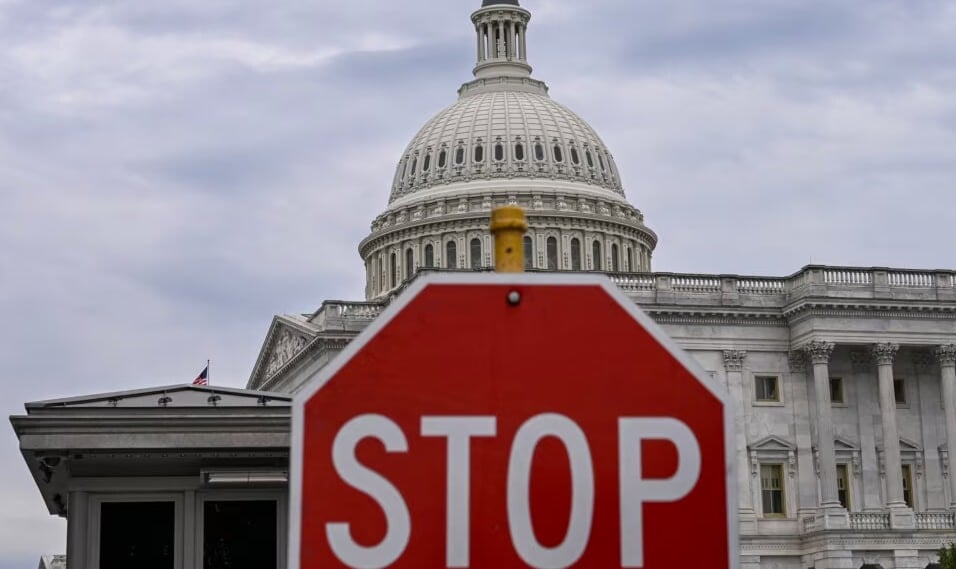
The United States federal government has been paralyzed for 35 days in a row, the longest shutdown in the country’s history. The duration of the current shutdown has already equaled the record of 2018-2019. This is reported by The Hill, "Komersant Ukrainian" informs
How the US got to this point
A shutdown is a temporary cessation of government operations when Congress fails to pass a law to fund government agencies. The current crisis began on October 1, after negotiations between Democrats and Republicans failed over federal spending priorities.
Since then, tens of thousands of government employees have been furloughed or continue to work without pay. Many government programs, institutions, and services have been temporarily suspended.
Senate fails to reach agreement again
On Tuesday, the U.S. Senate blocked an attempt to pass a bill to fund the government for the fourth time in a row. The document numbered HR5371, which provided for the extension of appropriations until 2026, was supported by 54 senators, while 44 opposed.
Despite the support of some Democrats (Catherine Cortez Masto, Angus King, and John Fetterman), no compromise was reached. One Republican, Rand Paul, also voted against it.
What they say in Congress
House Speaker Mike Johnson said before the vote:
“Today is the 35th day of the Democratic shutdown. No one expected it to last this long. We could not even imagine that it would equal the longest in U.S. history.”
Now the Senate must come up with a compromise solution that President Donald Trump can sign.
What are the consequences for Americans?
Many citizens are already facing real problems:
- delays in the payment of social programs;
- suspension of the work of some national parks, museums and courts;
- failures in the transportation security and control system at airports;
- delays in processing visa applications and tax documents.
If a compromise is not found in the coming days, the shutdown could become the longest in US history, breaking the previous record set during Trump’s presidency.
What is a shutdown and why did it happen?
In the United States, since the late nineteenth century, there has been a law that prohibits the work of federal authorities if they do not have funding. A shutdown (literally, “closure”) occurs if Congress fails to approve and the president fails to sign off on funding for these bodies.
Unlike Ukraine, the United States does not have a single budget law. Different bills are required to fund departments or programs, 12 in total. It often takes a long time for them to be approved by both chambers and the White House. That is why they are usually not all approved by October 1, when the new fiscal year begins in the United States.
If the White House and Congress (or even congressmen among themselves) cannot agree on a continuing resolution, a shutdown will begin at 00:01 on October 1 (07:01 Kyiv time).
Watch us on YouTube: important topics – without censorship
What works during a shutdown?
Despite the suspension of many services, some critical functions continue to operate:
- Security and defense: military, border guards, police, and emergency services continue to operate.
- Medical services: Hospitals and emergency medical services are functioning without changes.
- Pensions and social benefits: payments under the Social Security and Medicare programs continue. U.S. Representative Ami Bera.
How long do shutdowns last?
Government shutdowns in the United States are not a new phenomenon.
- In 2018-2019, during Donald Trump’s presidency, the shutdown lasted 35 days, which is a record.
- In 1995, under Bill Clinton, it lasted 21 days,
- In 2013, under Barack Obama, it lasted 16 days.
- Ronald Reagan’s presidency had the most shutdowns – eight, but they were all short-lived.
How does this affect the economy?
According to the Congressional Budget Office, the shutdown could cost the U.S. economy up to $400 million a day due to the shutdown of federal agencies.
At the same time, members of Congress will continue to receive their salaries, as provided for by the US Constitution. The military will continue to work, but their pay will be postponed until the shutdown is over.
For example, in 2018-2019, the shutdown resulted in $11 billion in losses.
Read us on Telegram: important topics – without censorship