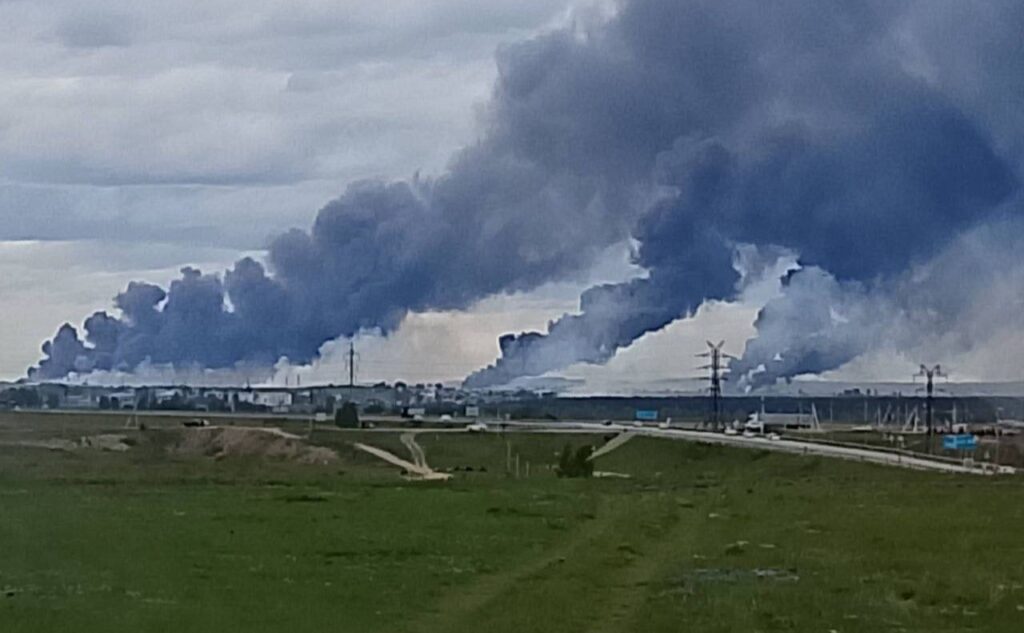
Seven billion on fire: how many planes do the Russians actually have left?
2 June 2025 20:50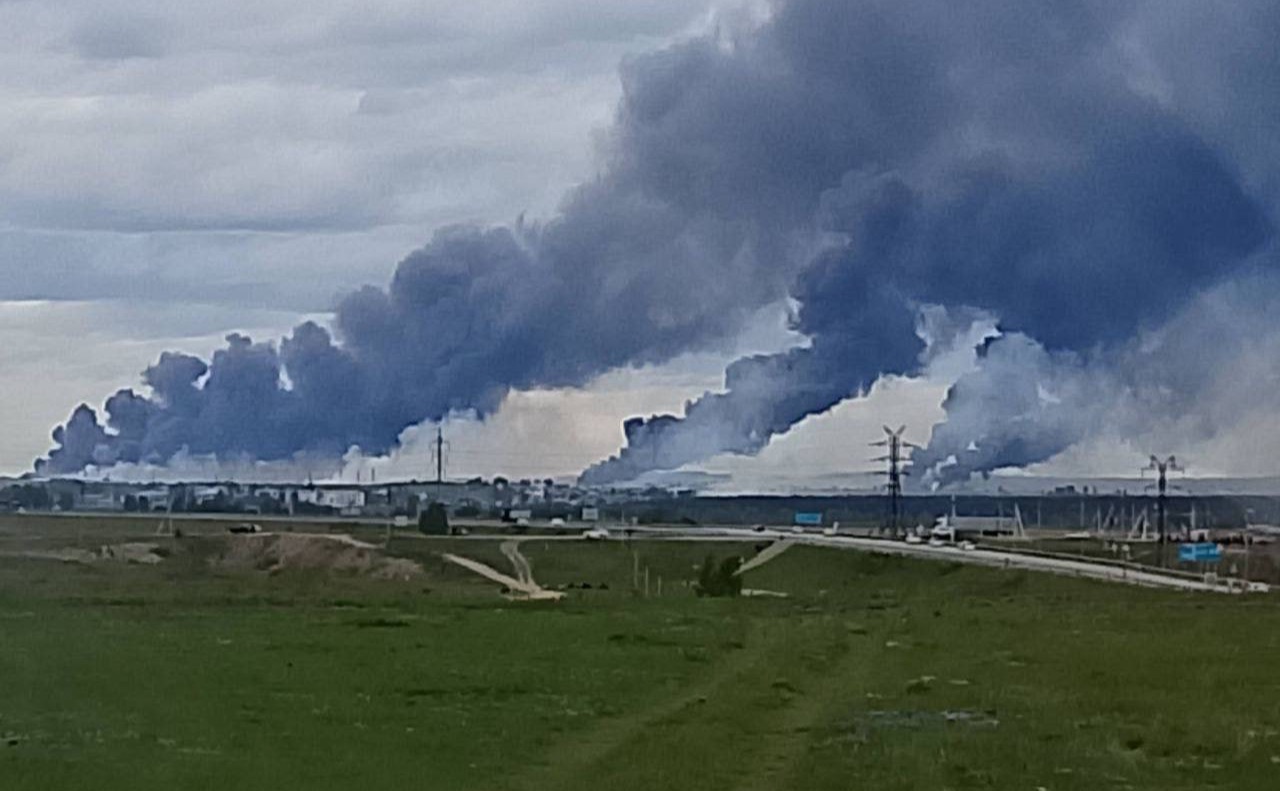 ANALYSIS FROM
Ukraine has dealt the most painful blow to Russia’s strategic aviation since the beginning of the Great War. The SBU’s special operation “Pavetina” destroyed 41 aircraft at once – from Tu-95 and Tu-22M3 to the unique A-50 and Tu-160. The strike covered four airfields in different parts of Russia, including Murmansk and Irkutsk – the enemy has never been so deeply hit before. The losses amounted to more than $7 billion.
This is a strategic breakthrough that not only disarms Russia, but also demonstrates the ability of Ukrainian special services to operate in the rear of a nuclear power. More than a third of the enemy’s combat-ready long-range aviation was destroyed. Western analysts have already called this night “Russia’s Pearl Harbor,” and even Russian propagandists are panicking and admitting that these losses are irreparable. Which planes were destroyed, and why will Russia not be able to recover them? What does this mean for the security of Ukraine, Europe and nuclear parity, and most importantly, how many more planes does the aggressor country have – more in the article
According to the head of the SBU, Lieutenant General Vasyl Malyuk, the attack was the result of a year and a half of preparation and was the largest strike against enemy strategic aviation since the beginning of the full-scale invasion. On the night of June 1, SBU drones hit the Belaya, Diaghilev, Olenya, and Ivanovo airfields. The strikes hit 41 enemy aircraft, including A-50, Tu-95, Tu-22M3, and Tu-160 strategic bombers. Russia’s total losses were estimated at more than $7 billion.
It was not just a devastating blow to enemy aircraft, but a serious slap in the face to the power and terrorist nature of the Russian Federation. The destruction of these bombers was a task set by the President of Ukraine Volodymyr Zelenskyy. He personally supervised the operation,” Malyuk said.
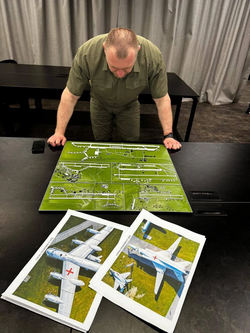
According to him, the operation resulted in the destruction of 34% of strategic cruise missile carriers that were used to strike Ukrainian cities.
How many strategic aircraft does Russia have left after the SBU strike?
After a large-scale attack by Ukrainian drones on four Russian military airfields as part of the SBU’s Pavetina special operation, the Russian army has significantly fewer combat-ready strategic bombers. This was stated in a commentary for
According to him, by June 1, 2025, Russia actually had not 120 strategic aviation aircraft, as some sources say, but about 65-70 combat-ready aircraft. That is why the downing of 41 aircraft reported by the SBU can be considered a critical strike.
According to accounting records, they had 120 aircraft at the beginning of December 22. But they have not been there for a long time. When I started to look into what was there, what numbers, I found completely different figures,” Kryvolap explained.
- Tu-95: no more than 30 units
According to the expert, the Russians had no more than 25-30 Tu-95s left.
In the European part, there are about 18 Tu-95s on average. About 6 more aircraft are at the Ukrainka base in the Amur region. In total, there are up to 25, maximum 30 units,” Krivolap said.
He also reminded that over the past year, the Russians have never used more than 18 of these aircraft at once, even in large-scale missile attacks.
- Tu-160: 13 operational, 4 “under repair“
According to the expert, Tu-160s are easier to count because of their limited number. There are 13 units still in service, and 4 more are undergoing long-term modernization.
Those four have been undergoing modernization in Kazan for three and a half years. There are always some difficulties there: there is a lack of equipment, they cannot supply modern avionics. In December 2023, one of them was taken into the air with Putin on board, and that was the end of it,” Kryvolap ironically says.
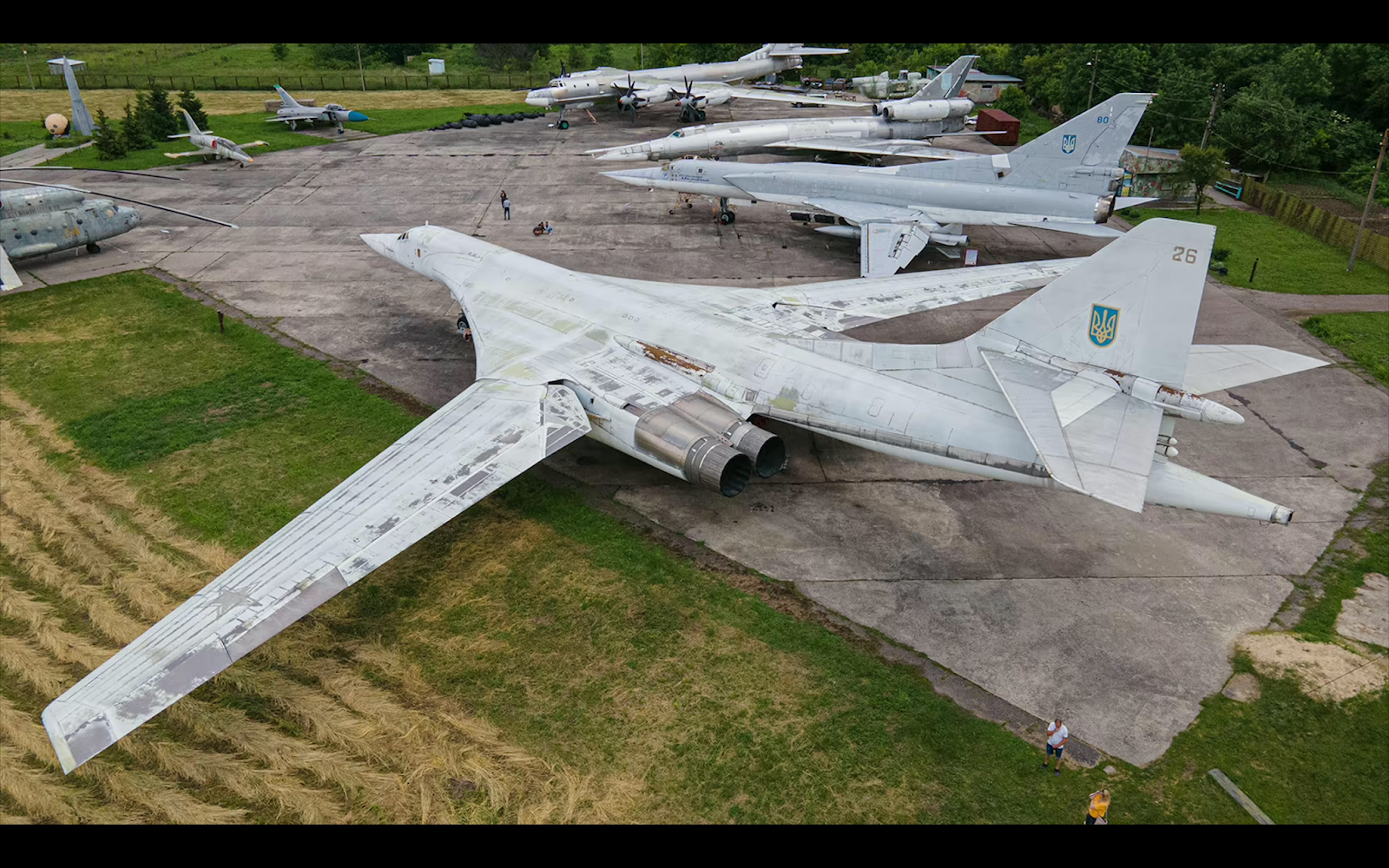
- Tu-22M3: approximately 25-27 aircraft
The damage to the Tu-22M3 is also significant. According to the expert, by the beginning of June, Russia had approximately 25-27 of these aircraft left, which coincides with the estimates of Ukrainian intelligence.
He also emphasized the peculiarities of the Belaya base, where, in addition to combat-ready vehicles, a large number of “donor” aircraft are stored for cannibalism – disassembly for spare parts.
It is possible that among the destroyed aircraft were those that were to be scrapped. But even if they burned down, it’s a good thing. There will be no source for “cannibalism,” Kryvolap emphasized.
- A-50 or A-50U: a key clarification
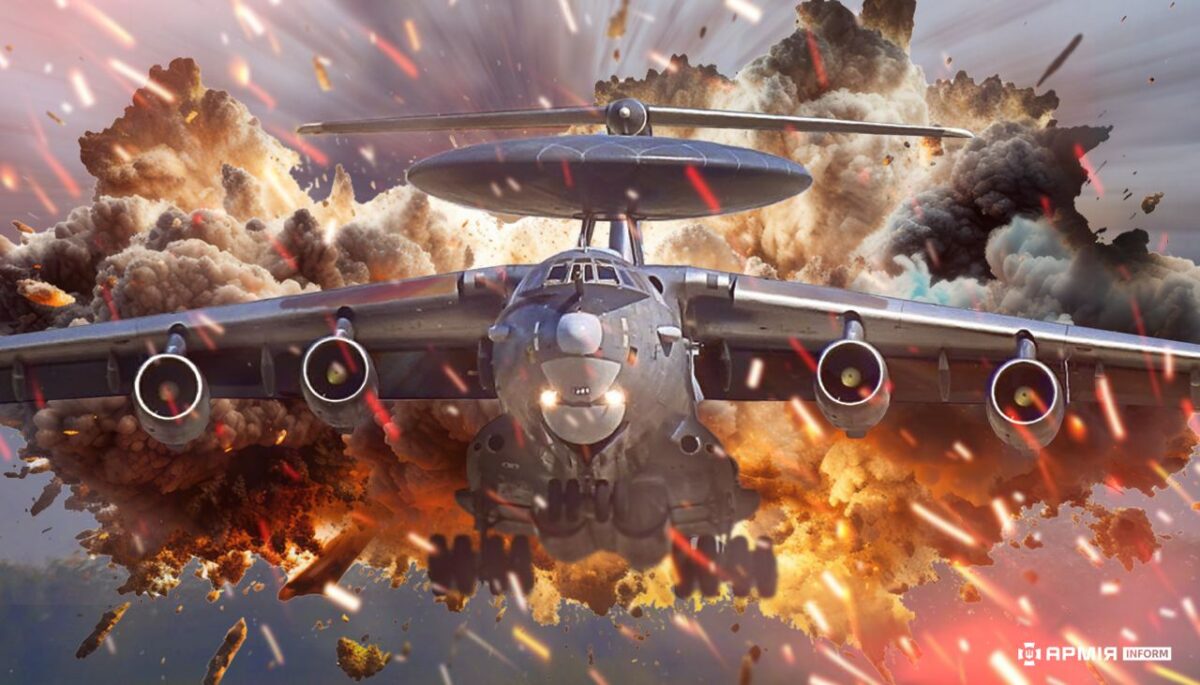
The A-50, a long-range radar detection aircraft, was also mentioned among the aircraft destroyed by the SBU. The expert emphasized that it is important to clarify whether it is a modernized version of the A-50U.
The A-50 is outdated, almost “blind”. But A-50U is an important object. There were only seven of them in Russia, and we have already destroyed four of them. If we add another one, it will be very good,” says Kryvolap.
Bottom line: enemy losses are critical. Kryvolap confirms the estimate of losses in the range of 30-34% of strategic aviation, which was stated by the SBU.
“Russian Pearl Harbor”: Western and Russian experts on the SBU’s devastating strike on Russian strategic aviation
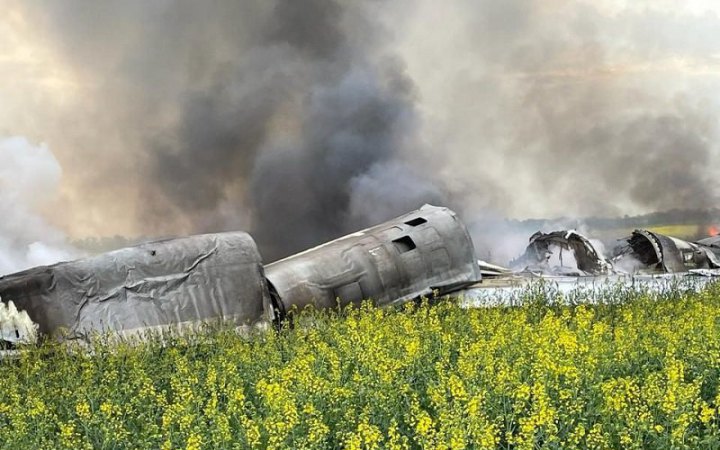
The scale of the operation is evidenced by both satellite images of the destroyed bombers and comments by leading military observers.
This is the most powerful attack ever carried out against Russia’s strategic nuclear forces. According to preliminary estimates, up to 10 bombers were destroyed. The photo shows numerous Tu-95s engulfed in flames. “Russia’s response is likely to be harsh,” Julian Röpke, a military analyst for the German Bild, wrote on social networking site X.
His colleague, German expert Nico Lange, emphasized:
“Reducing the number of Russian strategic bombers is a definite plus for the security of Germany and Europe.
Israeli military analyst Yigal Levin described the operation as “absolutely unprecedented.”
“The Ukrainians have raised the bar to an exorbitant level,” he wrote on his Telegram channel.
Russian reaction: “a blow to nuclear parity”
Even pro-war Russian Telegram channels recognize the unprecedented nature of the strike. The Veteran’ s Notes channel called the event “Russia’s Pearl Harbor.”
The air component of Russia’s nuclear triad has been destroyed. The enemy has reached Murmansk and Irkutsk, something that did not happen even in World War II.
And the most loyal supporters of Russian aggression recognize the failure of Russian counterintelligence. The propaganda channel Rusich, which has ties to militants, has publicly expressed outrage at how Western journalists – “not without the help of foreign intelligence services” – were able to uncover the Russian agent network.
“Foreign journalists had no trouble exposing the Russian network and even told its members how they did it,” the channel’s administrators wrote with frank disappointment.
The channel’s authors complain that the Russian side has not conducted a single successful “information” or counterintelligence operation of this magnitude in more than two years of full-scale war.
“Nothing of the kind has been done by our side during the entire war,” the Rusych RRG admits.
Z-blogger Roman Alekhin confirmed that the Tu-95 and Tu-22M3 are out of production and cannot be restored. And the Rybar TV channel admitted it:
“These losses are irreplaceable.
Another Russian channel , Two Majors, wrote that the attack was an attempt to “reduce the nuclear power of the Russian Federation” and called for “shootings and imprisonment” of those responsible for the lack of shelters for the aircraft.
The Russian propaganda outlet Rydovka called the Ukrainian attack on the night of June 1 “the largest terrorist attack” since the beginning of the full-scale war. In its weekly summary publication, the outlet acknowledged that Ukrainian defense forces had hit a number of key military facilities in Russia.
According to confirmed estimates, the SBU managed to carry out the world’s first large-scale operation to hit several strategic aviation bases at once. This is not just a local success, but a strategic breakthrough that weakens the nuclear threat from Russia and demonstrates new capabilities of Ukrainian special services in the enemy’s deep rear.
Читайте нас у Telegram: головні новини коротко