The Scandinavian model of air defense: Ukraine anticipates a new phase in strengthening its air defense capabilities
4 February 16:01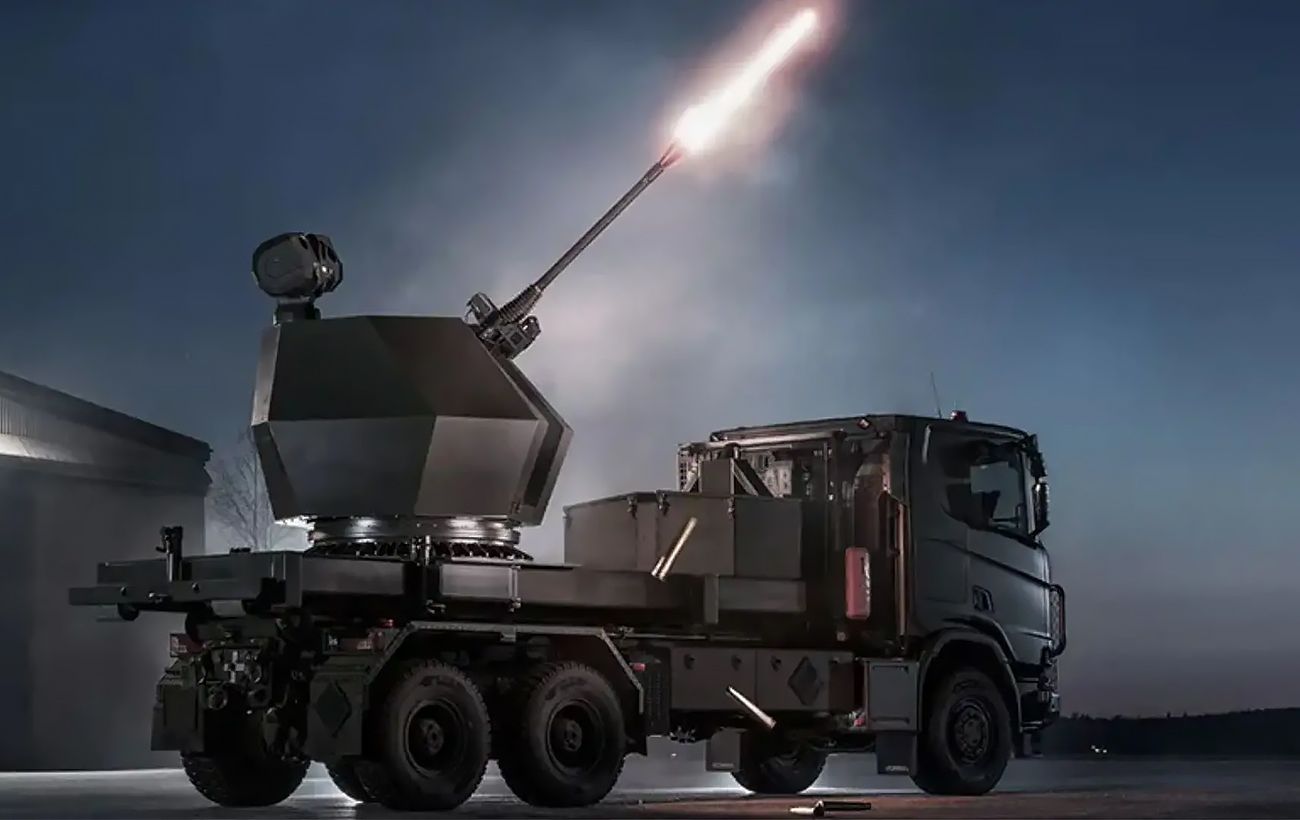 ANALYSIS FROM
Sweden and Denmark have agreed to jointly purchase air defense systems for Ukraine worth a total of 2.6 billion Swedish kronor (approximately $290 million). The equipment is intended to protect against Russian air strikes.
According to Reuters, Sweden will invest 2.1 billion kronor (approximately $235.9 million) in the purchase of Tridon air defense systems developed by BAE Systems Bofors. Denmark, for its part, will provide funding of approximately 500 million kronor ($56.1 million), writes "Komersant Ukrainian".
Swedish Defense Minister Paul Jonson noted that such assistance will allow Ukraine to form a full-fledged air defense battalion if necessary. According to him, this purchase not only strengthens Ukraine’s defense capabilities on the front lines, but also contributes to the development of defense production in Sweden.
In fact, both countries have been providing Ukraine with significant military and humanitarian support since the start of Russia’s full-scale aggression.
New air defense systems: adapting Ukrainian experience
Military analyst Dmytro Snegirev emphasizes that the new air defense systems that Ukraine will receive in the near future are significantly different from the existing models.
“These are systems created with Ukrainian combat experience in mind. This is a record speed by historical standards — from design to practical implementation,” the expert notes.
The key element of the complex is a 40-mm cannon with a 100-round loading system, which provides extremely high fire density.
“It is the high intensity of fire that allows it to work effectively against the swarm nature of Russian strike drone attacks,” explains Snegirev.
This approach is a response to the enemy’s changing tactics, which increasingly involve massive UAV attacks.
Another important advantage of the complex is its mobility. The system is mounted on a civilian Scania truck. This allows for rapid deployment, even on public roads.
“In fact, we are talking about a highly maneuverable anti-aircraft complex,” the analyst emphasizes.
The range of destruction is up to 13 kilometers.
The cannon provides a maximum range of up to 13 km for air targets, which is a significant indicator for air defense artillery systems.
“The system is capable of actively countering drones, cruise missiles, and helicopters with high accuracy,” notes Snegirev.
One of the main innovations is the use of programmable ammunition.
“This involves creating a cloud of debris directly in front of the target. The combination of high-intensity fire and this ‘cloud’ effectively destroys aerodynamic weapons, in particular cruise missiles,” explains the expert.
Snegirev calls this element the key know-how of modern developments.
Previously, Russia relied on “bleeding” Ukrainian air defense by using cheaper decoy drones without warheads.
“When an air defense missile can cost up to $100,000 and a drone costs about $50,000, there is an obvious imbalance,” explains Snegirev.
According to the analyst, Sweden has already announced its readiness to transfer these anti-aircraft systems to Ukraine in the near future.
“Considering the adaptation of Ukrainian experience, the choice of a 40-mm cannon, and the ability to neutralize swarm attacks by UAVs, we can talk about a real breakthrough in strengthening our country’s air defense system,” concludes Dmitry Snegirev.
Tridon air defense system specifications
BAE Systems’ Tridon Mk2 anti-aircraft system was first unveiled in 2024 at the Eurosatory international exhibition. The system is based on the well-known 40 mm Bofors cannon.
For Ukrainian needs, the complex was equipped with a modern Saab Giraffe 1X radar station capable of detecting air targets, including drones, at a distance of up to 75 km. The package includes spare parts and a significant amount of ammunition, including P3 programmable detonation shells.
The system effectively engages targets at a distance of up to 12 km and has a firing rate of 200-300 rounds per minute. Currently, the system is mounted on a Scania 6×6 truck chassis, but its design allows it to be mounted on both wheeled and tracked platforms.
Thus, the joint initiative of Sweden and Denmark to purchase Tridon air defense systems for Ukraine is a striking example of the transition of Western partners from point solutions to a systematic approach in strengthening Ukraine’s air defense. This is not just another package of military aid, but a response to the changing logic of air warfare imposed by Russia through the massive use of strike and decoy drones.
The key value of Tridon Mk2 lies in the combination of several critical factors: high fire intensity, relatively low cost of target destruction, mobility, and adaptation to the enemy’s “swarm” tactics. Against the backdrop of a shortage of missiles for anti-aircraft systems and the Russian Federation’s deliberate strategy to “bleed” Ukrainian air defense, artillery systems with programmable ammunition are effectively restoring the economic balance in Ukraine’s favor.