How much longer can the Kremlin hold out? Experts outline three scenarios for ending the war
26 March 19:44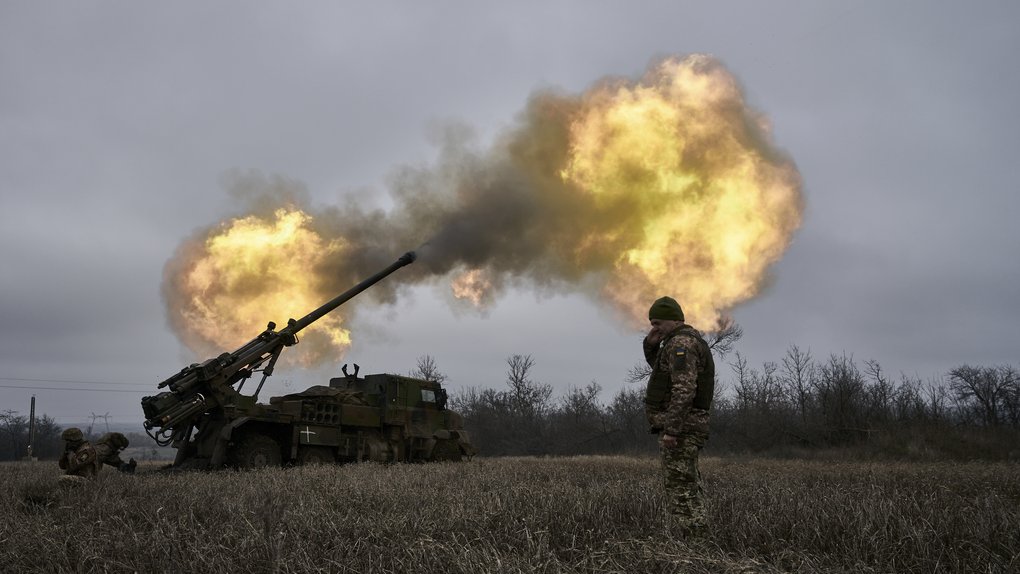 ANALYSIS FROM
The front is entering a phase of maximum intensity: the number of battles is breaking records, and the Russian army is throwing new forces into the attack, but is paying a critically high price for it. Military officials and experts are discussing Russia’s new tactics, the Kremlin’s resource constraints, and increasingly grim scenarios for the war’s conclusion. Why has the number of attacks exceeded 200 per day—and what is behind this surge? Is Russia truly nearing the point of exhaustion, or does it still have reserves for a protracted war?
How are strikes on logistics changing the situation on the front lines right now? And most importantly—does the current escalation signal preparations for the decisive phase of the war, or, on the contrary, its prolongation?
Russian troops have sharply intensified pressure on several fronts simultaneously, and the number of attacks has exceeded 200 per day for several days in a row. This was reported by Commander-in-Chief of the Armed Forces of Ukraine Oleksandr Syrskyi following an assessment of operations in frontline areas. With the change in weather conditions, the enemy has intensified its offensive operations, attempting to break through Ukrainian defenses. At the same time, the cost of such assaults for the Russian army is extremely high—the occupiers are suffering significant losses in manpower and equipment.
“Despite the enemy’s active attempts to advance, the aggressor’s losses remain critical,” Syrskyi emphasized.
Russia’s Resource Limit: Will It Have Enough Strength for a War of Attrition
Military historian and reserve officer of the Israel Defense Forces Grigory Tamar in an exclusive comment
“If Iran is knocked out of this structure, it will be a serious blow to the stability of the Russian system,” Tamar notes.
The IDF reserve officer emphasizes: a temporary rise in oil prices cannot save the Russian economy from structural problems. Signs of financial exhaustion are already evident within Russia—rising prices, a decline in the population’s purchasing power, and a reduction in resources.
According to the historian, Russia’s actual resilience may be significantly lower than what the Kremlin’s official rhetoric suggests.
Western support is a key factor
Grigory Tamar also emphasizes: Ukraine is holding on thanks to its own resilience and international aid. Support from the U.S., the U.K., France, Germany, Poland, the Czech Republic, Finland, and the Baltic states remains critically important.
“Without the help of Western nations, Ukraine would not have been able to hold its defenses for so long. That is a fact,” Tamar noted.
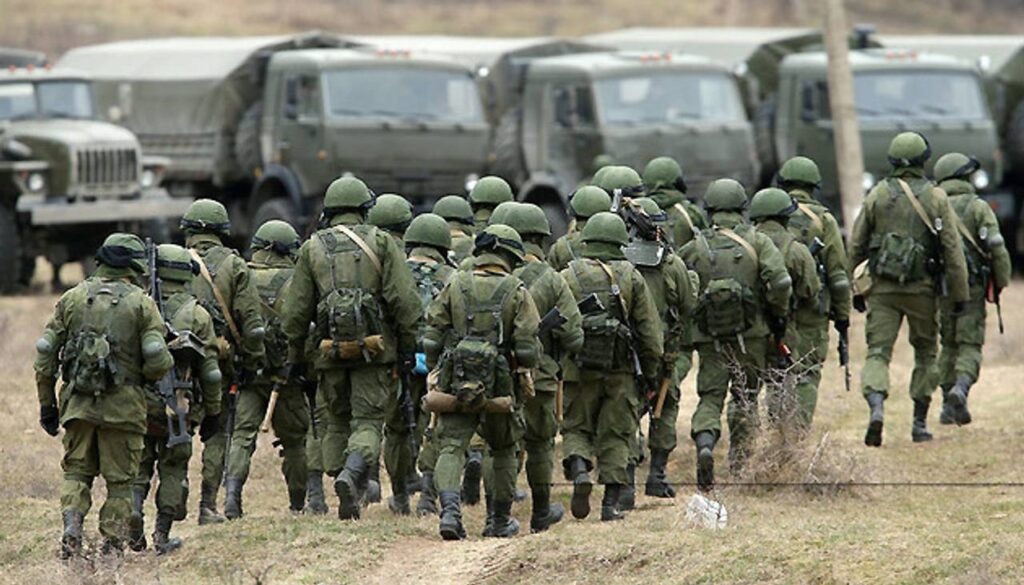
At the same time, he said, the Russian army has not demonstrated the ability to make large-scale strategic breakthroughs.
“Several attempts to create powerful strike groups ended with their destruction even at the outer lines. Ukraine, on the other hand, has repeatedly proven that it is capable of launching surprise operations,” concluded Grigory Tamar.
Three Scenarios for the End of the War
Russia’s war against Ukraine continues as a war of attrition—and there will be no quick solutions. The peace process is unlikely to bring Ukraine the expected dividends, and realistic scenarios for ending hostilities remain grim. This was stated by military analyst Vasyl Pekhno.
According to him, the current logic of the war boils down to three possible outcomes.
- The first is the complete exhaustion of one of the sides, leading to a de facto surrender. In Russia’s case, this would mean abandoning its aggression and withdrawing from the occupied territories.
- The second is the similar exhaustion of Ukraine.
- The third scenario is that both sides reach the limits of their resources and are forced to stop.
“So far, we are not close to any of these scenarios,” notes Pekhno.
The analyst emphasizes: Russia continues to attack and retains its capacity for mobilization. Moreover, complete control of the information space within the Russian Federation may indicate preparations for new waves of mobilization. At the same time, Ukraine also shows no signs of complete exhaustion.
According to the expert, the Ukrainian defense industry is ramping up production of drones that systematically strike the enemy’s rear areas. Additionally, the country is on the verge of mass-producing ballistic missiles.
“We are definitely not a country that has been exhausted to the point of collapse,” Pehno emphasizes.
The analyst believes that the most likely scenario at present is gradual mutual exhaustion, which could create the conditions for negotiations. But only if Russia is forced to agree to peace under pressure from circumstances. So far, according to Pekhno, there are no signs of such pressure.
Escalation on the front lines—a consequence of political signals
Separately, the expert drew attention to the international context. He expressed the view that any signals of leniency or delays in sanctions could be perceived by the Kremlin as a sign of weakness. Against this backdrop, the current escalation on the front lines appears to be an attempt by Russia to seize the moment and intensify the pressure.
“It seems that the aggressor, sensing an opportunity, is only stepping up its attacks,” Pekhno concluded.
What are the military saying?
Ukrainian troops on the front lines report noticeable changes in certain sectors. In particular, the Defense Forces are more actively disrupting the enemy’s logistics, which is already yielding results, while the enemy itself is attempting to compensate for its losses through both assaults on the front lines and attacks on civilian infrastructure in the rear.
A senior lieutenant in the Ukrainian Defense Forces with the call sign “Alex” describes the situation in the Pokrovsk and Dobropillia sectors as one where the enemy has begun to lose confidence due to sustained pressure on its supply lines:
“In the Pokrovsk and Dobropillia sectors, the Russians have started complaining a lot because their logistics are being hit pretty hard—they felt pretty comfortable and didn’t even suspect that this game could be played by two sides,” – Soldier “Alex”
At the same time, “Alex” says , the roads to Donbas are such a sore spot that entire bypass routes are popping up right next to those “roads” in the surrounding fields, making it actually easier for them to move around.
According to the soldier, the destruction of these routes forces the enemy to literally improvise—to carve out alternative paths off the roads, which complicates and slows down their movement.
Soldier Stanislav Bunyatov, call sign “Osman,” emphasizes: despite constant pressure on the front lines, the overall picture for Ukrainian forces looks cautiously positive.
“Despite regular enemy infantry activity on the front lines, the overall situation for us is quite positive. Over time, the enemy will feel the consequences of the Starlink shutdown, as their method of connecting to the internet exposes UAV crews—which cause us the most problems directly on the front lines—to significant risks; we are already working on this,” – Stanislav Bunyatov
The behavior of the Russian Armed Forces leadership has become somewhat nervous, says Bunyatov. On the front lines, we see attempts to break through the line with mechanized assaults; in the rear, large-scale attacks on civilians, aimed at wearing down the morale of the population and persuading them to accept the end of the war at any cost.
“We will see more such UAV raids, and they will target not military objectives but the basic needs of the civilian population: electricity, water, and residential infrastructure, so we must be prepared for anything,” says Bunyatov
The military officer emphasizes that the enemy is increasingly combining tactics: pressing on the front lines while simultaneously attempting to influence the rear, particularly through strikes on critical infrastructure.
Thus, according to the soldiers’ assessments, the situation is twofold: on the one hand, there are local successes and the enemy’s logistical problems; on the other, there is a growing threat to the civilian population, which may find itself under new waves of attacks.