Tactics of human waves: how Russia is copying the Iranian experience and how Ukraine can fight it
14 October 2024 13:21 OPINION
British intelligence reports that the Russian army suffered its heaviest average daily losses in September – 1,271 people.
This has been going on since May – on average, more than 1,000 Russian soldiers are killed or seriously injured every day.
Many of the wounded have been crippled for life due to improperly applied tourniquets and turnstiles and late evacuation.
This is the price for a 20-25 km advance to Pokrovsk, a strip of no more than a few kilometres near Kupyansk and the capture of Vuhledar.
The price is not reckoned with
The Russians have increased the one-off payment for the contract. The record is 3 million in cash. Despite the slowdown, they managed to recruit up to 450-500 thousand people.
Some of them are sent as marching replenishment to cover losses and keep up the pressure, while others are trained and join the assault brigades.
The Russians are continuously attacking – Vuhledar, Kurakhove, Chasiv Yar, Selidove, positions near Kupyansk on the bridgehead across the river, even on the islands in the mouth of the Dnipro.
And even in positions where they had no immediate prospects.
The same Vovchansk.
The defence forces cleared the Aggregate Plant, destroyed the garrison and took prisoners.
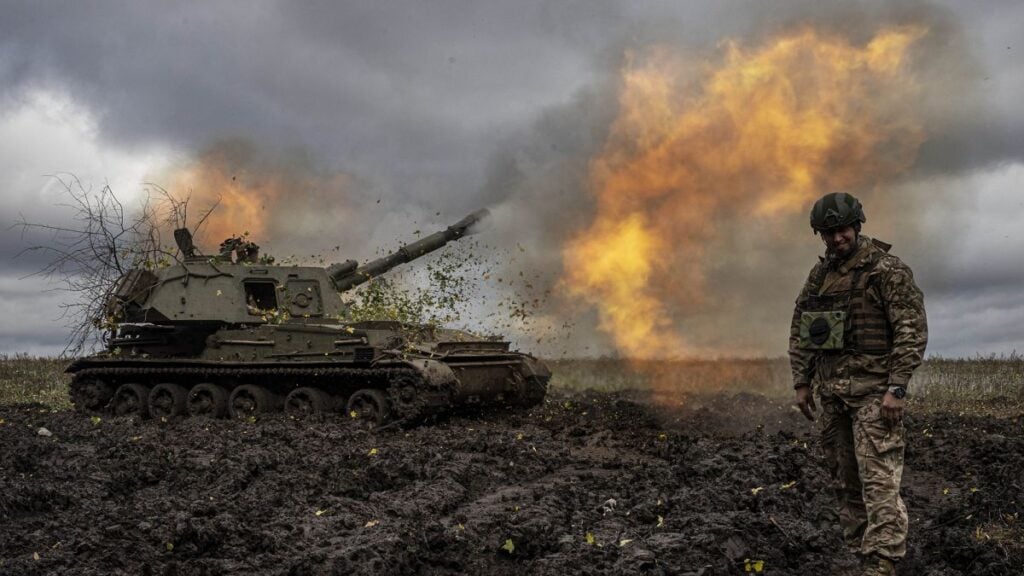
The enemy counterattacked a few days later, attacking with a company on the MTLB, through minefields, barrage fire and drops – more than half of the vehicles were hit, some were destroyed with armour.
After that, several CABs were dropped on the plant and assault teams were brought in again to clear them out in the web of buildings between the two dozen workshops and buildings of the Aggregate Plant.
Why, what will this do in the context of improving their “North” group, which is stuck in ruins? They just don’t want us to move our forces from there, so they are ready to grind people against prepared defences.
In Selydove, they popped up twice in single armoured personnel carriers, hiding behind buildings. Naturally, the landing party was destroyed.
In the Kursk region, the enemy rolled up to 30 units of tracked and wheeled armoured vehicles to cut our positions towards Lyubymivka, storming it from the north and north-west.
And part of the forces was thrown into coverage along the motorway to go to the rear to Novoivanivka, closer to Sudzha.
He received artillery fire and munitions. The defence forces counterattacked on the flanks, and the attackers suffered significant losses – up to 17 APCs and infantry fighting vehicles, and heavy casualties. But there are also captured positions.
Iranian tactics
They attack quite aggressively, bringing infantry into the gaps between the line of supporters, through minefields. They infiltrate the rear, accumulating in plantations, buildings or basements, and sit on the flanks.
If there are no combat-ready armoured vehicles, they use ATVs, groups on motorcycles, and foot porters.
In the Siverskyi sector, they attacked in two VAZ vehicles, running right into a minefield. Naturally, they were destroyed.
Where commanders are smarter, they practice covert amassing for the attack – in small groups, at night, hiding behind thermal imaging capes.
Iran’s tactics in the Iran-Iraq war. Basij militia within the IRGC – up to 2 million people.
Extremely lightly armed – mortars, machine guns, rifles.
Human waves, stretching of forces, constraints along the front and flowing around the flanks.
And it was not a crowd of untrained random people, as many people here believe – each mosque fielded a squad of 22 volunteers, aged 15 to 70, who knew each other and were preparing for combat together.
The Iraqis overcame the “human waves” with engineering defences (Bruno spirals, pegs, ditches, mines), combined fire with an emphasis on mortars, and chemical irritant artillery shells.
And, of course, by maintaining control and engaging in a circular defence at the strongholds that were prepared for this scenario and then attacked from the air during daylight hours. And those who ran to the rear were dispersed by artillery.
Follow us on Telegram: the main news in a nutshell
The situation here is a little different. We have masses of infantry with trays and deliveries to the last kilometre on foot, mechanised assaults, attempts to fly into the flank on motorcycles, and well-trained JVP units.
As long as the Russians are willing to pay with thousands of lives and health for nameless villages and district centres, and as long as they have enough money to pay the lifting and coffin fees, this will continue for the next few months. A short break for off-road and a new series in winter.
What can be done here and now?
Withdraw from the anti-personnel mine convention. We are also for everything good against everything bad, but in the occupied territories, we are filtering, purging and killing activists. We must protect our people from this.
We should actively buy from third countries, produce cluster shells and rockets with submunitions. We can deal with demining later. It will be a problem, but today we have infantry assaults as a problem.
More heavy infantry forward edge: revolver grenade launchers, 60mm mortars, AGS, LPG, a separate mortar battalion behind to support the light infantry, TROs and fire support where needed. Weapons for the poor, as it were. Robotic dogs and drones for evacuating the wounded are interesting and useful, but our resources are not the same as those of the countries where they were created.
Of course, increasing the limits of mines and 105 mm shells (to produce, purchase) is a long arm for the infantry.
Continue the campaign of strikes against oil and gas. The best sanction is the repair of a coarse cleaning plant, 90 days. This is money for the war, payments and salaries, which will become less.
Training of artillery officers, most often in new organisations. Because the main task of the cannon artillery is to support their infantry, to make their lives easier, not to get out of formation and catch cars in the tactical rear. You can fill up a lot of vehicles (and it is necessary), but slowly, slowly roll back to the west.
Well, and increase the density in defence. As long as the prevailing opinion is that society will not accept the mobilisation of women (even for air defence, communications and control), children aged 18-25 should not be drafted even to work at factories, and up to 1.5 million people have been booked, it is probably not possible to achieve this.
But the situation when there are dozens and hundreds of people in the second line in RUBACs [reconnaissance and strike unmanned aerial vehicles], in evacuation, in supply, in communications, and there are 3 soldiers in front of the JV, who are attacked by 9 attack aircraft (who quickly skipped the danger zone in bad weather for drones) on a motorcycle, and they succeed, cannot last forever either.
The enemy is suffering heavy losses, wearing down and continuing to advance, right now. This level of casualties is the highest in many months, but it is not yet enough to turn the situation into a positional phase.
Follow us on Telegram: the main news in a nutshell
Author: Kyrylo Danylchenko, military expert