Trump Threatens a “Punitive Plan” for NATO: What Happened After the Dispute Over Iran
9 April 07:47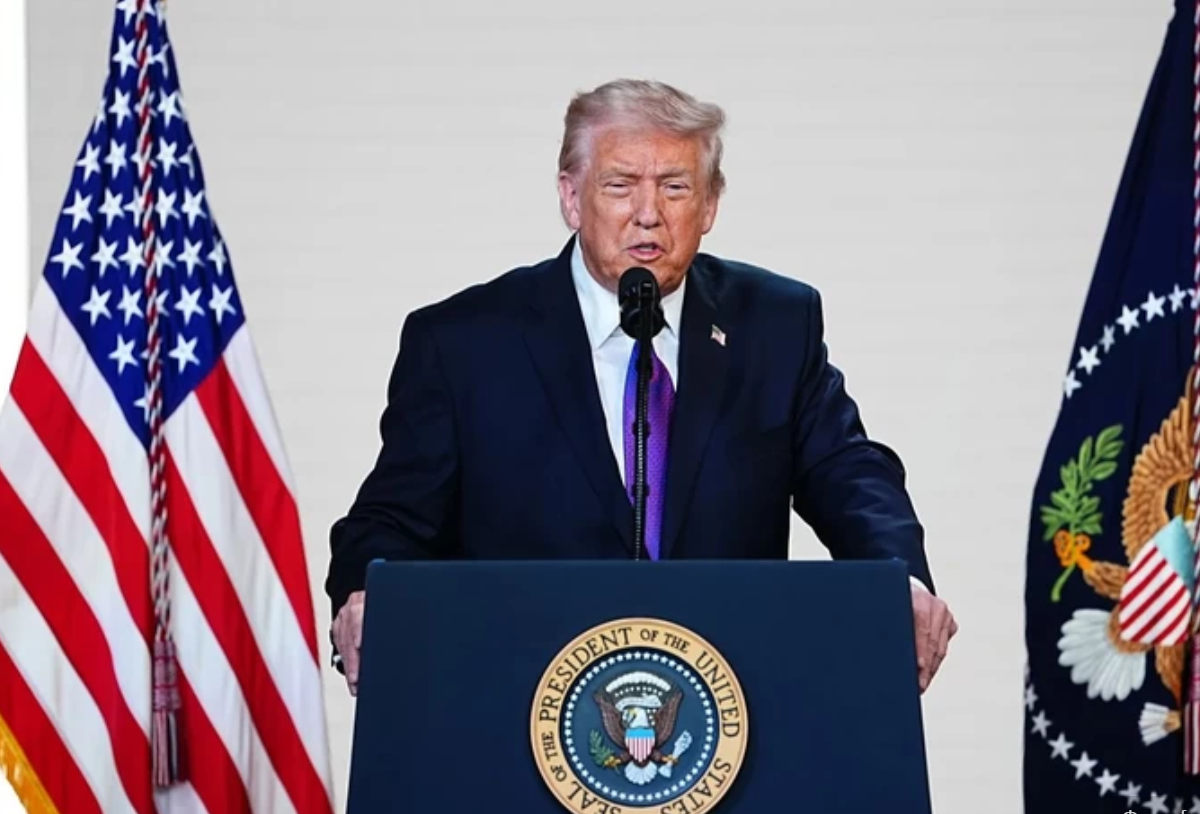
U.S. President Donald Trump sharply criticized NATO following a meeting with the alliance’s Secretary General Mark Rutte, stating that the allies had not supported Washington during the war with Iran. He wrote about this on Truth Social, according to "Komersant Ukrainian"
After talks at the White House, Trump wrote on Truth Social that NATO “wasn’t there when we needed them, and they won’t be there if we need them again,” and also mentioned Greenland again.
Trump’s statement marked a new phase of tension between Washington and its NATO allies following the Middle East crisis. According to American and European media reports, the U.S. president’s irritation stemmed from the refusal of some alliance countries to provide direct support for the U.S. operation against Iran, specifically to open their airspace or assist in unblocking the Strait of Hormuz.
What exactly did Trump say?
After speaking with Rutte, Trump publicly questioned the reliability of the alliance. In his post, he stated that NATO did not support the U.S. at a critical moment and hinted that this could have consequences for future relations with allies. In the same post, he returned to the topic of Greenland, calling it a “big, poorly managed chunk of ice.”
This marked a noticeable departure from Trump’s previous, often harsh but more measured statements about NATO. Now the criticism came against the backdrop of a real military crisis, where the U.S. expected more practical support from its allies.
Why the conflict between the U.S. and NATO arose
According to The Wall Street Journal, the Trump administration is disappointed that some European countries refused to support U.S. actions during the war with Iran. This is not just about political restraint, but also about specific decisions by individual states not to provide airspace or other assistance for military logistics. It is precisely this, as the WSJ writes, that became the basis for discussing the so-called “punitive plan” regarding NATO members whom the White House considers insufficiently loyal.
AP also reports that Trump was particularly outraged by the stance of certain European countries regarding the crisis in the Strait of Hormuz, which Washington viewed as a test of the alliance’s solidarity. Against this backdrop, the U.S. president has once again begun discussing the possibility of revising America’s role in NATO.
What is known about the “punitive plan” for NATO members
According to The Wall Street Journal, Washington is discussing options for punishing those allies who refused to support the U.S. in the conflict with Iran. Among the possible measures mentioned is the redeployment of U.S. troops from Germany and Spain to more loyal countries, particularly those that spend more on defense. Countries that meet or support the new high benchmark for defense spending are also being mentioned in public discourse.
The issue of defense spending has once again come to the forefront. Trump has long demanded that NATO countries spend 5% of their GDP on defense, and he has advocated this position for some time. In 2025, he explicitly stated that all allies, except the U.S., must reach this level of defense funding.
What Mark Rutte said
NATO Secretary General Mark Rutte said after the meeting that the talks with Trump were “frank” and “open.” According to reports by the AP and other media outlets, he acknowledged that Trump was “clearly disappointed” with the stance of some allies, but at the same time emphasized that the U.S. remains fully committed to security issues and that the alliance must strengthen the contributions of its members.
Rutte sought to defuse tensions and stated that the conversation took place “between friends,” and that the dialogue itself demonstrated mutual respect and a working relationship. However, public statements indicate that this meeting did not resolve Trump’s core grievances with the alliance.
Can the U.S. Really Withdraw from NATO?
This is not the first time Trump has questioned the wisdom of U.S. participation in NATO. In early April, American and European media reported that he was seriously considering revising the U.S. role in the alliance or even withdrawing from it. At the same time, the AP notes that a 2023 U.S. law makes it difficult for the president to unilaterally withdraw from NATO without congressional approval.
Despite this, Trump’s rhetoric alone is already creating tension in transatlantic relations. For European allies, this is a signal that the U.S. administration is prepared to link security issues to Washington’s actual military and political support in conflicts outside Europe.
Why the topic of Greenland resurfaced in Trump’s statement
The mention of Greenland in Trump’s post served as an additional irritant for NATO allies, particularly Denmark. Previously, the issue of American control over the island had already caused serious concern within the alliance, and now it has resurfaced in the context of questions about NATO’s reliability. European and American media note that in this way, Trump has combined the issues of Iran, NATO, and North Atlantic security into a single political message.
What does this mean for NATO
The current conflict over Iran has shown that the main test for NATO is not only war in Europe or containing Russia, but also the allies’ willingness to support the U.S. in global crises. For Trump, the stance of certain European countries has become proof that the alliance does not always function as a unified security mechanism. For NATO itself, this marks a new phase in internal discussions about the division of responsibilities, defense spending, and the limits of allied support.
Read us on Telegram: important topics – without censorship