Will Ukraine be left without titanium? Experts warn of privatisation consequences for national security
6 August 2024 14:27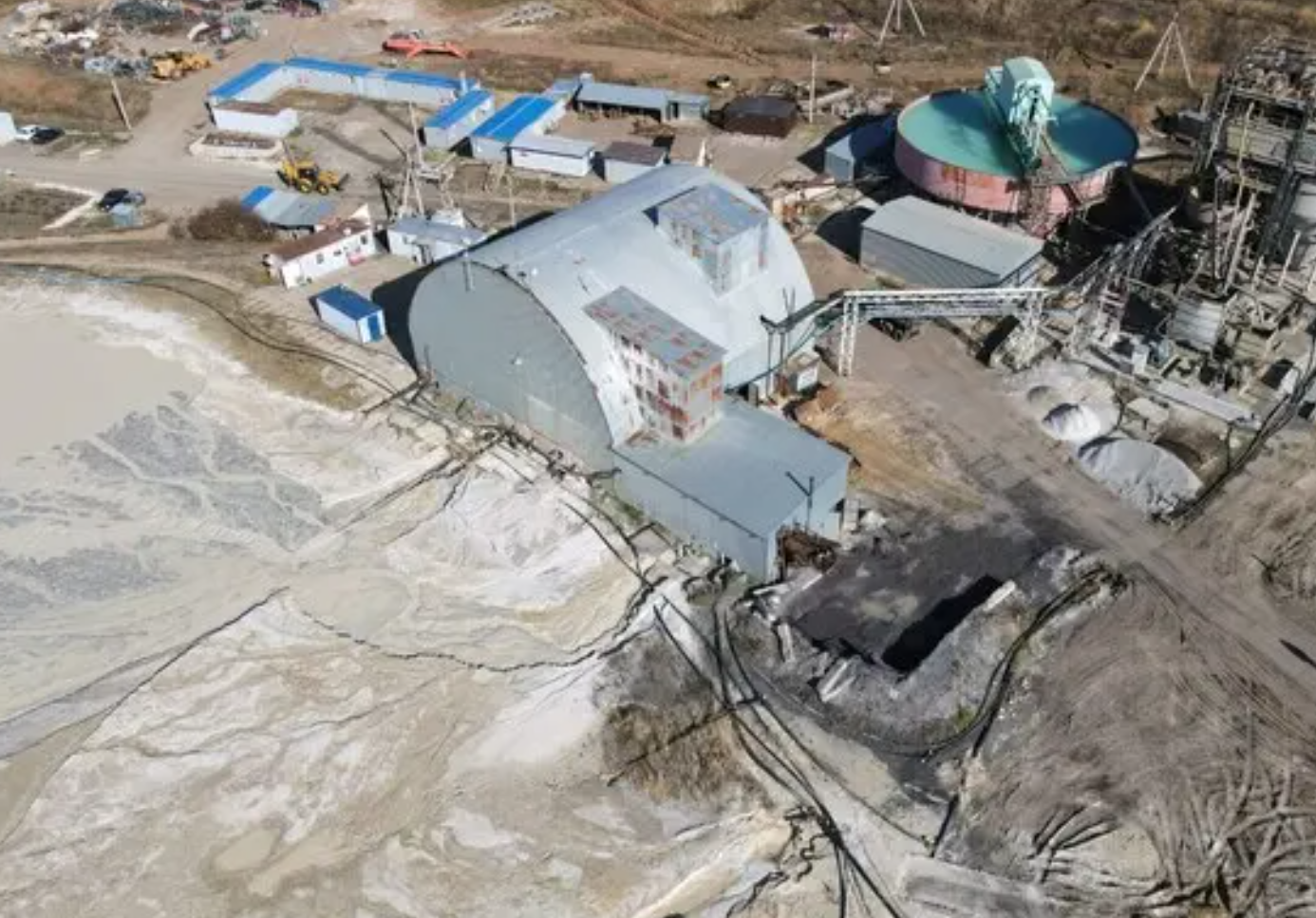
Ukraine faces a real threat of losing its strategically important titanium production, which is a key element for many industrial sectors and technologies. This metal is used in the production of aerospace components, medical implants and other high-tech products. This is stated in an article on the Dzerkalo Tyzhnia website by Anna Borshchevska , co-founder of the Centre for the Study and Counteraction to Hybrid Threats, strategic communications specialist, and Oleksandr Savchenko, rector of the International Institute of Business, "Komersant Ukrainian" reports
Ukraine is at risk of losing its strategically important titanium production due to the government’s plans to sell the United Mining and Chemical Company (UMCC) and the Demurinsky Mining and Processing Plant. Such a decision could lead to the control of these enterprises being transferred to foreign owners, in particular from Russia, which has political motives to undermine Ukraine’s economy.
The loss of the titanium industry could have serious consequences for Ukraine’s economy. Titanium is critical for the aerospace, automotive and medical industries. A key element is the production of sponge titanium, which is used to make titanium metal required for aviation, rocketry and the military-industrial complex.
Ukraine is one of the few producers of sponge titanium in the world, and its Zaporizhzhya Titanium and Magnesium Plant is the only producer of this material in Europe. The loss of this production could have serious consequences not only for Ukraine, but also for Western countries that rely on Ukraine for their supplies.
Corrosive investments that pursue political goals of undermining the economy have already caused significant damage to various industries in Ukraine.
“The analysis shows that from 1995 to 2021, out of more than 1,500 strategic enterprises in Ukraine that were transferred for privatisation by the Cabinet of Ministers, about 42% were liquidated or are in bankruptcy. The most affected by the corrosion of investments are the processing industry – about 50% of losses, the mining industry and quarries – almost 47%, and scientific and technical activities – about 35%,” the article says.
The sale of strategic enterprises during the war, especially those that produce titanium, zirconium and hafnium, could have catastrophic consequences, experts say.
“The facilities put up for privatisation are critically needed by Russia, and for a long time it has been trying to establish control over them. By taking over Ukraine’s dilapidated and exhausted titanium processing industry, the Russians will deprive us of hope for the post-war development of the titanium industry for years to come. The rebuilding of the titanium industry is an extremely complex and multilevel task, on which not only the economy but also the national security of Ukraine and, without exaggeration, to a large extent, the Western countries depend,” the experts warn.
Ukraine is the main supplier of titanium to Russia
It is noted that Ukraine was the main supplier of titanium raw materials to Russia.

in 2013, on the eve of the Russian aggression, Ukraine supplied 98.9% of Russia’s total imports of titanium raw materials.
“It should be noted that at that time, Russia had no chemical production that required titanium concentrate. So all this raw material was used to make titanium metal, and later to manufacture aircraft, missiles, ships and other military products. Supplies did not stop, but, on the contrary, increased in absolute terms after the start of the aggression. An analysis of international open databases, including UN data, shows that from 2013 to 2021, Ukraine remained the main supplier of titanium raw materials to Russia,” the experts emphasise.
Average annual supplies from Ukraine during this period amounted to about 80% of total Russian imports, and in some years this share exceeded 90%. This means that Ukrainian titanium could have been used to manufacture weapons that are currently being used against Ukraine.
Titanium exports are not controlled by the State Export Control Service
Borshchevska and Savchenko also point out that Ukraine’s exports of rutile concentrates, as well as other components for the manufacture of titanium metal and even finished titanium metal products, for unknown but strange reasons, are not controlled by the State Export Control Service of Ukraine.
The absence of a procedure for obtaining a permit from the SECU to export titanium products is inexplicable and illogical. Such a procedure would require Ukrainian exporters to specify the final recipient of their products, verify it and ensure that they deliver to the specified consumer.
It is surprising and illogical that ilmenite concentrates, which are used for whitewash, rubber, paper and plastic, are subject to export controls, while rutile concentrates and semi-finished products for the manufacture of titanium metal are not.
Implications for the economy and industry
This creates the preconditions for providing Russian industry (including the military-industrial complex) with high-quality Ukrainian raw materials and for the development of international criminal intermediary schemes for the sale of these supplies.
The current situation in the titanium industry is as follows:
- State ownership includes the three largest mining companies and strategic processing enterprises.
- The state also owns leading specialised research institutions.
This creates the conditions for the development of vertically integrated industrial production of competitive end products based on domestic extraction of raw materials.
The production of end products brings significant profit. Experts emphasise that privatisation of mining companies could deal a devastating blow to Ukraine’s processing industry. The lack of supply of ore and concentrates from privatised enterprises to domestic enterprises could be a real consequence of privatisation.
To preserve its strategically important titanium production, the Ukrainian government should carefully review its privatisation policy, ensure that exports of strategic materials are well controlled and take measures to prevent corrosive investments. This will help protect national interests and ensure the country’s economic and military security.