Ukrainian icebreaker “Noosphere” reaches Antarctica and visits Polish station “Arttowski”
30 December 2024 17:08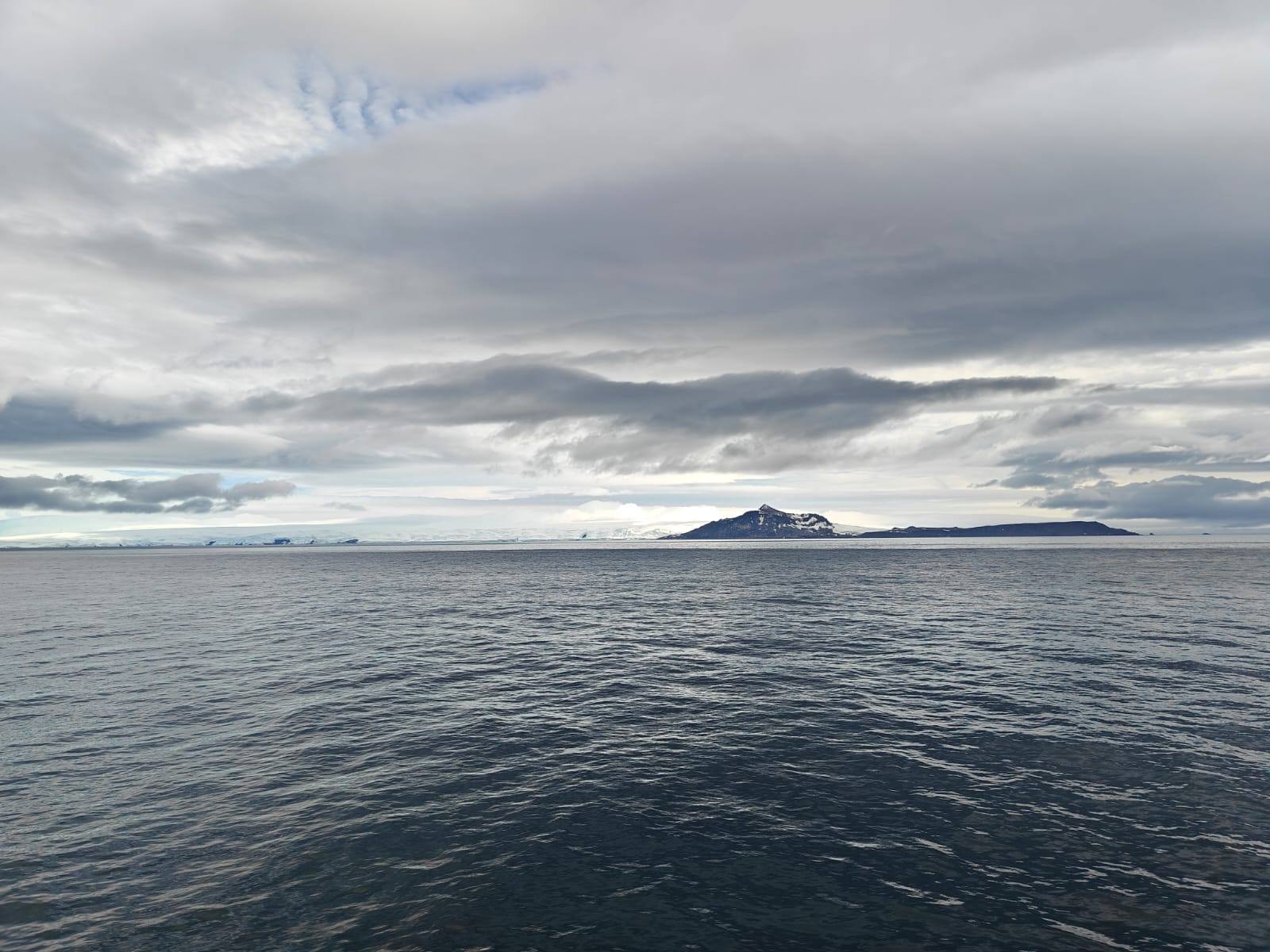
The flagship of the Ukrainian research fleet, Noosphere, has arrived at its first destination – the Polish Antarctic station Arttovsky, located on King George Island. This was reported by the National Antarctic Research Center, "Komersant Ukrainian" reports.
The ship will be unloaded over the next few days. So, most likely, the Noosphere team and the participants of the seasonal Ukrainian expedition will celebrate the New Year near King George.

After that, Noosphere will travel to the Ukrainian Akademik Vernadsky station.
Traditionally, at the beginning of the season, the ship will deliver a group of technical specialists to Vernadsky to carry out urgent repairs during the short Antarctic summer. It is worth recalling that this station was built in the 1950s and reconstructed in 1980. The plans include replacing the sewerage system, lighting fixtures, reconstructing and expanding the meteorological research site. At the end of the fourth season, the icebreaker will also traditionally provide a year-long change of shifts for Ukrainian Antarctic expeditions.
As you know, on December 12, the research vessel Noosphere left Cape Town (South Africa) and began its fourth Antarctic season. Like all the previous ones, it is conducted in cooperation with the Polish Antarctic Program.
Also, as emphasized by the National Antarctic Science Center, this season is the most international of all the previous ones. It includes collaborations with the United States and Spain, joint research with the Czech Republic, and the implementation of two EU Horizon Europe projects.

What Antarctic researchers will work on together
For the fourth time in a row, the Ukrainian icebreaker provides rotation of Polish polar explorers and cargo delivery to the Polish Antarctic station “Arttovsky”.
The Ukrainian vessel Noosphere was selected by the US National Science Foundation to conduct marine research in the waters of the Southern Ocean around the US Palmer Station. So, we plan to conduct relevant research. By the way, the American station is the closest neighbor of the Ukrainian Akademik Vernadsky station.
As part of its cooperation with Spain, Noosphere will provide research and cargo delivery for the Gabriel de Castilla station located on the island of Despensas. On the same voyage, Ukrainian scientists will carry out a number of joint projects with the Czech Antarctic Expedition.
What other projects will Noosphere join?
Research is planned for two projects within the Horizon Europe program.
OCEAN:ICE – oceanographic studies of changing currents in the Bransfield Strait;
EXPLORA – selection of samples of marine bacteria for their further cultivation and search for useful properties.
All international research and projects are funded by foreign partners.
What’s happening at the Ukrainian Antarctic station
The New Year and Christmas holidays have adjusted the work schedule so that there is enough time not only for work and communication with local neighbors – penguins.

At the Vernadsky station, of course, a Christmas tree was set up and decorated. The Christmas tree at Vernadsky, of course, is artificial, because live plants cannot be brought to the icy continent. The top of the tree is decorated with a golden Trident – this decoration, along with a set of hand-painted balloons based on paintings by Maria Prymachenko, was presented to the station last year by the Ukrainian brand Grono. There are also soft toys in the shape of angels and penguins on the Antarctic Christmas tree. They were handmade and handed over to the polar explorers by Ukrainian schoolchildren from Odesa a few years ago.

Christmas at Akademik Vernadsky station began a few days before the holiday itself with… children’s carols. Six first-graders with their teacher Olga Istotska from the now unfortunately destroyed Lipetsk lyceum named after P.V. Shchepkin, located in Kharkiv region on the border with Russia, visited the polar explorers online.

Ukrainian polar explorers also became the heroes of a safety lesson for children called “Winter Adventures Without Harm.” It was prepared by UNICEF and EdEra together with partners. From the far Antarctic, the researchers told schoolchildren how to avoid danger on ice and during ice. And it’s not just about the “penguin gait”. For example, you should not kick the ice on water bodies to check its thickness, as you can fall through. You should also pay attention to the color of the ice: the strongest ice is blue, while white and gray ice is much weaker and may not withstand the load.
By the way, this year’s winter in the Antarctic did not support the trend of its predecessors in terms of warming and positive temperature anomalies and became the coldest in the last 6 years.

“Although the lowest temperature dropped to only -14.7°C, the periods of cold snap were definitely long. The previous autumn months were also colder than the current norm,” said Denys Pishniak, Head of the Department of Atmospheric Physics and Geocosmos at the National Academy of Sciences.
There was relatively little snow accumulated near the station: 180 cm compared to 300 cm in 2022. This is quite natural for cool winters, when dry air masses from the continent often dominate.

But now summer is already beginning in the Antarctic.