Palm Sunday in Jerusalem ended in controversy: Catholic leaders were barred from entering the holy site
30 March 10:42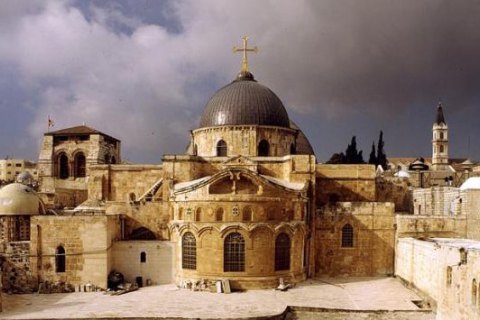
A scandal erupted in Jerusalem after Israeli police barred Catholic leaders from entering the Church of the Holy Sepulchre to hold a private Mass on Palm Sunday. The incident, the first of its kind in centuries, drew criticism from the U.S., France, and Italy. This was reported by "Komersant Ukrainian" citing the AP.
The Israeli side cited security concerns due to the ongoing conflict with Iran as the reason for the restrictions. Jerusalem’s major holy sites, including the Church of the Holy Sepulchre, remain closed or operate under strict restrictions due to regular rocket attacks on the city.
What exactly happened on Palm Sunday
According to the AP, Israeli police barred two high-ranking church officials from entering the church, including the Latin Patriarch of Jerusalem, Cardinal Pierbattista Pizzaballa. The Latin Patriarchate called this decision “a clearly unjustified and disproportionate measure.”
Palm Sunday is one of the most important days for Christians, as it marks the beginning of Holy Week leading up to Easter. That is why the ban on holding even a private service in one of the world’s most significant Christian churches caused such an outcry.
Why Israel restricted access to the church
Israeli police explained their actions on security grounds. Among the reasons cited were the narrow streets of the Old City, the lack of adequate access for emergency services, and the shortage of shelters near the Temple. Later, the police stated that they had agreed to a “limited format of prayer,” which is intended to ensure freedom of worship while taking risks into account.
The article also notes that debris from an intercepted Iranian missile had previously fallen onto a roof just a few steps away from the Temple. This became one of the Israeli side’s arguments in favor of stricter restrictions.
Read us on Telegram: important topics – without censorship
Why the church did not agree with the police’s explanation
The Latin Patriarchate emphasized that since the start of the war with Iran, private masses have already been held at the Church of the Holy Sepulchre without public access. That is why church representatives do not understand how Sunday’s service differed from previous ones.
Patriarchate spokesman Farid Jubran stated that for Christians this is a “very, very holy day,” and, in his opinion, there was no justification for such a decision. The Patriarchate also believes that the ban infringed not only on freedom of religion but also on the established status quo regarding Jerusalem’s holy sites.
How the services took place without the church
The traditional Palm Sunday procession, which usually draws tens of thousands of pilgrims and runs from the Mount of Olives to the Old City, was canceled this year due to security risks. Instead, Pizzaballa celebrated Mass at the Monastery of the Holy Savior, located near a site that Israeli military officials consider suitable for use as a shelter. Later, he also led a prayer for peace on the Mount of Olives.
At the end of Mass in St. Peter’s Square, Pope Leo XIV also mentioned Christians in the Middle East, who, in his words, are enduring a “horrific” conflict and in many cases are unable to fully celebrate these holy days.
What was the international reaction?
The incident sparked a wave of criticism from Israel’s Western allies. U.S. Ambassador Mike Hakabi called the situation a “regrettable overreach” and emphasized that the number of participants in the private prayer was significantly below the permitted limit of 50 people.
French President Emmanuel Macron condemned the incident and stated that the free practice of worship in Jerusalem must be guaranteed for all religions. In Italy, the police decision was also sharply criticized, and the government officially requested clarification from the Israeli side. Italian Prime Minister Giorgia Meloni called it an insult not only to believers but also to every community that recognizes religious freedom.
What is being said in Israel now
Israeli Prime Minister Benjamin Netanyahu stated that there was no “malicious intent,” and that access to the church was restricted solely for security reasons. At the same time, he promised that in the coming days, Israeli security forces would attempt to partially reopen the Church of the Holy Sepulchre for church leaders in the run-up to Easter.
Cardinal Pizzaballa himself stated in a comment to an Italian Catholic broadcaster that there are differences with the Israeli authorities, but the dispute remains civil. According to him, the Church wants to use this situation to better coordinate the order of worship services in the coming days—with respect for both security and the right to pray.
Read us on Telegram: important topics – without censorship