From 50 to 30 million: how Ukraine lost a third of its population
16 February 17:42
Ukraine is experiencing one of the deepest demographic crises in its history. While in the early 1990s, after independence was declared, the country’s population exceeded 50 million, today it has shrunk to approximately 36 million due to a combination of catastrophically low birth rates, extremely high mortality rates, and large-scale migration. This dynamic became particularly dramatic after Russia’s full-scale invasion in 2022, which accelerated all negative demographic trends.
This was reported, in particular, by Reuters.
What happened to the birth rate?
One of the key reasons for the demographic decline is the extremely low birth rate. Years of economic uncertainty, social instability, and war have led Ukrainian families to postpone having children or to give up on them altogether. According to OpenDataBot, citing statistics from the Ministry of Justice, in 2025 the birth rate was three times lower than the death rate, with fewer than 170,000 newborns and nearly half a million deaths.
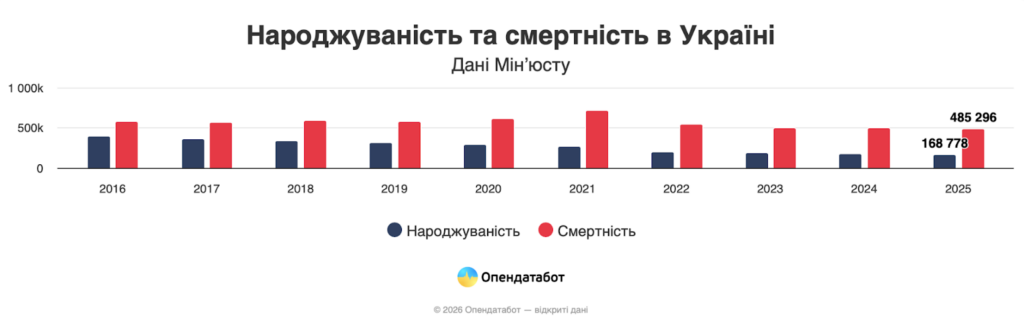
Even before the full-scale war, the total fertility rate was well below the level needed for simple population replacement (more than 2.1 children per woman). After 2022, it fell to about 1.0, indicating profound demographic weakness and no prospects for natural population replacement.
Ukraine also faces extremely high mortality rates, which significantly exceed birth rates. According to official sources, there are approximately three deaths for every newborn, creating a so-called demographic gap.
Before the full-scale war, life expectancy in Ukraine was already among the lowest in Europe, and with the onset of hostilities, the situation has only worsened due to civilian casualties, military losses, deteriorating access to medical services, and stressful living conditions.
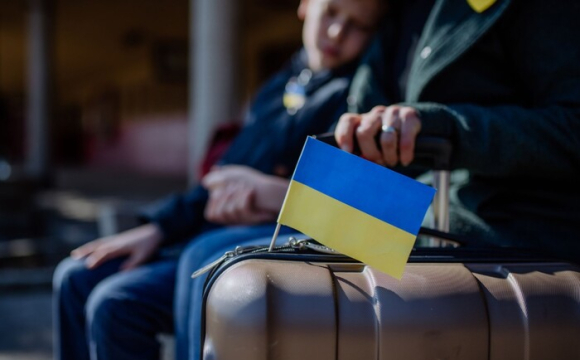
The war has been a powerful catalyst for mass migration. According to European Commission estimates, millions of Ukrainians were forced to leave the country or move within the country due to hostilities and the occupation of territories. The European community estimated that by early 2023, about 7 million people had left Ukraine, and another 5 million had been displaced within the country.
This mass exodus of young people — especially working-age women and men — not only reduces the population but also disrupts the age structure, making it difficult to restore demographic potential. One of the main problems is that many displaced persons and refugees do not return home after the war because of more stable economic opportunities abroad.
How many people remain in Ukraine
Ukraine is entering the post-war future with a demographic deficit that is no longer measured in percentages but in millions. According to various estimates,37–38 million people lived in the controlled territory before the full-scale invasion. Today, that number is probablyaround 29–30 million. Economist Oleg Pendzin points out that it’s not just about how many of us are left, but who exactly is left.
“When we assess the components of Ukraine’s recovery, we cannot solve it without the issue of labor. This is the first point,” the expert explains.
The last full census in Ukraine was conducted in 2001 (preparation and counting began in 2000). At that time, 42 million people were recorded. Subsequently, the country lived without a systematic census, operating on estimated data.
“In 2010, we were constantly told about 40 million. In 2020, there was an attempt to estimate the population based on active SIM cards. Using various methods, the figure was 37-38 million before the start of active hostilities,” says Pendzin.
After 2022, the situation changed dramatically. According to the economist, about 8–8.2 million people left Ukraine (UN estimates — about 7.2 million).
“Using indirect methods, the current population of Ukraine can be estimated at approximately 29-30 million. This includes children, pensioners, and people who are unable to work,” he notes.
The main problem is not the total number, but the working-age population
By 2022, the working-age population was estimated at approximately 18 million people. Currently, it is approximately 13 million. At the same time, there are over 10 million pensioners.
In fact, according to the expert, today in Ukraine there is less than one officially employed person per pensioner.
“Approximately 9–9.5 million people legally pay social security contributions. That’s 13–13.5 million of the working-age population. The rest are either in the shadow economy or are people without official employment,” explains Pendzin.
It’s estimated that about 40% of the economy is in the shadows.
According to the economist, Ukraine will need about five million workers to return the economy to at least its pre-war level. Sociology also shows a decrease in willingness to return. While in 2022, up to 75% of refugees stated their intention to return, as of 2025, about half do not plan to do so, and another 25% are undecided.
“The longer the war lasts, the smaller the proportion of people willing to return. People integrate, learn the language, and find work,” the expert notes.
Wave of labor migrants to Ukraine
A separate risk is the possible wave of migration after the borders are opened in the event of demobilization.
“The question is where families will reunite—will men return to Europe or will women with children return to Ukraine? This is another potential migration factor,” says Pendzin.
According to the economist, the state has only two options: to encourage the return of its own citizens or to open the country to mass labor migration.
“Ukraine needs 450,000–500,000 labor migrants every year,” he emphasizes.
This primarily concerns countries in Southeast Asia and the Middle East — regions with lower income levels than Ukraine. At the same time, the expert warns that mass labor migration carries risks of integration, social tension, and changes in the cultural balance.
“The problem of birth rates is not only a Ukrainian problem, but also a European one. But if the number of children in migrant families is significantly higher than in local families, the question of preserving identity arises,” he says.
Why people don’t return: it’s not just about salaries
The key factor is quality of life. Pendzin gives a telling example of household expenditure structure: in Ukraine, families spend up to 50% of their income on food and another 28% on utilities. Less than 1% is spent on travel and cultural events.
In EU countries, 12–18% is spent on food, while a significant portion of the budget is allocated to travel and leisure.
“The question of return is not just about salaries. It’s about security, the judicial system, access to services, tax transparency, and the work of law enforcement agencies,” the expert emphasizes.
He separately mentions the factor of security — both military and internal: criminalization, illegal weapons, trust in the courts.
Forecasts for 2050: scenarios for the future
Analysts predict a sharp decline in Ukraine’s population in the coming decades if current demographic trends continue. According to conservative estimates, without major political and social changes, the population could fall to 25 million by 2051.
This forecast is based on low birth rates, high mortality rates, and continued population outflow. Under more optimistic scenarios, provided that the national demographic development strategy is implemented, the population could remain at 30–34 million by the middle of the century.
The demographic situation in Ukraine is not just a matter of statistics. It is an indicator of the nation’s vitality, its ability to reproduce itself, develop, and preserve its identity. The war has only accelerated these discouraging trends, but their roots lie deep in socio-economic problems. Solutions will require not only resources but also a huge social and political consensus so that Ukrainians can not only survive but also thrive in the coming decades.
Moreover, according to experts, Ukraine has found itself in a situation where demographics have become a factor in national security. Without a sufficient working-age population, neither economic recovery, nor a stable pension system, nor the modernization of the state are possible.
The question is stark: either the country creates conditions that will make Ukrainians want to return, or it will be forced to seek labor abroad — with all the consequences of such a decision. And the time for making strategic decisions is rapidly running out.