War and the environment: how much does Russia’s aggression cost the planet Earth?
27 February 2025 17:40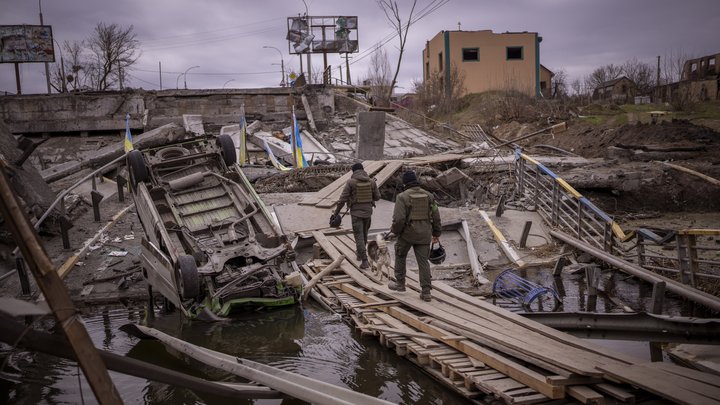
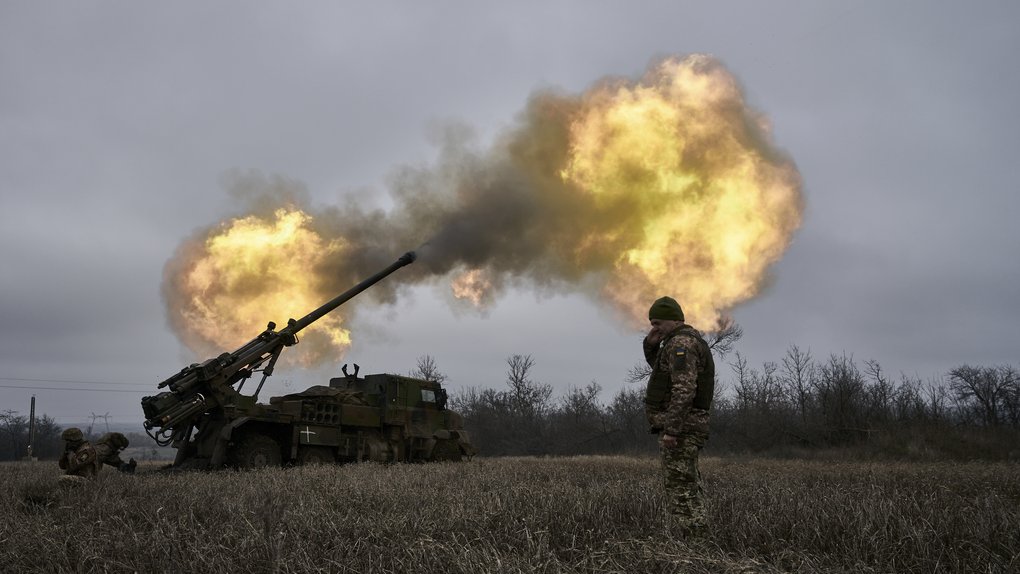
Russia’s war against Ukraine is not only about human losses and destruction of infrastructure, but also about a large-scale environmental disaster whose consequences will be felt all over the world. From air and soil pollution to the destruction of ecosystems and enormous greenhouse gas emissions, Russia’s aggression is causing irreparable damage to the environment.
At the same time, the environmental problem is not only about the war, but also about everyone’s responsibility. Ukrainians must not only resist the enemy, but also prevent the country from turning into a landfill. Environmental safety starts with our attitude to nature every day. Along with the cleanup of destruction waste, enormous funds are allocated for waste disposal, which is also a problem in Ukraine.
What can already change the environmental situation today and how garbage can become a resource – read more in the article "Komersant Ukrainian".
According to the State Ecological Inspectorate of Ukraine, more than 7,000 cases of environmental damage caused by Russia have already been recorded. The amount of financial losses exceeds UAH 3.1 trillion. The war waged by Russia against Ukraine destroys not only cities, infrastructure, and human lives, but also the entire planet. According to scientists, in 2024 alone, greenhouse gas emissions increased by 30% and reached 230 million tons of CO₂ due to the war. These are colossal volumes that bring the world closer to a climate catastrophe.
At the 62nd session of the Intergovernmental Panel on Climate Change in China, Ukrainian climate scientist Svitlana Krakovska emphasized that Russian aggression is not only harmful to Ukraine, but also accelerates global warming and climate change worldwide. Large-scale fires, explosions, destruction of industrial facilities and leakage of harmful substances cause air, soil and water pollution.
Experts estimate that Russia has to compensate for more than $42 billion in environmental damage. After all, war does not just kill people – it poisons the future.
The international community must realize that the fight for climate and the fight for peace are one battle. And Ukraine’s victory will be a step towards saving the planet.
How garbage turns into a resource: a unique initiative of a Ukrainian farmer
At the same time, Ukraine is preparing for large-scale changes in waste management. The Ministry of Environmental Protection and Natural Resources has announced 200 promising projects aimed at waste treatment in different regions of the country. The total cost of the initiatives is 4 billion euros.
“We analyzed the situation in each region in detail, took into account the volume of waste generation and composition, and adopted the experience of European countries. Based on this, we have formed a plan for the location of new waste recycling plants,” said Minister Ruslan Strilets.
Currently, the priority projects include the construction of two modern waste processing plants in Kyiv region. They will process 470,000 tons of waste annually and provide services to at least 1.5 million residents. However, this is only in the plans for the future.
Mark Melnychenko, a free-lance farmer, volunteer, and founder of the My Ukrainian Dream project, admits that when he was young, he was not too concerned about environmental issues. But trips to Europe changed his view of garbage and the environment.
“After seeing the clean streets and rivers of Germany and France, I was confronted with the contrasting reality of Ukraine – piles of plastic bottles and construction waste littering water bodies and forests. In the villages, all household and construction waste is thrown directly into the rivers. It hurt my eyes,” says Mark.


At first, Mark joined cleanup initiatives organized by libraries and local activists. He started learning how to sort and working with the organization Sorting Uzhhorod, which recycles waste. Later, he organized his own campaigns, involving volunteers, local authorities, and even the State Emergency Service.
“While cleaning up, I realized that picking up garbage once is not enough. It is necessary to change people’s attitudes towards it, to teach them responsibility,” emphasizes Mark Melnychenko.
One of the most illustrative projects was cleaning up Lake Nesamovyte near Hoverla. This is a popular tourist destination, but local national park employees traditionally just burned garbage there, creating a toxic fire.
“Together with a team of 10 volunteers, we collected the remains of burnt plastic, glass and cans, and each participant brought two bags of waste down from the mountains, which is a lot. I couldn’t just stand by and watch this beautiful place turn into a landfill,” says Mark Melnychenko.
From garbage to building material
One of the most interesting initiatives was the construction of a mini-sorting station made of plastic bottles filled with non-recyclable waste. This idea was prompted by an acquaintance with Yaroslav, a well-known baker from Bucha who, after the city’s de-occupation, began baking bread for the military and local residents. Mark started collecting plastic bottles filled with small garbage: wrappers, medicine blisters, and other waste. And Yaroslav encouraged people to bring the same bottles in exchange for bread and goodies.
In two years, Mark collected 50 bottles on his own, and when people found out about it, they started sending their waste en masse.
“In six months, we managed to collect 700 bottles, which was enough to build a 3 m² experimental wall. At first, everyone doubted that anything would come of it, but when we built the first wall, it became clear that it works!” says Mark Melnychenko proudly.
The Ukrainian experience has become unique. Previously, small bottles were used to build walls in Asia and Africa, but now the technology has been improved and, moreover, tested in the Ukrainian climate. According to Mark, such structures can withstand frosts down to -20°C.

“Clean Space” – gifts for cleaning
The next step is to scale up people’s motivation to clean up the environment. This is the launch of the Clean Space initiative, which involves participants collecting garbage, documenting it, and receiving gifts: raincoats, peanut butter, kombucha, books, etc.
“I wanted to find a way to make cleaning more interesting for people. The idea of gifts worked. Initially, 18 thousand hryvnias were raised for this project, and during the year of activity, about 25-30 people collected more than 5 thousand liters of waste. About a third of it was sent for recycling, and the rest was disposed of properly,” Mark Melnychenko
We plan to involve business in financing the project. Companies that make contributions will receive advertising on the website, and the funds will go to support the initiative. Clean Space program participants also have an alternative: if they don’t want to receive gifts, they can donate their points to support the Armed Forces or the development of the initiative. For example, recently, during a joint cleanup with the Ukrainian Leadership Academy, they collected 3,000 liters of garbage and donated 5,000 hryvnias to the military.
There are still many challenges ahead, but Mark Melnychenko’s initiative has already produced real results. Thanks to his efforts, hundreds of kilograms of waste have been prevented from ending up in the environment and have become a resource for new environmental solutions.
“We are just at the beginning of the journey, but I believe that we can change people’s attitudes towards garbage if we show them that it can be useful. I hope that more people will join our campaigns in the spring, and that businesses will support us. Together we can make Ukraine cleaner,” Mark concludes.


Thus, Russia’s war against Ukraine has not only destroyed cities and killed people, but also caused an environmental disaster that could affect the entire planet.
Ukraine is already taking steps to restore the environment by investing billions in waste disposal and recycling. However, the example of Mark Melnychenko, a free-lance farmer, proves that everyone can contribute to nature conservation – from organizing cleanups to creating eco-friendly solutions from waste.
His experience is inspiring and shows that garbage can become a resource, and environmental responsibility can become a way of life. And today, Ukraine has a unique chance not only to overcome the consequences of the war, but also to lay the foundation for an environmentally conscious future.