Volodymyr Tsybulko: “Turkey is weakening Russia in Syria to stop it in the Caucasus”
2 December 2024 16:04 OPINION
The escalation of hostilities in Syria came as a real surprise to many uninitiated people. The world saw “Aleppo in three days” performed by anti-regime militants associated with Turkey. There is increasing talk that even the capital Damascus is in danger of falling, after which, it seems, nothing will remain of Bashar al-Assad ‘s regime.
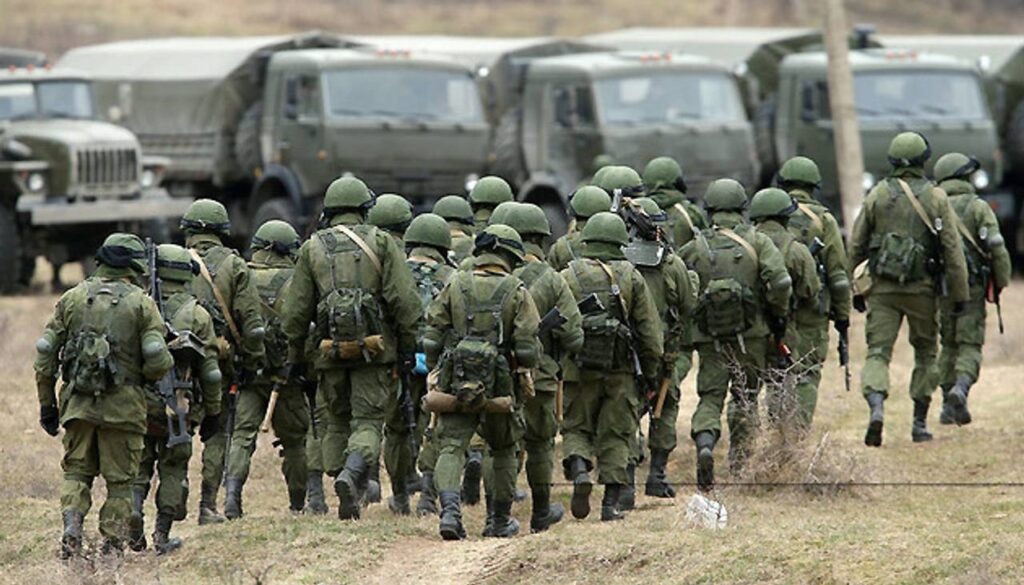
At the same time, it is known that Russia is the Assad regime’s main ally in Syria. It is thanks to its military assistance that the regime has survived in previous years. However, the main striking force of the Russians used to be a contingent of mercenaries from Wagner, which no longer exists in the form in which it used to strike fear before. Currently, Russia has transferred all its forces to the Ukrainian front and its military presence in Syria is minimal. This is exactly what the militants, generously “warmed up” by Turkey, have taken advantage of.
What can these events mean for the war in Ukraine and why is Erdogan, who has previously demonstrated friendly relations with Putin, taking such anti-Russian steps? After all, Russia now has to choose between two alternatives: withdrawing some troops from the Ukrainian front and redeploying them to Syria or betraying its ally Assad. Read more "Komersant Ukrainian" asked political scientist Volodymyr Tsybulko about all this.
Turkey vs. Russia: who depends on whom?
The political scientist is convinced that the current Turkish President Recep Tayyip Erdogan has a strong position in relations with the Kremlin.
“Erdogan does not depend on the Kremlin in any way, it is the Kremlin that depends on Erdogan. That’s why he behaves like a person who can make counter demands,”
– the expert said.
According to Mr. Tsybulko, the key factor that gives Turkey leverage over Russia is its control over the Bosporus and the Dardanelles. And this control directly affects Russia’s position in the region in a far from positive way.
“Erdogan has blocked the movement of the Russian fleet, and because of this, supplies to Syria have collapsed. There is no long route from the Baltic to Syria,”
– the political analyst adds.
Follow us on Telegram: the main news in brief
Another important lever, according to Tsybulko, is the Turkish Stream, a gas pipeline that serves as almost the only alternative to the Ukrainian gas transportation system for Russian energy exports to Europe. In addition, Turkey used to supply dual-use goods to Russia, but has now stopped this practice as well.
So everything indicates that Erdogan has decided to play on this dependence of Russia to his advantage. And the weakened Russian military contingent in Syria may simply be “overlooked” by a power like Turkey, says Tsybulko.
How the situation in Syria affects the war in Ukraine
The events in Syria and Ukraine, according to the expert, are closely interconnected, but he suggests that the key to the current Syrian events is not to be found here. According to Mr. Tsybulko, it is the Turkish response to Russian activity in the Caucasus.
“It seems to me that the events in Syria are a reaction to Russia’s attempt to seize the Black Sea coast, Abkhazia and Georgia,”
– explains the political scientist.
Tsybulko recalls that Russia tried to move its fleet from Sevastopol to Abkhazia. However, this attempt failed when the local authorities did not allow the basing. There were other maneuvers, such as attempts to buy the Abkhazian coast under the guise of creating resorts that could actually become a base for the Russian fleet.
The active work of the Russians with the pro-Russian authorities in Georgia is also beyond doubt and is visible to the naked eye.
“So, in fact, it seems to me that the strike, including on the Russian contingent in Syria, was a precautionary measure to keep Russia out of Georgia,”
– summarizes Volodymyr Tsybulko.
Thus, Erdogan’s actions in Syria not only weaken Russian influence in the region, but also demonstrate that Erdogan’s geopolitical game does not always meet Russia’s interests, but instead creates new challenges for the Kremlin.
Follow us on Telegram: the main news in a nutshell