Which domestic government bonds were chosen by Ukrainians in 2025: top five and reasons for demand
28 December 2025 13:08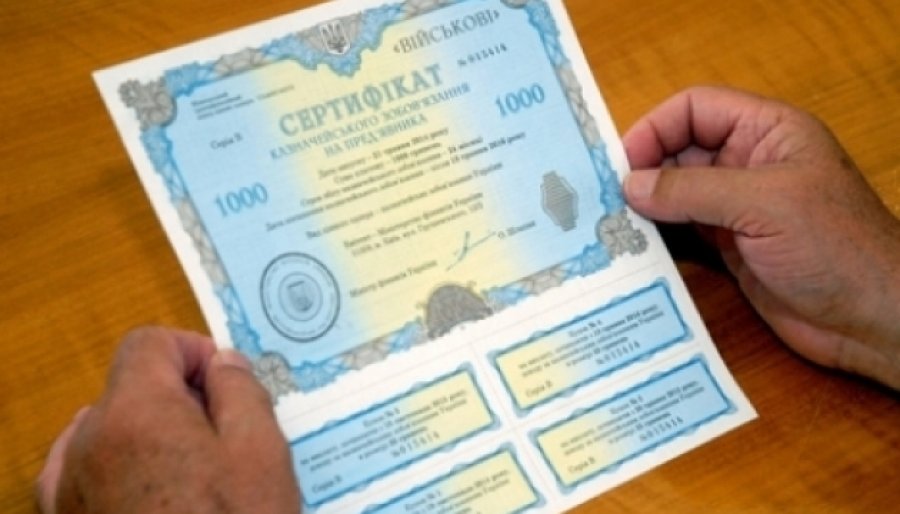
Over the year, household deposits in hryvnia domestic government bonds increased by UAH 25 billion. This is more than half of the increase in hryvnia deposits, according to the NBU. As of December 26, private investors held UAH 110.66 billion worth of these securities. Andriy Velychko, head of ICU’s brokerage division, told the Ministry of Finance what kind of issues Ukrainians preferred, "Komersant Ukrainian" reports.
The leader of the year is military securities maturing on 10/15/2025
The expected leader of the year, as these securities had an attractive maturity – intermediate between 6 months and a year. The issue could be purchased both through the apps of licensed brokers and through the Diia app. They were invested in by those who were not ready to invest for a long time, as well as clients who usually make investment decisions in the fall. It is during this period that the situation regarding the exchange rate and the prospects for the economy as a whole for the next year becomes clearer.
Yields on these securities were in the range of 15-15.2%.
Military government bonds maturing on 18.06.2025 are in second place
A large number of investors are guided by the 6-month horizon, as they do not dare to invest for longer periods in times of war.
The yield on these securities was about 14%, depending on the period of purchase.
The third place was taken by military government bonds maturing on June 24, 2026
These securities were actively sold throughout the year, but became really popular when there were 6-7 months left to maturity, which is the popular term mentioned above. There is an interesting pattern: issues maturing in the summer are traditionally in high demand. For the holidays, we also gave our clients the opportunity to purchase these bonds at a higher rate of 15.75%.
Military bonds maturing on January 28, 2026 are in fourth place
These are currently the shortest securities available on the market. They appear situationally, as they are sold out like Kyiv pastries. Demand is driven not only by clients who want to snatch up short securities, but also by clients who buy them with credit funds and are driven by the terms of their banks’ credit limits. Usually, these range from 30 to 100 days. Therefore, securities with these terms are always in demand.
The yield is 11.80%
Fifth place – government bonds maturing on 23.06.2027
Finally, there are no non-military bonds in the top 5. These are classic securities that became a bestseller after they were introduced into the FIX product. Their uniqueness lies in the fact that the effective yield is 16%, and at the same yield, an investor can sell them at any time. In fact, these are highly liquid funds – an analog of a current account or demand deposit, but with a simple yield of about 14% and no taxation.
What about long-dated securities?
Statistics show that investors are increasingly investing in such securities. For example, bonds maturing by 2028 have a yield of 18.6%. Given the forecasts for a reduction in the discount rate, investing in long securities now with an even higher rate makes sense.
Macroeconomic background
Key policy rate
The NBU’s monetary policy decisions were mostly predictable for the market. Despite the slowdown in inflation at the end of the year, the Monetary Policy Committee still hesitated to cut the key policy rate, pending the EU Council’s decision on the 2026-2027 financial assistance program, and postponed possible cuts to the next year.
It is likely that the cycle of rate cuts will begin with the first meeting of the Committee in 2026.
The key policy rate at the beginning of the year was 14.5%
Key policy rate at the end of the year – 15.5% (increased from 07.03.2025)
Inflation
Consumer inflation declined significantly to 9.3% at the end of the year.
If the downward trend had started a few months earlier, I am sure we would have seen the key policy rate at the end of the year at around 15%.
The NBU forecasts inflation to decline to 6.6% in 2026 and to 5% in 2027.
Top 3 financial sources of the Ukrainian budget at the end of 2025
- ERA (Extraordinary Revenue Acceleration Loans for Ukraine) – $33.820 billion.
- Domestic government bonds – $12.404 billion.
- EU – $9.428 billion.
- IMF – $912 million.
- World Bank – $384 million.
- Japan – $191 million.
- BRDE – $117 million.
Exchange rate
Since the beginning of October, the hryvnia has been weakening against the dollar, but if we compare the figures at the beginning and end of the year on a fundamental basis, most people will be very surprised. Our currency has devalued by 0.12 kopecks over the year. In fact, this is the margin of error. That is why a large number of investors, both individuals and legal entities, are now switching from foreign currency positions to hryvnia government bonds. This is not surprising, as the difference in yields on long securities compared to foreign currency deposits is more than 400%.
Namely, 3.5-4% versus 17-18.6%.
NBU exchange rate as of 01.01.2025 – 42.0295
NBU exchange rate as of 12/25/2025 – 42.1541