The EU may impose counter-tariffs against the US worth $93 billion: experts explain whether Europe is ready for a confrontation with Washington
19 January 20:08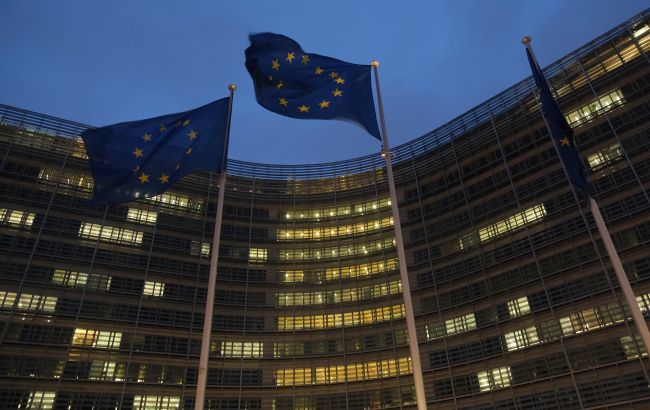
The European Union is considering imposing trade restrictions against the United States in response to President Donald Trump’s statements regarding possible tariffs on Europe amid the situation with Greenland.
This was reported by the Financial Times.
The EU is preparing appropriate measures
According to the publication, Brussels is discussing the possibility of imposing tariffs on American goods worth a total of €93 billion or introducing restrictions on US companies in the European market. Such steps are being considered in response to Trump’s statements about the possible annexation of Greenland.
The goal of these measures is to prevent a serious split within the Western defense alliance, which, according to European officials, could pose a direct threat to European security.
The list of possible tariffs, prepared last year, is currently frozen until February 6 in order to avoid a large-scale trade confrontation between the EU and the US.
Paris and Berlin are looking for leverage
France and Germany are coordinating a common position and considering the use of the so-called anti-coercion instrument (ACI), which allows them to restrict investments and exports by American companies in response to political or economic pressure.
One European official stressed that Trump’s statements could well be grounds for applying the ACI, as they constitute a classic form of coercion.
Transatlantic security under threat
Earlier, Donald Trump demanded that Denmark agree to transfer control of Greenland and threatened to impose 10% tariffs on imports from the UK, Norway, and six EU countries that have sent troops to the Arctic island.
Danish Prime Minister Mette Frederiksen responded by saying that Copenhagen is committed to cooperation and is not interested in confrontation.
Brussels hopes that demonstrating a willingness to respond harshly will intensify bipartisan pressure within the US to reopen and force Trump to reconsider his position.
One European diplomat summed up that the situation had gone too far to seek a compromise: the transfer of Greenland is impossible, and the US president’s actions, in his words, have effectively “opened Pandora’s box.”
The situation has changed, and the EU has not noticed
The European Union does not fully realize how quickly the global political and economic situation is changing, and attempts to put pressure on the US will only worsen the situation in Europe itself. This opinion was expressed by Taras Zagorodniy, managing partner of the National Anti-Crisis Group and political scientist.
According to the expert, Brussels continues to act in a way that no longer corresponds to reality.
“The European Union still does not understand how dynamically the situation is developing. What could have been perceived as a threat six months or a year ago no longer works today. The context is completely different,” Zagorodniy said.
He emphasizes that the United States is demonstrating its readiness to vigorously defend its interests and impose its own rules of the game.
“The Americans have shown that they are acting confidently: they are leaving the markets of China, Russia, and other countries, putting pressure on logistics, energy, and trade. They see that they are succeeding in many areas,” the political scientist explained.
Zagorodniy pays special attention to the EU’s economic problems, in particular the growing pressure from China.
“Trump sees that China is literally flooding the European market with cheap goods because it cannot fully export them to the US. As a result, factories are closing in Germany, and Europe is still not ready to raise tariffs against China,” he said.
According to the expert, the EU has also not yet reviewed a number of strategic mistakes.
“Europe continues to cling to the idea of abandoning nuclear energy, even though this is an obvious blow to competitiveness. Certain politicians are already starting to talk about this, but we have yet to see any real decisions,” Zagorodniy added.
Trade war with the US — a dead end
The political scientist is convinced that attempts to restrict trade with the US in the current conditions look particularly risky.
“The EU has a positive trade balance with the US — Europe exports more than it imports. And in such a situation, starting another confrontation is, to put it mildly, illogical,” the expert stressed.
He warns that an additional trade war could ultimately weaken European industry.
“Europe is already under pressure from China, and its industry is in decline. And now a conflict with the US? This will not stop Washington, but will only worsen the situation in Europe itself,” Zagorodniy noted.
The US and the EU are entering a phase of economic war
Transatlantic relations between the US and the European Union are rapidly deteriorating, and further escalation could develop into a full-fledged economic war. This assessment was expressed by former SBU employee and military expert Ivan Stupak.
According to Stupak, this is not about armed confrontation, but about trade and customs confrontation.
“There will be a war. But not a military one—an economic one. Donald Trump is a man who is ready to fight even with allies. He is not fighting enemies, he is fighting those with whom the US has cooperated for decades,” the expert noted.
The expert believes that Washington’s current actions are undermining the system of international relations that was formed at the beginning of the 20th century.
“In fact, the relations established after World War I — since the time of Woodrow Wilson and his principles — are being destroyed. This is not a one-day process, but the degradation is already evident,” Stupak emphasized.
At the same time, he stresses that Europe is still critically dependent on the United States for security.
Europe is not ready for autonomy without the US
According to the expert, EU countries will need at least several years to prepare for a possible distancing from the US.
“Europeans themselves say that they need at least two to three years to be ready to act independently of the US in the event of a serious crisis. Ideally, they need five to seven years. They are already doing something, but the gap in capabilities is huge,” he explained.
Stupak reminds us that Europe has not invested enough in its own defense for decades.
“Europeans are used to relying on the Americans: they think that all they have to do is call, and the US will come with aircraft carriers, fly in with aircraft, and arrive in tanks. And you don’t have to do anything,” the expert noted.
Tariffs as a tool of pressure
Ivan Stupak drew attention to Donald Trump’s threats to impose tariffs on European countries.
“Initially, there was talk of a 10% tariff for countries that sent their contingents to Greenland. The contingent is symbolic — 10-15 soldiers. However, Germany has already announced that it is returning its people,” he said.
Later, according to the expert, threats were made about a 25% tariff on European goods supplied to the US.
“French wines and cognacs, cars, and other industrial and consumer goods may be subject to restrictions. This is essentially shooting oneself in the foot — or even worse,” Stupak added.
Trade war benefits the West’s opponents
The expert stressed that the US and the EU are key trading partners for each other.
“The European Union is the number one partner for the US. About 20% of American exports go there. But despite this, the parties are moving towards confrontation,” he said.
According to Stupak, such an economic war carries strategic risks.
“This trade and economic war does not work for the unity of the West, does not help Ukraine, but definitely plays into the hands of Iran, North Korea, China, and Russia,” the expert concluded.
Therefore, according to experts, Brussels’ threats to impose tariffs and restrictions against the US demonstrate the inertia of old thinking rather than adaptation to new conditions. The Trump administration openly declares its readiness for tough, unilateral action and no longer perceives traditional allied restrictions as a deterrent. In this situation, the EU’s attempts to act through trade pressure seem belated and ineffective.