Lawyers call on lawmakers to restrict the High Council of Justice’s right to impose unreasonable bail
23 January 16:37
The situation with determining the size of collateral in Ukraine indicates a systemic crisis in its application. This position was expressed in comments
According to experts, the record holders for imposing exorbitant bail amounts are the judges of the High Anti-Corruption Court, who consider the relevant motions of the SAPO prosecutors in NABU cases.
In 90% of its decisions, the High Anti-Corruption Court uses the “exceptional case” mechanism when determining the amount of bail, notes Vladimir Bogatyr, Honored Lawyer of Ukraine.
According to him, bail should guarantee the fulfillment of obligations, rather than being a punishment or a hidden tool for imprisonment without alternative. However, in Ukraine, the opposite is often the case . That is why legislators must intervene and resolve the issue with appropriate legislative changes.
“The practice of applying bail in numerous cases with questionable risks demonstrates a lack of consistent logic. In 2024, only 10% of VAKS decisions fell within the legislative limits, while in 90% of cases, the “exceptional case” mechanism was applied with amounts in the millions of hryvnia, which are often linked to hypothetical losses, ignoring the real financial situation of the person and the seizure of their assets,” explains the lawyer.
He is convinced that without the intervention of legislators, the situation will not improve. In particular, parliamentarians must adopt amendments to the legislation and:
- limit the application of Article 182 of the CPC regarding “exceptional cases” with clear criteria;
- prohibit the automatic identification of the amount of bail with the amount of damages without confirmation of solvency;
- introduce a presumption of proportionality of bail to the actual financial situation of the person, Bogatyr emphasizes.
This position is shared by lawyer Oleksandr Protas. According to him, bail should not serve a punitive function, but only a preventive one. However, in practice, it is precisely the exorbitant amounts of bail that have become a tool for keeping people in pretrial detention.
“And the champion of this practice is the High Anti-Corruption Court. They started this tradition, and the courts impose such high bail that people cannot pay it and remain behind bars. Then Ukraine loses these cases in the European Court of Human Rights. There is a well-known case, Istomina v. Ukraine, where Ukraine lost and continues to lose. It was recognized that the amount of bail was so high that it exceeded the person’s means, and therefore they were unable to pay it. In fact, this led to their detention without alternative. And this is a violation of human rights.
In other words, when examining all the circumstances, the court must set a bail amount that is substantial for the person but that they can pay,” the lawyer emphasizes.
According to him, the judges instead took the path of populism.
“When the High Council of Justice began its work, they started imposing these outrageous bail amounts based on estimates of the likely damages. But at the pre-trial investigation stage, these damages have not been proven.
And by issuing such decisions, which are impossible to enforce, without setting a reasonable bail, the courts are deliberately violating the norms of European legislation, which is part of our Ukrainian legislation.
House arrest, by the way, is considered to be as severe as bail, but the state does not bear the costs in this case. Therefore, this is a very interesting topic in general, and it needs to be raised at the legislative level in Ukraine. One should not confuse a court verdict, when a person has been convicted and has begun to serve their sentence, with a pre-trial investigation, where there is a presumption of innocence,” he added.
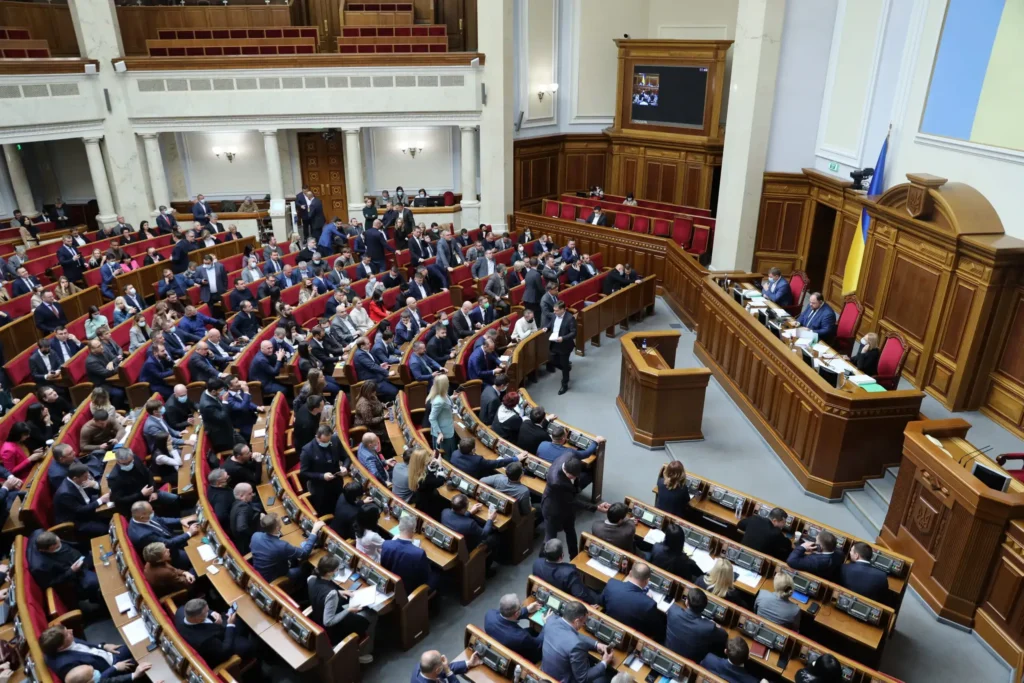
In his comment, MP Mykhailo Tsymbaliuk noted that determining bail in NABU cases is indeed a problem.
Commenting on the willingness of lawmakers to propose clearer mechanisms for determining bail, the deputy noted that the Batkivshchyna faction is currently deprived of this opportunity due to a possible conflict of interest. In particular, he said that it is NABU and SAP that are currently prosecuting Yulia Tymoshenko on suspicion of allegedly attempting to bribe deputies from other factions and have initiated bail for her in the amount of UAH 50 million before the High Anti-Corruption Court.
“The problem does exist. I think it needs to be resolved by lawmakers so that they can jointly study the positions of law enforcement agencies and European practice. Here, we must follow the example of European judicial and law enforcement agencies. That is why a discussion is needed,” said Tsymbaliuk.
As reported by