“Green” Transformations: How the Ukrainian Biogas and Biomethane Market Is Changing
26 March 18:17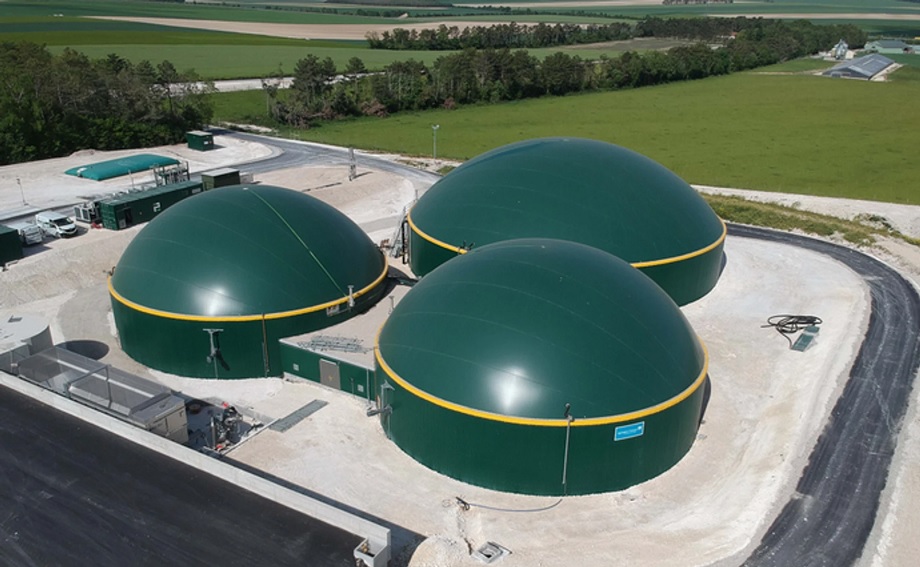
A few days ago, Ukraine’s largest biomethane production plant began operations in the Khmelnytskyi region. It is the sixth facility of its kind in the country. The emergence of such plants is evidence of profound changes in the bioenergy sector. [Komersant] investigated what exactly is happening in the biogas and biomethane production market.
From a historical focus on electricity generation from biogas to ambitious biomethane production projects. This is precisely the transformation in Ukraine’s bioenergy sector that Oleksandr Sokolov, CEO of Pro-Consulting, points to . He outlines the main differences between the sectors:
“Historically, demand for biogas has been concentrated on electricity generation under the ‘green’ tariff and heat production for the self-consumption needs of large agricultural holdings—sugar factories and farms. In contrast, domestic consumption of biomethane is virtually nonexistent, as the bulk of production is geared toward export due to greater economic viability. Thus, the Ukrainian market is in the process of transitioning from a ‘supplementary energy source for agribusiness’ to a ‘strategic export sector.’”
It was 2025 that provided grounds to speak of real potential: Ukrainian biomethane was supplied to the EU market for the first time, and export volumes exceeded 11 million cubic meters.
Adjusting Priorities
Biogas is gas produced from biomass (primarily agricultural waste). It is a mixture of methane, CO2, and small amounts of other gases. Biomethane is essentially 100% methane, produced by enriching biogas. It is the eco-friendly alternative to fossil gas. Shutterstock
Heorhii Geletukha, head of the Bioenergy Association of Ukraine, explains the technology:
“Biogas typically contains 55% methane and 45% CO2. Using special technologies, CO2 is separated from the biogas, and we obtain biomethane—almost pure methane. This is what the six plants operating in Ukraine produce. They have essentially built biogas enrichment systems.”
According to Heorhii Geletukha, there are approximately 80 biogas plants operating in Ukraine.
“Electricity and heat are generated from the biogas produced there in cogeneration plants. The heat is typically used for the plants’ own needs, while the electricity is sold to the grid. The total volume of such electricity is about 140 megawatts. That’s not much. In fact, these plants were built back when electricity was paid for under the ‘green tariff,’ meaning they were constructed specifically for that tariff. But now the ‘green tariff’ has become lower than the market rate. Therefore, in principle, many have left this system and are simply selling on the market,” the expert notes.
Instead, some have gone further and started to expand biomethane production. And now there are already six biomethane plants operating in Ukraine with a total capacity of over 100 million cubic meters of gas per year. Almost all of the biomethane produced in the country is exported. Four plants use gas networks for this purpose, while two enterprises have the capacity to produce bio-LNG for transportation in liquid form. Last year, MHP was the largest exporter, shipping approximately 8.7 million cubic meters. VITAGRO ranked second with approximately 2.5 million cubic meters. Gals Agro shipped a single batch of over 75,000 cubic meters.
Georgiy Geletukha, head of the Bioenergy Association of Ukraine, explains why biomethane production is export-oriented.
“Only through exports does biomethane fetch a price that makes its production profitable. In Ukraine, you can only sell biomethane at the price of natural gas. And you’ll be operating at a loss. In Europe, they pay at least twice as much for it, and sometimes even three times as much. Because biomethane is one of the cheapest ways to decarbonize. Ukraine, however, is not yet seriously engaged in decarbonization, so what’s the point of switching to gas that’s twice or even three times more expensive if it’s not required,” the expert notes.
But there are exceptions to this rule. As noted by Pro-Consulting, some producers are already beginning to use biomethane domestically. In particular, the agricultural holding “Gals Agro” uses its own biomethane in the production of “green” sugar, which increases the competitiveness of its products on the European market.
Focus on the EU
Ukraine has significant potential for the development of the biomethane industry. Experts believe that it is technically possible to produce up to 10 billion cubic meters of biomethane per year in Ukraine, and that reaching a level of 1 billion cubic meters by 2030 is realistic. However, there are factors currently holding back biomethane production.
For example, one such constraint in the domestic market is its price: it is more expensive than natural gas, and gas subsidies make biomethane even less competitive. Moreover, risks associated with the war are having an impact: under such conditions, it is difficult to attract foreign capital for the development of new production facilities. Of course, there are also factors that could boost demand and facilitate production growth even under current conditions.
Alexander Sokolov, CEO of Pro-Consulting, highlights the following:
“Demand for biogas and biomethane may increase, primarily due to the electricity shortage caused by the destruction of generating capacity, as well as the growing need for reliable and autonomous energy sources amid regular power outages. In particular, a key driver is the development of small-scale distributed generation, which ensures greater energy resilience for businesses—especially in the agricultural sector—and communities. Additionally, demand is stimulated by government support for bioenergy, simplified procedures for installing energy facilities, and plans to expand bioenergy capacity. The prospects for exporting biomethane to EU countries also play a significant role, increasing the sector’s investment attractiveness.”
Oleksandr Sokolov also points to the main trends that will shape the development of biomethane production in Ukraine. First and foremost, this is export expansion to the EU.
Read us on Telegram: important topics – without censorship
“Ukraine is guided by the goals of the REPowerEU plan (the European Commission’s plan aimed at rapidly reducing the EU’s dependence on Russian fossil fuels – Ed.). This plan calls for the production of 35 billion cubic meters of biomethane in the EU by 2030. And Ukraine has the potential to meet up to 20% of this EU demand,” the expert emphasizes.
According to him, it is also important that Ukraine will gradually transition from using corn silage and distillers’ grains to agricultural waste (manure, straw, corn stalks) and the organic fraction of municipal solid waste. This approach does not compete with food production and complies with European environmental standards for sustainable development.
In this regard, Georgiy Geletukha, head of the Bioenergy Association of Ukraine, notes that Europe has set the decarbonization of the economy as a political goal—that is, reducing greenhouse gas emissions by transitioning from fossil fuels to renewable energy sources.
“Essentially, they want to reduce all greenhouse gas emissions in the EU to zero by 2050. According to these plans, all fossil fuels that produce greenhouse gases when burned must be replaced with some renewable alternative. And, in essence, there are only three renewable gases that are being considered as replacements for natural gas. These are biomethane, green hydrogen, and synthetic renewable methane. And biomethane production is particularly promising, as it is the cheapest of these three gases. Plus, there’s no need to change the infrastructure: it can be injected into the very same pipelines currently used to transport natural gas,” the expert notes.
A month ago, another important element of the biomethane market infrastructure appeared in Ukraine. The State Agency for Energy Efficiency officially launched the biomethane registry. As the agency’s head, Hanna Zamazeyeva, stated at the time, Ukraine will now have a transparent and clear mechanism that allows for the identification of every cubic meter of biomethane produced, tracking its movement within the system, and confirming its renewable origin. And this is crucial for scaling up Ukrainian biomethane exports to the EU.
Author: Serhiy Vasylevych
Watch us on YouTube: important topics – without censorship