Anna Yakovleva: “The enemy wants us to fall into depression and for our children not to see the holidays”
3 May 2024 10:35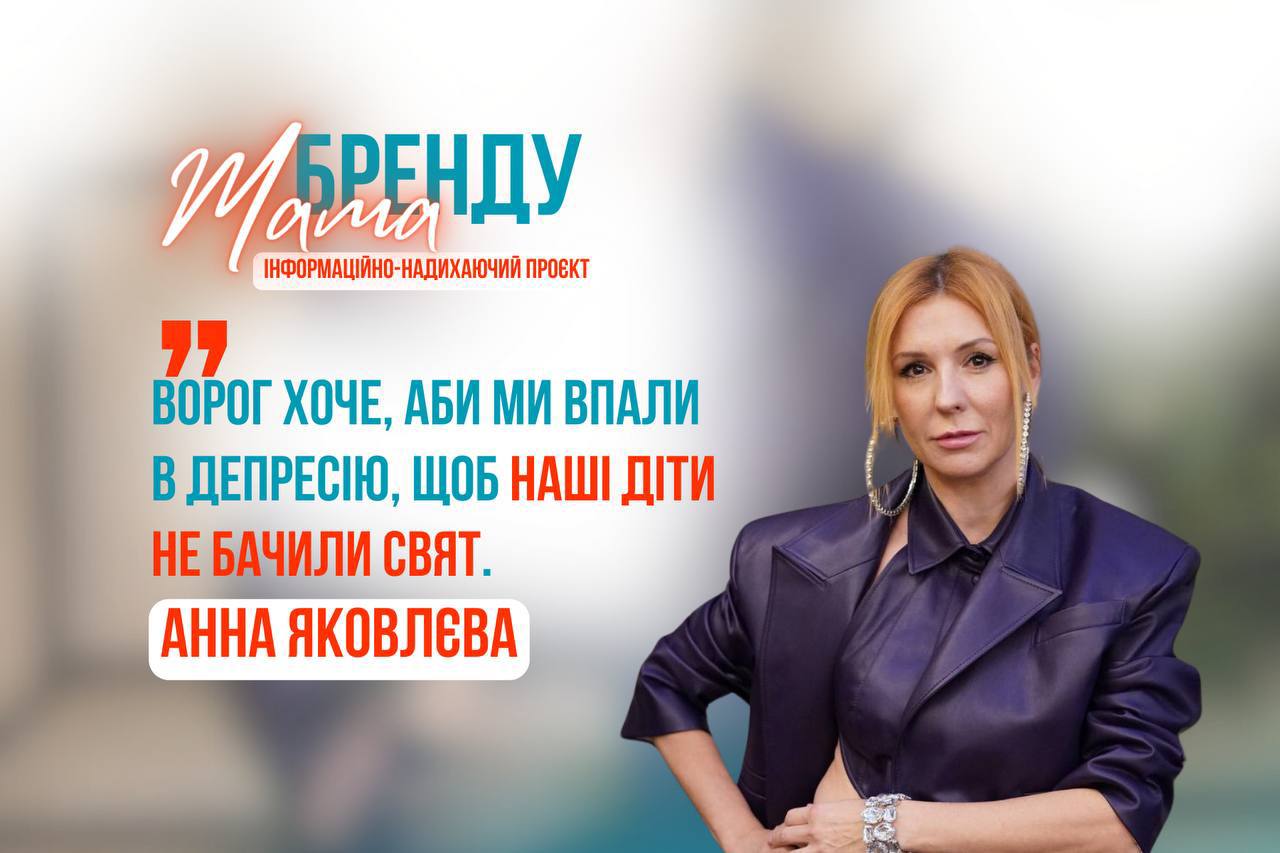 MOTHER OF THE BRAND
Events and holidays during the war. This is our reality. When meeting with friends and family on the occasion of important events, Ukrainians today seek each other’s support and sincere communication. Anna Yakovleva, the founder and owner of the well-known event organisation agency Kiwi Party, became the heroine of theMamaBrand project by Kommersant Ukrainian  . Despite the war, the agency’s activities are developing, and today Anna Yakovleva’s brand organises the largest number of children’s parties in Ukraine. The heroine of the MamaBrand project spoke about why we need holidays and why we have no right to deprive children of them in a blitz interview.
Events during the war. Probably, no one could ever think of such a possible reality. However, today there is a demand for such events. And your agency has resumed its active work. How has the event management industry changed since the start of the full-scale invasion: what has become a thing of the past, what client requests have become key?
Of course, a lot has changed during the war. First of all, events have become more socially responsible. None of them is held without a charitable purpose – an auction, fundraising for the Armed Forces, for children, to support IDPs. It can be said that any event in Ukraine today, whether it is an anniversary or even a small family celebration, a small corporate event or a child’s birthday, still has a component of supporting others. This is very important, and perhaps the main thing that has changed in events during the war.

When the invasion began and during the first few months of the war, how did you save your business? Did you believe in its continued need for society? When did you realise that your business was still relevant and were able to fully resume the agency’s work?
From the first days of the war, we did not think about business obstacles. Our minds were occupied exclusively with how we could help people: donations, clothes, food. Then we started to think more globally: what we could do to be useful. And of course, we realised that we could help children. That’s how our initiative “Childhood Now” was born.
At first, we went to the metro station with animators, where children were crying, screaming, standing on their heads. They didn’t know what to do, they were scared and terrified. And we came there with bright animators, colouring books, games, competitions. We did this at metro stations, and then worked for almost 3 months at our railway station in Kyiv and met all the displaced children who were travelling on evacuation trains from the east. Then we engaged our sponsors, and we are very grateful to them. This allowed us to treat the children to goodies, give them travelling backpacks and gifts. And so, of course, we continued to cheer the children up and do everything we could to make sure that this journey was not the worst in their lives.
Later, when the Kyiv region was liberated and people started to return home, we organised events for children in Bucha, Vasylkiv and Irpin. So we just did what we could and were there where we were needed. Over time, the business started to revive step by step.
Events mean working in the evenings and on weekends, and therefore living according to other people’s schedules. But in the conditions of high unpredictability and stress that the whole country is experiencing during the war, it is really difficult to plan anything in advance. So what does it feel like to plan a holiday with no room for error?
We even joke about this: during the war, event planners have more free time because there is a curfew. That is, any celebration or loud wedding ends at midnight, and we can go home. That is, we used to work 24/7 – now we can be home with our families at night.
Do you agree with the statement that holidays for Ukrainians today and the desire to celebrate them is a kind of self-therapy that allows them not to lose the skills of peaceful life? Does the team take this aspect into account when preparing for events?
Undoubtedly, art: events, theatres, cultural events, concerts – is always a lifeline for any psyche. We cannot live in constant stress – we need to be distracted by something beautiful.

It is not human to condemn people who are distracted, laugh or dance, because we laugh and joke, but at the same time we organise events with one hand and weave nets with the other. We should not sit and cry. The enemy wants us to be depressed, to cry, so that our children don’t see holidays, so that people don’t have anything bright and joyful. So yes, events are primarily about therapy, about supporting each other.
If we look at the changes that have taken place in events, for example, people now drink much less alcohol and don’t use fireworks at all. I think that in the next 10 years we will not find a client who will order fireworks.
However, public events are the socialisation of each of us. We get together. We do something beautiful together, and this is what keeps us sane and gives us the energy to do something useful.
By the way, as an event agency that organises the largest number of children’s parties in Ukraine, we can say that nowadays almost all parties are dedicated to children in one way or another. Because children should not feel the burden of war. They are not to blame for anything. And to take away these bright moments from them now is not just unfair, but a trauma that we will all have to work through with psychologists for a very long time. We must all do our best to ensure that children have all the holidays and a normal life.