Bioethanol in gasoline and in the law: what drivers should prepare for
15 April 2025 11:49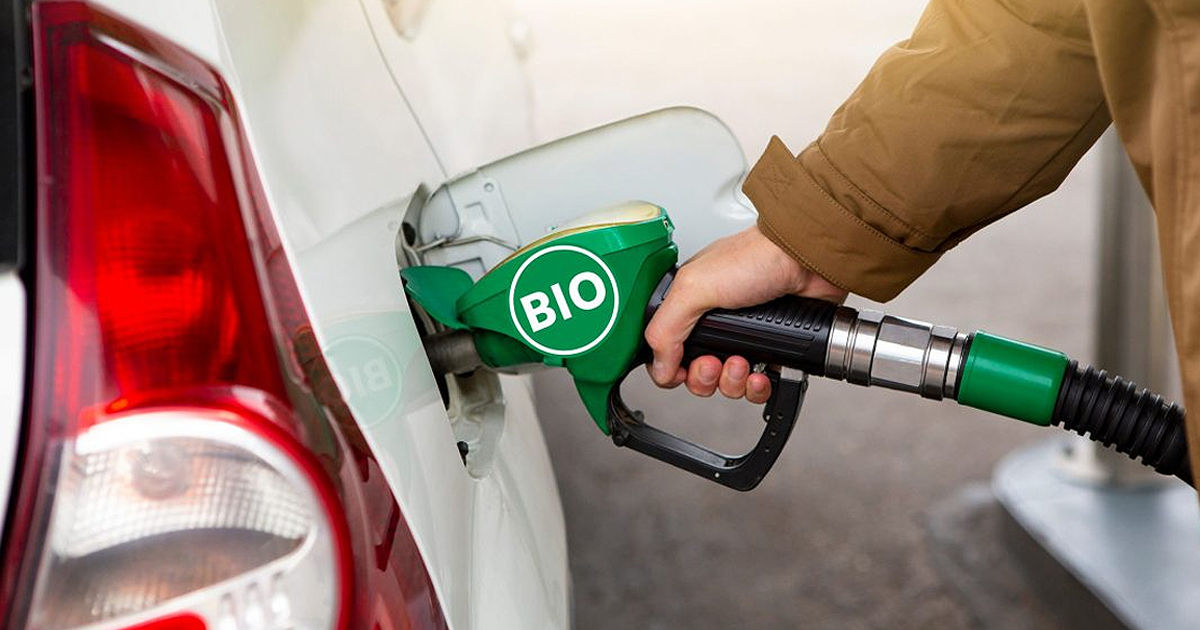
Starting May 1, 2025, a new requirement will come into force in Ukraine – the addition of bioethanol to all gasoline sold at gas stations. The minimum share is 5%. This was reminded by the Institute for Automotive Market Research, reports
The Institute’s experts, together with Oleksandr Sirenko, an analyst at the consulting company NaftoRynok, analyzed what changes and surprises drivers should expect. First of all, they explained why it was decided to add bioethanol to gasoline.
According to Oleksandr Sirenko, bioethanol is a dehydrated alcohol made from agricultural raw materials, in particular corn and wheat, and its use will be beneficial for the environment, firstly, because it emits fewer harmful substances during combustion, secondly, it reduces dependence on oil imports, in particular Russian oil, and thirdly, the use of bioadditives in gasoline will stimulate domestic production and the agricultural economy.
By the way, Poland has been using gasoline with bioethanol for more than 15 years, and the United States for even longer. And Brazil has gasoline containing up to 70% alcohol components.
And Ukraine has been familiar with such gasoline for a long time, as Ukrainian cars have been running on bioethanol gasoline for a long time, as imported gasoline from Europe already contained this component. Now there will simply be an official requirement and a regulated share of 5%, with the prospect of growth to 10-15%.
Will the use of such gasoline harm the car?
“It won’t,” says Oleksandr Sirenko, an analyst at the consulting company NefteRynok. – “If the car is in good condition, manufactured after 2005 (and in most cases after 2000) and has no design features incompatible with E5.
By the way, most cars have a label on the gas tank hatch indicating the permissible level of ethanol (E5, E10, etc.). In European and American cars, this has long been taken into account in the engine design.
According to the expert, some Ukrainian gas stations are already selling gasoline with a higher bioethanol content of up to 10-20%, and cars are easily “digesting” it.
Should drivers do something about it?
Yes, says the Naftogaz expert, but not much:
– do not add any additives yourself – the networks have already purchased the necessary stabilizers;
– do not panic if you see a closed gas station – they may be cleaning the tanks before the new fuel;
– for the first month, it is better to refuel at the gas stations of large, proven networks that have undergone technical training.
Alcohol has the ability to attract water and wash out sediments from tanks, so all gas stations must undergo mandatory cleaning. Previously, this was often ignored – now it is critically important.
How innovations will affect fuel prices
Currently, bioethanol blends are more expensive than regular gasoline (in bulk).
But oil is getting cheaper on the world market, large traders have signed contracts for blends in advance, and the retail price is unlikely to rise, and in an optimistic scenario, it will even decrease by 3-5 UAH/l.
According to Oleksandr Sirenko, an analyst at NaftoRynok, bioethanol is not a horror story, but a logical step towards Europe, energy independence, and cleaner air.
Sellers will be fined for non-compliance with the requirements for bio-additives in gasoline
In June last year, the Verkhovna Rada adopted the Law of Ukraine “On Amendments to Certain Laws of Ukraine on the Mandatory Use of Liquid Biofuels (Biocomponents) in the Field of Transport” No. 3769-IX.
The Law amended Article 14 of the Law of Ukraine “On Alternative Fuels”, which, in particular, provides that “non-compliance with the requirements for the sale of motor gasoline containing the statutory mandatory share of liquid biofuels (biocomponents) for business entities engaged in retail trade in fuel shall be punishable by a fine in the amount of seven minimum subsistence levels for able-bodied persons for each 1000 liters of motor gasoline received for sale”. As of today, this amount is UAH 21,196 for every 1000 liters.
The State Agency on Energy Efficiency and Energy Saving is responsible for keeping records of the content of liquid biofuels (biocomponents) in fuel.
But, as the State Environmental Inspectorate reported a week ago, fines will not be imposed on gasoline sellers without bioethanol, as this requires an approved form of a protocol on the relevant offense, which is not yet available.
In addition, as of early April, the State Agency on Energy Efficiency and Energy Saving had not yet approved the Procedure for Administration of Accounting for the Content of Biocomponents in Motor Fuels and its Compliance with Sustainability Criteria.