Budanov in the OP and Malyuk’s resignation: reset or risk for the security of the state
6 January 18:44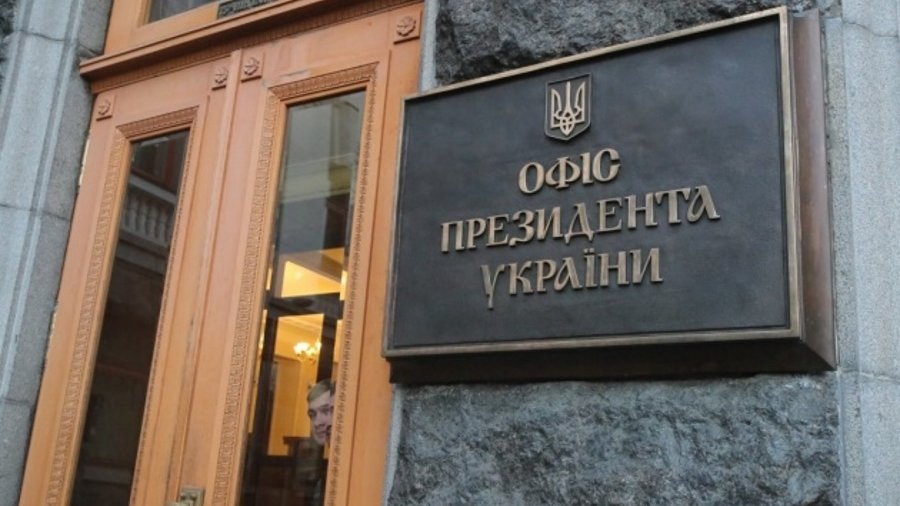
The beginning of 2026 was marked for Ukraine by high-profile personnel reshuffles. President Volodymyr Zelenskyy initiated a large-scale renewal of the senior staff in the sphere of state administration, defense and security. In particular, the position of the head of the Presidential Office was taken by Kyrylo Budanov, who had been in charge of Ukraine’s Main Intelligence Directorate for more than five years.
In parallel with these decisions, there are other personnel changes in the government. The head of the Ministry of Digital Transformation, Mikhail Fedorov, is seen as a possible new defense minister. At the same time, the current Prime Minister Denis Shmygal may move to the position of First Deputy Prime Minister or head the Ministry of Energy, given his previous experience in the energy industry in 2017-2019.
Also on January 5, it became known about the statement of Vasyl Malyuk on dismissal from the post of head of the Security Service of Ukraine. Temporary execution of the duties of the head of the SBU is entrusted to the head of the Center of special operations “A” Yevhen Khmara.
On the possible consequences of these personnel decisions read further in the material
Reshuffles in the Cabinet of Ministers will not yield results
Military expert, colonel of the AFU in reserve Roman Svitan criticized the personnel reshuffle in the government of Ukraine. In an exclusive commentary for
“Reshuffles inside the Cabinet will absolutely lead to nothing. It is, in fact, nothing more than replacing people without changing the system itself. The effect is the same,” the expert said.
According to him, real changes require a complete reset of the government.
“To get a positive result, it is necessary to resign the entire Cabinet of Ministers and form it from people with professional military basic education – along with professional training in the profiles,” Svitan emphasized.
Roman Svitan recalled the existence of the Strategic Reserve Officers (SRO) mechanism, which, according to him, was never utilized.
“Every officer who graduates from the General Staff Academy undergoes a course of state management in war conditions. After that, he becomes an officer of the strategic reserve of the Cabinet,” the expert explained.
He added that in the case of martial law, the Verkhovna Rada should have automatically involved such specialists in the management of the state.
“This has not happened. In the Cabinet of Ministers remained civilians, who are now simply shuffled between positions,” – said Svitan.
Separately, the expert commented on the regular personnel movements of Prime Minister Denis Shmygal.
“There is already a peculiar schedule of his movements by positions. Conditionally speaking – “honorable Shmygal”. This is, of course, an exaggeration, but it well shows the real coefficient of usefulness of such rotations,” he said.
According to Svitan, the effectiveness of the government does not grow from this, and sometimes even decreases.
Reshuffles in the special services may be sabotage?
The expert is most concerned about personnel changes in the leadership of security and special services.
“Simultaneous reshuffling of heads of special services in such a difficult period – from the military point of view it is a sabotage. In fact – a crime,” Svitan stated.
He emphasized that although the special services consist of thousands of specialists and will continue to work, their efficiency will inevitably decrease.
“While the new head will build a management system, up to a year passes. The whole year 2026 special services will work with reduced efficiency,” the expert explained.
Svitan believes that the decision to simultaneously change the heads of the intelligence services requires a separate investigation.
“The question is where the command for such actions came from and who generated these decisions. This is already the sphere of work of counterintelligence,” he noted.
In his opinion, stopping or slowing down the effective work of special services in all areas at once cannot be accidental.
Meanwhile, Dmitriy Snegirev, a military analyst and co-chairman of the Right Cause public initiative, criticized the work and personnel decisions in the Security Service of Ukraine. In a commentary for Kommersant Ukrainian, he noted that the public campaign in support of the former head of the SBU indicates serious systemic problems rather than efficiency.
“Insane information campaign in support of the ex-head of the SBU demonstrates the complete unprofessionalism of the leadership of the service. In fact, the entire SBU agent apparatus was pulled out under the public spotlight,” the expert said.
According to him, drone strikes are not a core activity of the Ukrainian counterintelligence.
“Drone strikes on Russian territory are the area of responsibility of the Unmanned Systems Force, a separate branch of the military. The SBU should be engaged in counterintelligence, not competitions for public efficiency,” Snegirev emphasized.
The analyst drew attention to the dispersion of functions between different security agencies.
“When we hear about “SBU drones,” “GUR drones,” “SDF drones,” it means the absence of a single control center. Such operations should be carried out centrally, by one structure,” he explained.
Corruption scandals as a reason for Malyuk’s resignation
According to Snegirev, in open sources, the reason for the resignation of Vasily Malyuk is called large-scale corruption cases in the top leadership of the SBU.
“We are not talking about isolated episodes. At least three SBU generals were charged with illegal possession of property that does not correspond to their official incomes,” he said.
Among the examples, the expert recalled situations with officials’ family ties with the aggressor country, elite real estate abroad and NABU cases of illegal enrichment.
“It is not without reason that evil tongues decipher SBU as ‘Union of Businessmen of Ukraine’,” Snegirev added.
“Operation Spider’s Web is not an initiative of the SBU.”
Commenting on the operation “Web”, the expert expressed his belief that it was not an independent development of the SBU.
“Let’s call things by their proper names: this is an operation under someone else’s flag. The fact that the SBU took responsibility does not mean that it was the one that carried it out,” Snegirev said.
In his opinion, Ukraine’s strategic partners were behind the operation, as evidenced by further geopolitical moves and military-technical agreements in the region.
Trukhanov’s passport as a “colossal failure”
Snegirev also recalled the story with the alleged Russian passport of Odessa Mayor Gennady Trukhanov.
“The information about the “Russian passport” was voiced at the highest level, and later it turned out to be fake. This was a colossal failure of the SBU and the personal responsibility of Malyuk,” the analyst said.
In his opinion, it was after this that the issue of the SBU head’s resignation should have been raised immediately.
Fedorov and the bet on innovations
Assessing possible personnel decisions regarding Mikhail Fedorov, the expert expressed support.
“Fedorov works effectively with innovative technologies, in particular in the production of drones. Ukraine is significantly ahead of the aggressor country in this area,” Snegirev emphasized.
He recalled that the speed of introduction of new technologies in Ukraine – from development to combat use – is sometimes less than a month.
Budanov and the Office of the President
Separately, the expert commented on the appointment of Kirill Budanov as head of the Office of the President.
“The appointment of an authoritative military officer such as Budanov is an attempt to minimize corruption risks that existed under the previous leadership of the OP,” Snegirev noted.
He recalled the well-known conflict between Budanov and Andrei Yermak and outlined two possible scenarios.
“Either Budanov will get real powers to reformat the Presidential Office team, or it is an attempt to eliminate a potential political rival on the eve of possible elections,” the analyst believes.
According to Snegirev, Budanov’s key advantage is his direct contacts with Western allies.
“Budanov is trusted by our American and, most importantly, British partners. This significantly increases Ukraine’s subjectivity in the negotiation process,” he emphasized.
The expert also noted Budanov’s professional training and his years of experience in military intelligence.
“This is a professional with several higher education degrees who knows the system well from the inside. He does not need to ‘get up to speed’,” Dmitry Snegirev summarized.