Budanov at the Presidential Office and Malyuk’s Resignation: A Fresh Start or a Threat to National Security
6 January 18:44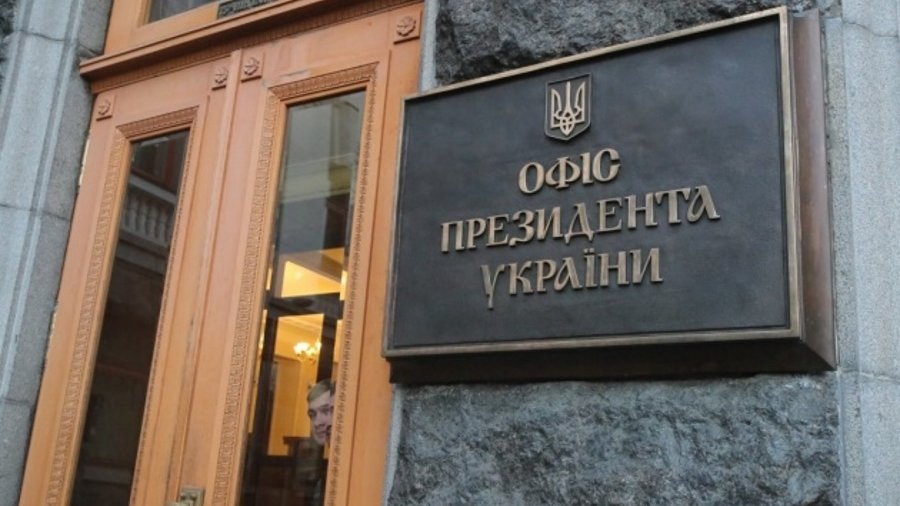 РОЗБІР ВІД
The beginning of 2026 was marked by high-profile personnel changes in Ukraine. President Volodymyr Zelenskyy initiated a major overhaul of leadership in the areas of public administration, defense, and security. In particular, Kirill Budanov, who had headed Ukraine’s Main Intelligence Directorate for over five years, took over as head of the Office of the President.
Alongside these decisions, other personnel changes are taking place within the government. The head of the Ministry of Digital Transformation, Mykhailo Fedorov, is being considered as a possible new Minister of Defense. Meanwhile, current Prime Minister Denys Shmyhal may move to the position of First Deputy Prime Minister or head the Ministry of Energy, given his previous experience in the energy sector from 2017 to 2019.
Also, on January 5, it was reported that Vasyl Malyuk had announced his resignation as head of the Security Service of Ukraine. Yevhen Khmara, head of Special Operations Center “A,” has been temporarily appointed to lead the SBU.
Read more about the possible consequences of these personnel decisions in the article
Cabinet reshuffles will not yield results
Military expert and retired Ukrainian Armed Forces Colonel Roman Svitan offered a critical assessment of the personnel reshuffles in the Ukrainian government. In an exclusive comment for
“Shuffles within the Cabinet will lead absolutely nowhere. This is, in essence, nothing more than replacing people without changing the system itself. The effect will be the same,” the expert noted.
According to him, real change requires a complete overhaul of the government.
“To achieve a positive result, it is necessary to dismiss the entire Cabinet of Ministers and form it from people with a professional military background—along with specialized training in their respective fields,” Svitan emphasized.
Roman Svitan recalled the existence of the Strategic Reserve Officers (SRO) mechanism, which, according to him, has never been utilized.
“Every officer who graduates from the General Staff Academy completes a course on governing the state in wartime. After that, he becomes a Strategic Reserve Officer of the Cabinet of Ministers,” the expert explained.
He added that if martial law were declared, the Verkhovna Rada would automatically have to involve such specialists in governing the country.
“This did not happen. Civilians remained in the Cabinet of Ministers, and they are now simply being shuffled between positions,” Svitan noted.
Separately, the expert commented on the regular personnel changes involving Prime Minister Denys Shmyhal.
“There is already a sort of schedule for his rotations through positions. So to speak—‘Honorary Shmyhal.’ This is, of course, an exaggeration, but it clearly illustrates the actual efficiency of such rotations,” he noted.
According to Svitan, this does not increase the government’s effectiveness; in some cases, it even decreases it.
Could reshuffles in the security services be a diversion?
The expert is most concerned about personnel changes in the leadership of law enforcement and special services.
“Simultaneously reshuffling the leadership of the special services during such a difficult period—from a military standpoint, this is sabotage. In fact, it’s a crime,” Svitan stated.
He emphasized that although the special services consist of thousands of specialists and will continue to operate, their effectiveness will inevitably decline.
“It will take up to a year for the new leader to establish a management system. The special services will operate at reduced efficiency throughout 2026,” the expert explained.
Svitan believes that the decision to simultaneously replace the heads of the special services requires a separate investigation.
“The question is where the order for such actions came from and who initiated these decisions. This is already the domain of counterintelligence,” he noted.
In his opinion, the halt or slowdown of the effective work of the security services across all areas cannot be accidental.
Meanwhile, military analyst and co-chair of the civic initiative “Prava Sprava” Dmytro Snegirev has criticized the work and personnel decisions within the Security Service of Ukraine. In a comment for “Kommersant Ukrainian,” he emphasized that the public campaign in support of the former SBU head indicates not efficiency, but serious systemic problems.
“The frenzied information campaign in support of the former SBU head demonstrates the complete unprofessionalism of the service’s leadership. In effect, the entire SBU intelligence apparatus has been dragged into the public spotlight,” the expert stated.
According to him, drone strikes are not a core activity of Ukrainian counterintelligence.
“Drone strikes on Russian territory fall under the responsibility of the Unmanned Systems Forces, a separate branch of the military. The SBU should be engaged in counterintelligence, not competing for public recognition of effectiveness,” Snegirev emphasized.
The analyst drew attention to the fragmentation of functions among various security agencies.
“When we hear about ‘SBU drones,’ ‘GUR drones,’ and ‘SSO drones,’ it indicates the absence of a single command center. Such operations should be conducted centrally by a single agency,” he explained.
Corruption scandals as the reason for Malyuk’s resignation
According to Snegirev, open sources cite large-scale corruption cases within the SBU’s top leadership as the reason for Vasyl Malyuk’s resignation.
“We’re not talking about isolated incidents. At least three SBU generals have been charged with illegal possession of property that doesn’t match their official incomes,” he noted.
Among the examples, the expert cited situations involving officials’ family ties to the aggressor country, luxury real estate abroad, and NABU cases regarding illicit enrichment.
“It’s no wonder that critics interpret the SBU as the ‘Union of Ukrainian Businessmen,’” added Snegirev.
“Operation ‘Spiderweb’ Is Not an SBU Initiative”
Commenting on Operation “Spiderweb,” the expert expressed his conviction that it was not an independent initiative of the SBU.
“Let’s call a spade a spade: this is an operation under a foreign flag. The fact that the SBU took responsibility does not mean that it was the one carrying it out,” Snegirev stated.
In his view, Ukraine’s strategic partners were behind the operation, as evidenced by subsequent geopolitical moves and military-technical agreements in the region.
Trukhanov’s passport as a “colossal failure”
Snegirev also recalled the story of the alleged Russian passport belonging to Odessa Mayor Gennady Trukhanov.
“Information about the ‘Russian passport’ was announced at the highest level, and it later turned out to be fake. This was a colossal failure of the SBU and Malyuk’s personal responsibility,” the analyst noted.
In his opinion, it was precisely after this that the question of the SBU chief’s resignation should have been raised immediately.
Fedorov and the focus on innovation
When assessing possible personnel decisions regarding Mykhailo Fedorov, the expert expressed his support.
“Fedorov works effectively with innovative technologies, particularly in the field of drone production. Ukraine is significantly ahead of the aggressor country in this sector,” Snegirev emphasized.
He noted that the speed of implementing new technologies in Ukraine—from development to combat use—sometimes takes less than a month.
Budanov and the Office of the President
Separately, the expert commented on the appointment of Kirill Budanov as head of the Office of the President.
“The appointment of an authoritative military figure like Budanov is an attempt to minimize the corruption risks that existed under the previous leadership of the Office of the President,” Snegirev noted.
He recalled the well-known conflict between Budanov and Andriy Yermak and outlined two possible scenarios.
“Either Budanov will be given real authority to reshape the Presidential Office team, or this is an attempt to remove a potential political rival ahead of possible elections,” the analyst believes.
According to Snegirev, Budanov’s key advantage is his direct contacts with Western allies.
“Our American and, most importantly, British partners trust Budanov. This significantly enhances Ukraine’s agency in the negotiation process,” he emphasized.
The expert also noted Budanov’s professional training and his many years of experience in military intelligence.
“He is a professional with several advanced degrees who knows the system well from the inside. He doesn’t need to ‘get up to speed,’” concluded Dmytro Snegirev.