
Fourth year of war: how the business climate in Ukraine has changed
24 February 13:58
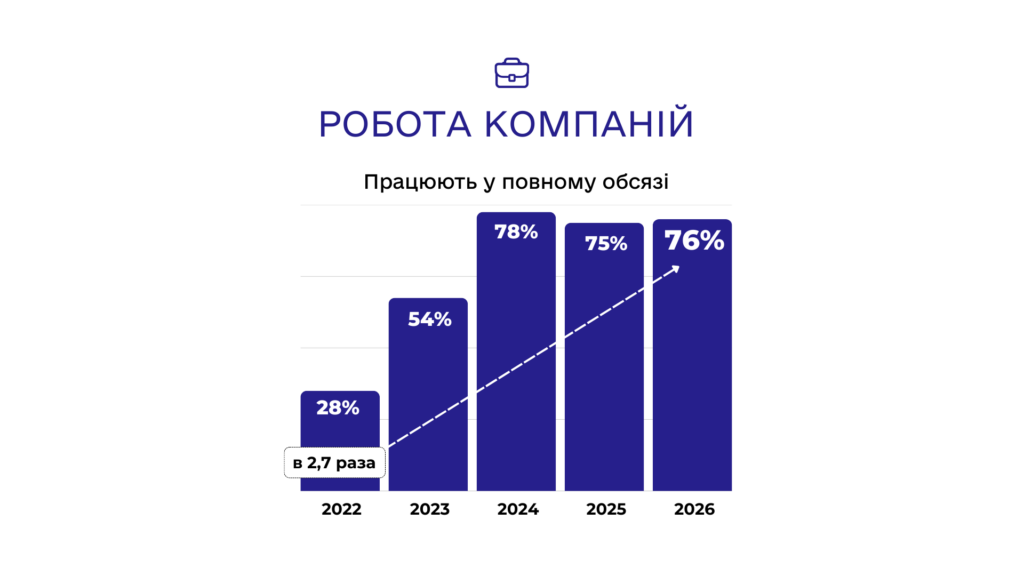
At the beginning of 2026, 76% of Ukrainian companies remain fully operational, but the level of optimism among managers is declining. Businesses have adapted to the war but are facing new challenges—energy instability, staff shortages, and growing financial losses. This is evidenced by the results of a business climate survey in various regions of Ukraine conducted by the European Business Association (EBA), according to "Komersant Ukrainian".
Optimism is fading: what the study showed
At the beginning of 2026, three-quarters of the European Business Association’s member companies (76%) are operating at full capacity, while 24% are operating with certain restrictions.
Despite their ability to operate in conditions of full-scale war, businesses are showing more subdued sentiment.
The share of top managers satisfied with the state of affairs in their companies has fallen from 40% to 32%.
Almost 40% of executives expect the situation to worsen in 2026.
The main obstacles are limited geography of operations, air raid alerts, and forced online mode of operation.
In fact, businesses are operating under constant risk, which affects both strategic planning and investment decisions.
Energy and personnel shortages are key challenges
Entrepreneurs cite the following factors as having the most negative impact:
- attacks on the energy system — 82%;
- lack of qualified workers — 78%;
- war and occupation of territories — 66%;
- a decline in domestic consumption — 46%;
- economic instability — 40%.
The issue of personnel is particularly acute. 88% of companies have employees serving in the Armed Forces of Ukraine. Half of businesses report the mobilization of critically important specialists — engineers, IT specialists, drivers, and equipment operators.
Financial stability: reserves are there, but losses are growing
The availability of a financial “safety cushion” remains a positive trend:
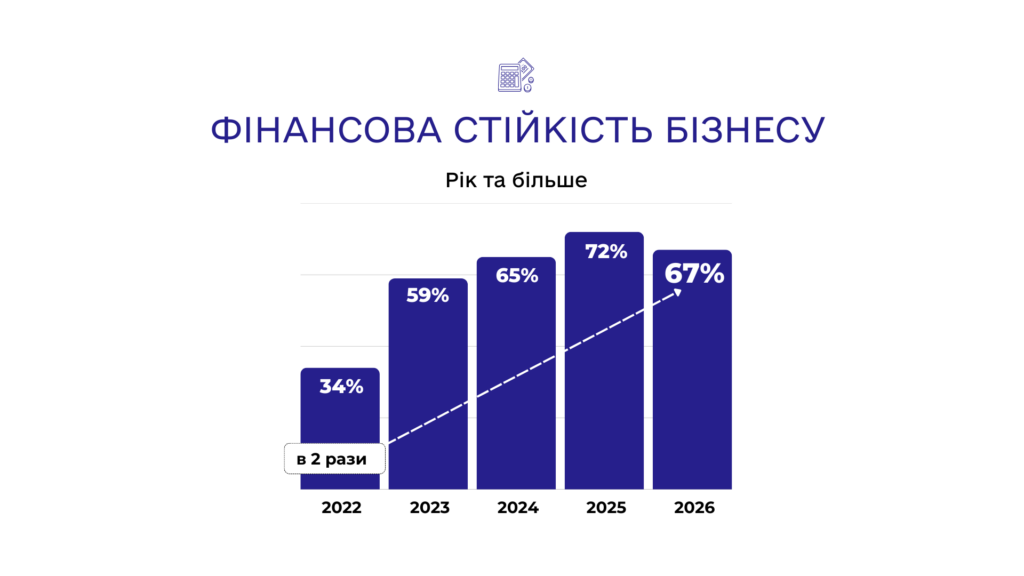
- 67% of companies have reserves for a year or more;
- 21% have reserves for six months;
- 10% have reserves for several months;
- only 2% have no reserves.
At the same time, the scale of losses is growing:
- 19% of companies have suffered losses of up to $1 million;
- 25% — from $1 million to $10 million;
- 20% — over $10 million (compared to 16% last year);
- 11% of businesses did not suffer any losses;
- 25% are not yet able to accurately assess them.
These figures indicate a gradual accumulation of financial pressure on businesses.
Support for the Armed Forces and communities
Despite the difficult conditions, businesses remain socially responsible:
- 71% of companies support their employees serving in the Armed Forces;
- 56% provide financial assistance;
- 37% donate products;
- 24% are involved in community recovery.
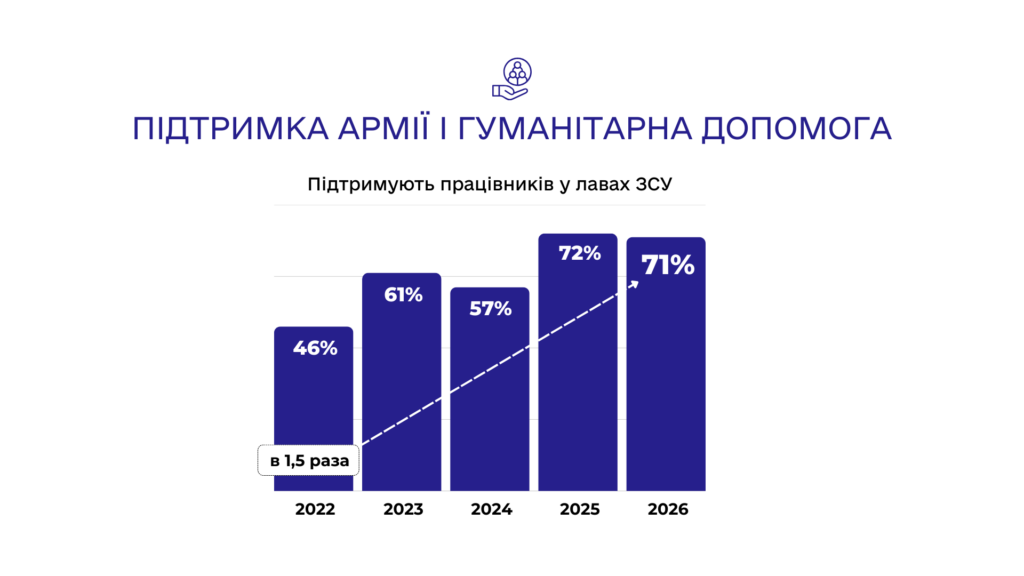
This demonstrates that the corporate sector remains an important pillar of support for the state during the war.
Relocation and forecasts for 2026
In 2025, only 10% of companies changed their location, mostly within Ukraine.
Regarding the end of the war:
- 47% of businesses do not expect the hostilities to end in 2026;
- 76% say they are ready to continue working in Ukraine under any conditions.
Businesses currently need the most support in the following areas:
- Assistance in communicating with government agencies
- Improving conditions for booking employees
- Coverage of military risks
- Moratorium on inspections
- Easing of currency restrictions.
Ukrainian businesses have learned to operate in wartime conditions. They have adapted to risks, created financial reserves, and continue to support the army and the economy. At the same time, business leaders’ optimism is gradually declining due to energy challenges, staff shortages, and uncertainty about the duration of the war.
2026 may be a year of endurance tests — but also a year of new opportunities for those who are ready to invest in modernization and human capital.













