The Draconids: on the night of 8 October, a meteor shower can be observed with the naked eye
7 October 2024 14:54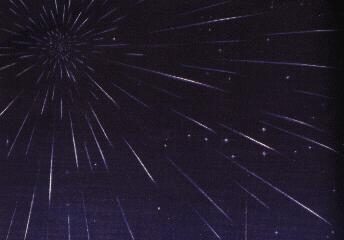
On the night of 8 October, a unique phenomenon will be observed in the starry sky – the Draconid meteor shower. It is reported by "Komersant Ukrainian" reports with reference to CNN.
Unlike many meteor showers, you don’t have to stay up all night to watch the Draconids. It will be enough to wake up early in the morning, as this stream from our part of the world will be best seen at that time. The moon will be illuminated by only 27-29% in its current phase, which will allow you to see faint meteors better.
It’s worth noting that the Draconid meteor shower is quite small. It is expected that you will see only a few meteors – a maximum of about 10 – flying across the sky in an hour. The meteor shower is forecast to peak at around six in the morning Kyiv time on Tuesday, 8 October.
The Draconids
Meteor showers occur when our planet passes through debris plumes left by comets and asteroids that eject rock and ice particles as they orbit the Sun. The draconids are the result of the Earth crossing such a plume from Comet 21P/Giacobini-Zinner as it approaches the comet’s orbit in October each year.
The stream got its name because the meteors come from the direction of the constellation Draco. But sometimes the Draconids are called the Jacobins in honour of the comet’s discoverer, Michel Jacobin, who spotted this celestial object in 1900.
Dragonids meteors move more slowly than those observed during other streams, which means they can be seen for one to two seconds.
Follow us on Telegram: the main news in a nutshell
Meteor storm
The opportunity to witness a flash of Draconid meteors flying across the sky, called a meteor storm, can be exciting for starry-eyed stargazers. Although it is a “sleepy” stream compared to some of the larger streams that typically produce more faster meteors, this year’s Draconids may hold surprises.
Meteor storms can occur when cometary debris is concentrated close to the comet itself, rather than scattered as the Earth passes through the plume. During a meteor storm, hundreds or thousands of meteors can be seen per hour.
The Draconids caused meteor storms in 1933 and 1946 when thousands of meteors per hour were observed, and European skywatchers reported more than 600 meteors per hour during the 2011 event.
Comet 21P/Giacobini-Zinner completes its orbit around the Sun approximately every seven years, and the last time it came close to Earth in September 2018, many reported seeing a flash during the meteor shower. The next close approach of the comet is not until 2025, but a flare is always possible.
How to observe
The best way to observe the meteor shower is to sit in a deck chair or lie on your back and look up at the sky with a wide view. No special equipment is required, but if you want the best viewing conditions, it’s best to be as far away from artificial lighting as possible. In particular, three times as many meteors can be seen outside the city, NASA scientists say.
Follow us on Telegram: the main news in a nutshell