Savings on heating. How the new heating bill will allow you to pay only for your heat
6 January 10:23 ANALYSIS FROM
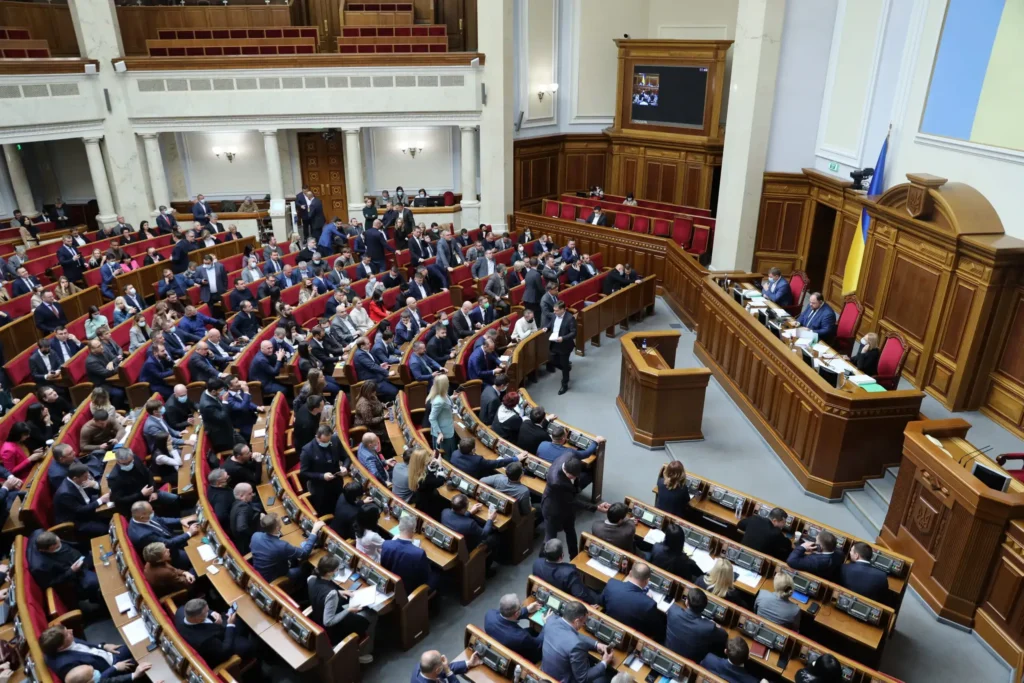
A bill on fair distribution of heating bills has been submitted to the Verkhovna Rada. MPs propose that consumers pay only for the heat they use, especially if no one lives in the apartment during the heating season or if they save money and screw down the radiators. What are these changes and how realistic are they?
The initiative provides for amendments to the Law of Ukraine “On Commercial Metering of Thermal Energy”. The deputies propose to remove paragraph 5 of Article 10 “Distribution of Utility Volumes Among Consumers,” which states that even if you hardly heat your apartment, you cannot pay zero hryvnias for heat if your house has heat distributors (heat meters on the batteries). You are obliged to pay a minimum share of the total heat consumption of your house.
Heating is like a lottery. How much you pay for heat depends on your neighbors
MPs propose to abolish the rule that violates the principle of “pay for what you get” and encourages wastefulness. According to the current law (Article 10, Part 2, Clause 5), owners of apartments with individual heat meters must pay at least 50% of the average heat consumption in the building. If they consume less, they will be charged the difference.
The author of the draft law, Hryhorii Mazurashu, notes that this forces people to pay for heat they have not received. Although formally the norm is intended to maintain the temperature regime and protect the building, in practice it does not work. The calculation formula does not take into account the actual temperature in the premises, but depends only on the average consumption in the building.
This leads to an unfair situation:
1.If the majority of residents heat a lot (for example, subsidy recipients or heat lovers), then their frugal neighbors are forced to pay more, as the “minimum share” increases.
2.If everyone saves money, the average consumption falls, the minimum share decreases, and everyone will pay less, but the apartments will become cold. The formula does not stimulate heat maintenance, but only averages costs.
Thus, the current rule does not fulfill the stated goals. So, this formula in its current form is an absolute profanation of the stated purpose of this Law. It does not affect the temperature in the house in any way and cannot prevent the formation of fungus or reduce the service life of premises, etc. as stated in the purposes of Article 10 of the Law and the aforementioned Methodology. The formula only equalizes consumption in the building, bringing all apartments closer to the average consumption and not allowing those who want and need it to save significantly, the MP believes.
If the document is adopted, the clause on forced additional charges will be removed. Then consumers will only pay for what their meters show.
Neighbors give heat to each other for nothing
Well, on the one hand, the idea of not paying for overly warm neighbors is not a bad one, but it is difficult to implement. A house is a single “thermal shell”. Apartments warm each other.
“If your neighbors are actively heating, and you have turned off all the radiators, you still receive heat from their apartments (through the walls, floors). Your cold walls force them to spend even more heat to warm their apartments, because they are heating your place as well. Without this rule, you would not pay anything, and your neighbors would pay for you (through increased costs and redistribution of the total costs of the building),” says
svetlana Volskaya, a former head of a condominium, tells "Komersant Ukrainian". [Kommersant]
The minimum share of specific consumption is calculated according to a special methodology and determines what minimum part of the average heat consumption per 1 square meter in your building you have to pay, even if your distributors show “zero”.
“Let’s say the total heating costs of the house for the month amounted to 100,000 hryvnias. The area of your apartment is 50 square meters. According to the methodology, the minimum share for your house is 30% of the average specific consumption. Average consumption per 1 square meter in the building = 100,000 UAH / Total area of all apartments. Let’s say it turned out to be 50 UAH/sq.m. Your minimum payment for heating, even if you did not use it, will be: 50 sq.m. * 50 UAH/sq.m. * 30% = 750 UAH. If your distributors charged more (for example, the equivalent of 1000 UAH), you will pay 1000 UAH. If the distributors have charged less (for example, the equivalent of UAH 500), you will still pay at least UAH 750,” explains a former building manager.
This provision of the law fairly distributes the obligation to pay for district heating and prevents a situation where some residents suffer financial losses due to the actions (or inaction) of others. It ensures that each owner makes a basic contribution to keeping the building warm.
Even the most economical have to pay
According to Oleh Popenko, chairman of the Union of Consumers of Public Utilities, if these rules are removed, as proposed by the MP, it will be unfair to those who heat their homes and pay the full amount. Because the heat from the neighbors comes through the walls to the frugal residents.
It is logical that a person should pay for heat even if he or she is not at home.
“As for the common areas, this is where we need to look into it, because they have the most manipulative figures that cannot be verified. They don’t actually reflect reality, they are literally taken from the head. And all this is reflected in the 315th resolution, which protects monopolists – district heating companies,” says
Oleg Popenko. [Kommersant]
Everyone should pay for centralized heating in an apartment building without exception. After all, even those who do not currently live there still receive services. Everyone has to pay for heating at the entrance to the building, because there is no separate apartment heating. There are heat losses in the building, 20 percent or more, and all residents have to pay for them.
Those who have heat meters in their apartments have to pay either according to the meter or the minimum part of the total heat consumption of the entire building. However, if the owner does not submit his meter readings on time, then the average rate is charged, which can be two or even three times higher than what the residents consumed.
Author: Alla Dunina