Venezuela, Cuba, Greenland: How Trump Is Changing the Global Rules of the Game and What It Means for Ukraine
7 January 16:16 РОЗБІР ВІД
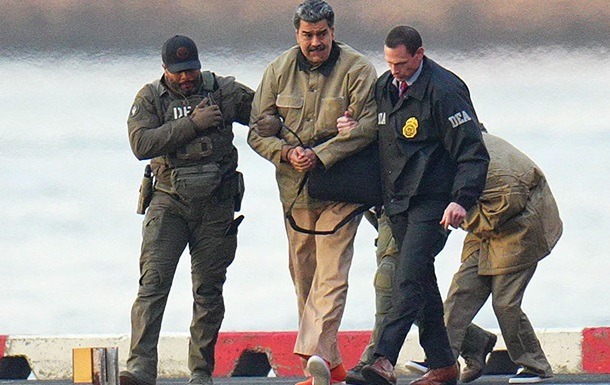
Venezuelan President Nicolás Maduro appeared before a U.S. court following a U.S. special operation. The world has split into two camps. Maduro’s son called it a “kidnapping” and warned of a dangerous precedent, while Nicolás Maduro himself refused to admit guilt, declaring himself the legitimate president and a prisoner of war. European leaders are trying to comment on the event with restraint so as not to weaken the coalition supporting Ukraine, while Kyiv has firmly supported the Venezuelan people and condemned the actions of the Maduro regime, in particular election fraud and systematic human rights violations.
Caracas has become proof that in modern politics, international law is increasingly giving way to the law of force. Is the U.S. truly ready to “rewrite” the rules of international law? How will Trump’s actions regarding Cuba, Mexico, and Greenland affect regional stability, and what lessons can Ukraine draw from this? And finally, what does the signal from Caracas mean for countries weaker than the U.S.?
The key factor in the events in Venezuela is not political sympathies, but oil. This was noted in an exclusive commentary by Serhiy Yagodzinsky, Vice Rector of the European University, Doctor of Science, Professor.
“There are ideological, financial, and economic issues at play, as well as leverage over global processes—and that is oil,” explains Yagodzinsky.
And Trump himself makes no secret of his plans to bring American companies back into the Venezuelan oil market. The U.S. president stated that American oil companies could help modernize Venezuela’s devastated infrastructure and receive compensation from the U.S. or through production. In his estimation, expanding production in Venezuela could be completed in 18 months, but this would require significant investment. The market’s biggest players—Exxon Mobil, ConocoPhillips, and Chevron—are not rushing to return just yet. Currently, the Americans’ return is hindered by worn-out facilities, political instability, and uncertainty regarding legal conditions following the nationalization of Venezuelan oil and U.S. sanctions.
The Trial of Maduro – A Signal to the World
At the same time, the professor emphasizes that the Maduro case should serve as a signal to other countries weaker than the U.S.
“What happened to Maduro should hint to all leaders, slightly less powerful than the U.S., that something irreparable could happen to them if they don’t at least more or less play the game imposed by the U.S.,” — Serhiy Yagodzinsky
At the same time, Yagodzinsky acknowledges that this is a clear violation of international law.
“Donald Trump acted first and foremost as the leader of his country and only then as president and guarantor of international agreements,” noted Yagodzinsky
Trump vs. Maduro: Lessons for Ukraine
The expert immediately refutes popular comparisons of Venezuela with Russia or Ukraine.
“That scenario, like with Maduro and Putin, obviously won’t happen. We need to forget about it. These are fantasies we’d like to joke about,” says Yagodzinsky.
Similarly, what the Russians are dreaming of there must also remain a fantasy. The history of Venezuela and the United States of America is long, complex, and defies simple comparisons, adds Yagodzinsky
For Ukraine, the key remains to maintain a negotiating position, demonstrate loyalty, and understand its role in the global system of alliances.
What’s next: Colombia, Cuba, Greenland, Mexico, or Iran?
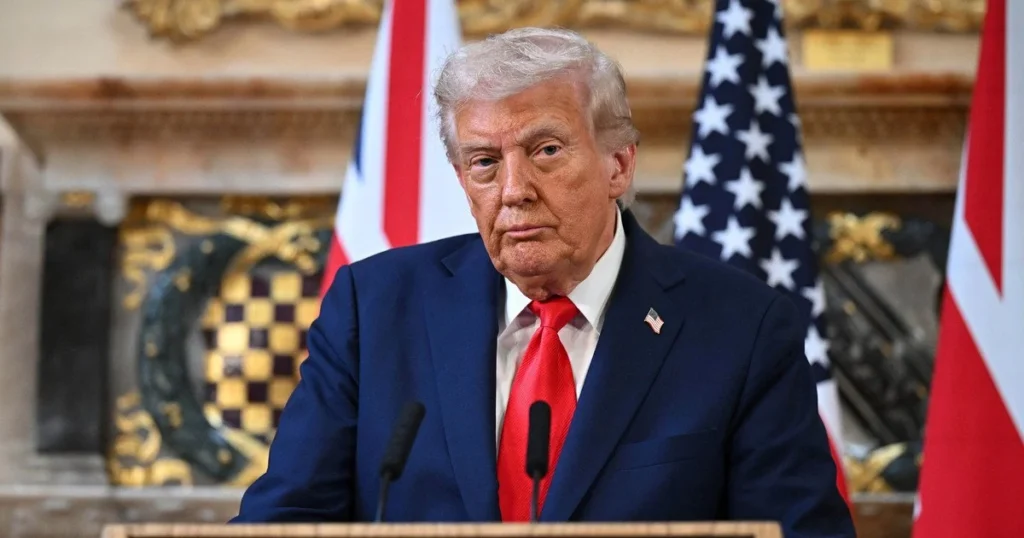
Following the ouster of Venezuelan leader Nicolás Maduro, U.S. President Donald Trump announced plans for potential military operations in other countries, among which he named Colombia, Cuba, Mexico, Iran—and Greenland. On board Air Force One, journalists received a list of potential targets from Trump, but American analysts are unanimous: the most realistic next “conquered” territory could be the autonomous Danish territory in the Arctic.
“Trump presented a long list of potential future conquests, but the most likely target for his administration will be Greenland,” notes Asli Aydintasbas of the Brookings Institution.
The U.S. president justifies his interest in the island on the grounds of national security. According to him, Denmark is unable to defend Greenland on its own against potential threats from Russia and China. In addition,Greenland is rich in natural resources, and its strategic location in the Arctic, between the U.S., Russia, and Europe, makes it key to controlling shipping and trade in the northern latitudes.
Trump also stated that Cuba’s fate is tied to Maduro’s downfall and Venezuela’s loss of the ability to fund allies in the region.
“I think it will just fall. I don’t think we need to take any action,” Trump said, responding to a question about a possible U.S. operation on the island.
Moreover, the U.S. President once again proposed incorporating Canada into the United States as the 51st state, sharing several maps on the social media platform Truth Social where the country is shown as part of the United States.
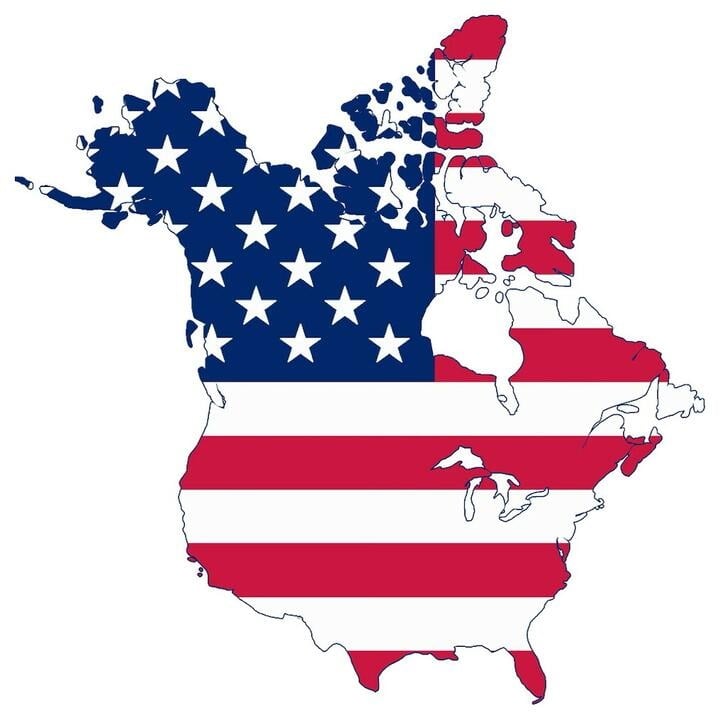
Meanwhile, the Financial Times reported that Mexico became Cuba’s top oil supplier in 2025, surpassing Venezuela. According to Kpler, Mexico exported an average of 12,284 barrels of oil per day to Cuba, which is 56% more than in 2024. This is precisely what is said to be capable of “infuriating Trump,” as Cuba’s shift away from Venezuelan influence contradicts his expectations of regional loyalty and political dependence.
The Iranian government has found itself in a dead end, primarily due to the complete economic collapse it has brought upon the country. This was stated in an exclusive comment for [Komersant] by Grigory Tamar, a reserve officer of the Israel Defense Forces (IDF) and a military and political analyst.
He drew attention to Donald Trump’s statement regarding possible U.S. intervention.
“If Iran’s intelligence services and security forces open fire to kill protesters, the U.S. will intervene. In general, when the government orders security forces to shoot at its own people, it means that the government’s legitimacy effectively disappears,” says Tamar

Maduro’s ouster, the change in oil suppliers to Cuba, and Trump’s plans regarding American companies demonstrate that the U.S. is ready to use economic and political pressure even without direct military action. For Ukraine, this is a lesson in flexibility: maintain a negotiating position, control one’s own resources, and understand that in global politics, power and economics are often more important than formal rules.