The “financial tragedy” in April: what lies behind Getmantsev’s statements and how realistic is such a scenario?
23 February 14:58 ANALYSIS
Ukraine may find itself on the brink of an acute budget crisis as early as this spring. The threat of a “financial tragedy” in April was announced by Danylo Getmantsev, chairman of the Verkhovna Rada’s finance committee. According to him, the state is already spending funds planned for the second half of the year, and without decisions on international financing, there may simply not be enough resources.
How realistic is this scenario? And what is behind the public warnings — political pressure or an objective economic threat?
Ukraine faces a “financial tragedy” as early as April: what exactly did Getmantsev say?
In an interview with Forbes Ukraine, Getmantsev, commenting on the discussions surrounding unpopular tax changes and the fulfillment of the IMF program conditions, said:
“Not all of my colleagues have a premonition of financial tragedy. I do, and so does the finance minister, because he understands that in April there will be nothing to finance expenditures.”
According to him, the IMF’s attitude toward the “beacons” agreed upon by the government is simple: they are mandatory, and transferring them from the prior actions format does not change this.
The deputy also criticized the government for inconsistency. According to him, on the one hand, the Cabinet of Ministers agrees to the requirements within the framework of the IMF program, and on the other hand, it expands, as he put it, “the ineffective national cashback program,” in particular through differentiated payments.
Budget deficit: the scale of the problem
The 2026 state budget law provides for a deficit of UAH 2.4 trillion, which is about 18.5% of GDP. For the fourth year in a row, Ukraine’s budget is being formed with an extremely high deficit.
Economist Oleg Getman commented
“It is entirely objective and entirely realistic. For the fourth year in a row, our budget has a huge deficit. Usually, it is between $40 billion and $50 billion every year.”
According to him, these funds were previously covered by international partners — the G7 countries, the EU, the IMF, and the World Bank. Last year, the amount of aid reached $55 billion.
“This year, we planned to receive about $50 billion from the IMF, the World Bank, Europe, and the G7. But so far, almost no one has given us anything.”
Read us on Telegram: important topics – without censorship
Why the money is not coming
According to Getman, the key reason is internal political problems:
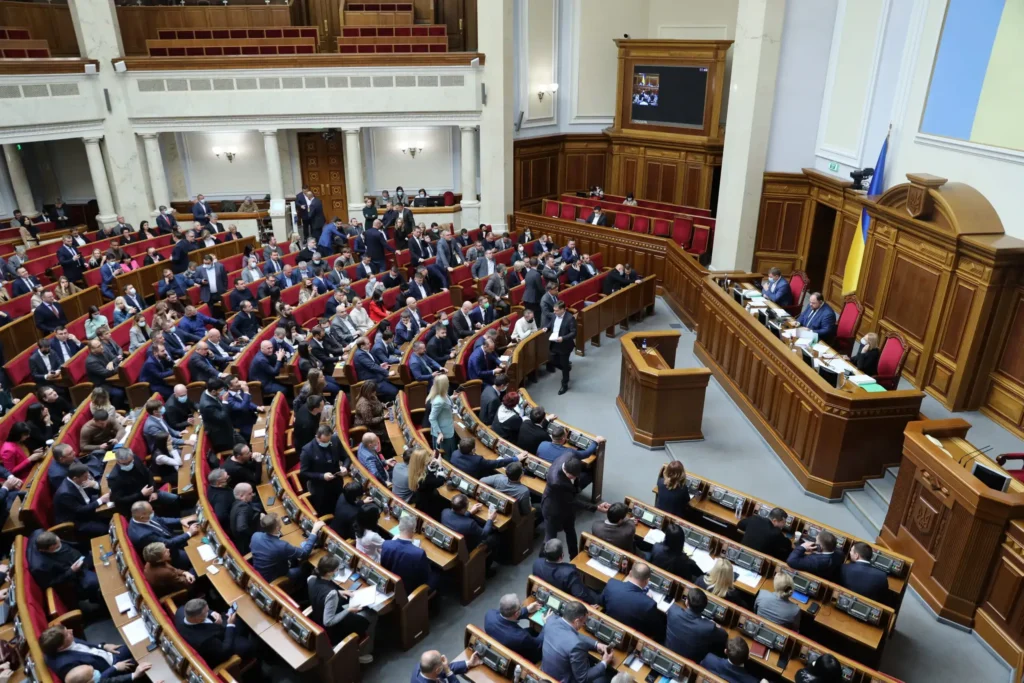
“We cannot vote on the bills that are needed to continue the financing programs. Parliament is effectively paralyzed.”
This refers to decisions necessary to continue macro-financial support programs, particularly within the framework of cooperation with the IMF and the World Bank.
“If these populists don’t come to their senses in March, we will have a very critical situation,” warns the economist.
90 billion euros and a blockade in the EU
Another risk factor is the blocking of a €90 billion EU loan. Economist Oleg Pendzin commented
“The budget situation in Ukraine is extremely threatening. You know about the €90 billion that has been blocked.”
He also draws attention to the complex geopolitical situation surrounding the Druzhba oil pipeline and the blocking of the 20th package of EU sanctions.
“I think that it will now be technically impossible to restore Druzhba. First, the Russians struck the oil pipeline compressor station in central Ukraine. Second, Ukraine struck in Tatarstan, Russia, at a large oil loading terminal on the Druzhba oil pipeline. Note, by the way, that there is no 20th package of sanctions — Hungary blocked it.”
How realistic is the scenario of default or “financial tragedy”?
Experts agree that this is not about an immediate default, but about the risk of cash gaps — a situation where the state will not have the funds to finance its expenditures in a timely manner.
The main risks are
- delay in international aid
- failure to comply with IMF program conditions
- political instability in parliament
- blocking of decisions at the EU level
However, if the necessary laws are passed quickly and funding is unblocked, the “tragedy” scenario can be avoided.
Expert forecast
Economists emphasize that March and April will be critical. If parliament adopts the necessary decisions and partners unblock funds, the budget system will remain stable.
At the same time, delays could lead to:
- cuts to certain programs
- delays in payments
- revision of the expenditure side of the budget
The situation remains tense but controllable, provided that decisions are made quickly.
Read us on Telegram: important topics – without censorship