Temu’s empire is bursting at the seams: the founder lost almost half of its profits for the quarter
29 May 2025 17:57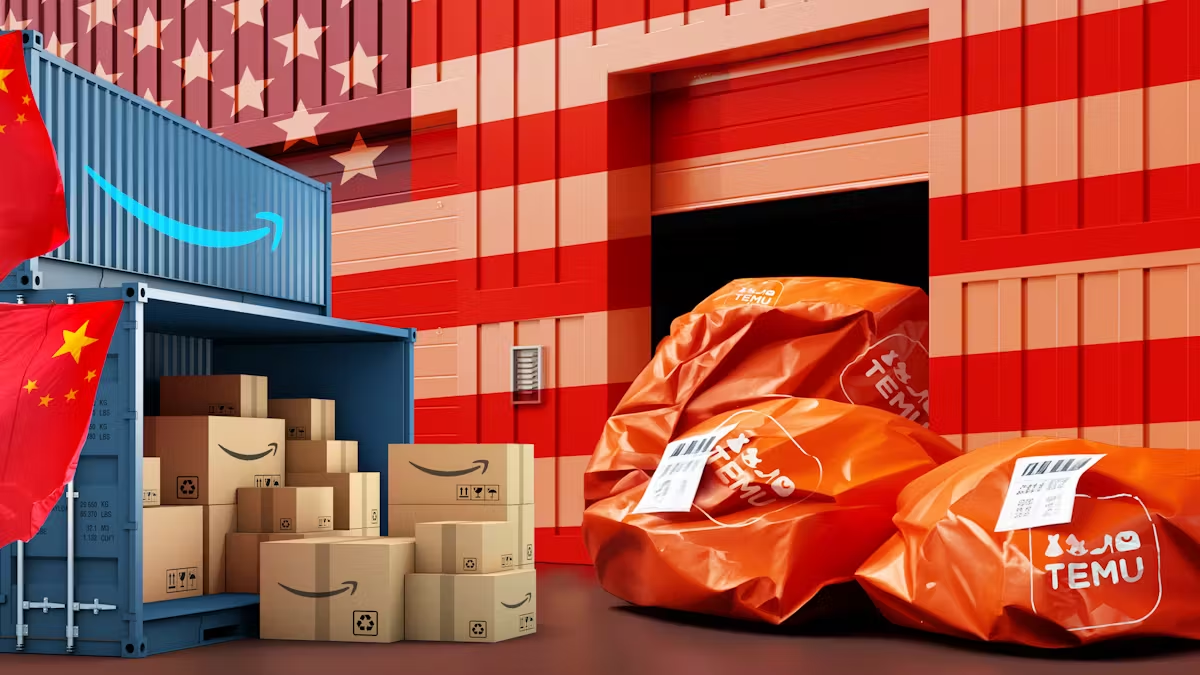
In the first quarter of 2025, PDD Holdings, the Chinese parent company of the fast-growing e-commerce platforms Temu and Pinduoduo, reported a staggering 47% drop in net profit to about $2.03 billion. This is one of the steepest quarterly drops in the company’s history, which shocked the global tech and retail investor communities, "Komersant Ukrainian" reports, citing the WSJ.
The main reason for this decline was the intensification of the trade war between China and the United States, which led to dramatic policy changes affecting cross-border e-commerce.
In particular, the recent decision of the US government to cancel the “de minimis” duty exemption has significantly affected Temu’s business model. This exemption allowed for duty-free imports of low-cost goods below a certain value threshold, which allowed Temu to offer ultra-low prices for goods shipped directly from China. Its abolition resulted in such shipments being subject to standard tariffs, which undermined Temu’s key competitive advantage in the US market.
To navigate this abrupt policy change, Temu tried to localize its supply chain by keeping inventory in US warehouses. While this strategy improves delivery times and mitigates customs issues, it also increases operating costs, making it difficult for the marketplace to compete with domestic giants such as Amazon and Walmart. The transition has been neither smooth nor instantaneous, forcing Temu to temporarily suspend some deliveries and adjust prices, both of which have negatively impacted customer acquisition and retention.
Meanwhile, PDD Holdings is facing growing pressure in the domestic market. Domestic competitors such as Alibaba and JD.com are aggressively investing in customer loyalty programs and platform improvements, undermining Pinduoduo’s once unique position in the Chinese e-commerce landscape. In addition, government subsidies that used to support e-commerce growth have become less generous, leading to margin compression across the sector.
It should be noted that despite these obstacles, PDD’s total revenue still grew by 10% year-on-year to $13.18 billion. However, this is the company’s slowest growth rate since the beginning of 2022. Investors reacted with concern: PDD shares fell by 14% after the announcement of the profit. Management sought to reassure stakeholders by revealing plans to invest more than $13 billion over the next three years to support vendors, especially to retain suppliers who had expressed dissatisfaction with PDD’s historically aggressive pricing and margin policies.
The financial blow also had a direct personal impact on PDD founder Colin Huang. Once the second richest man in China, Huang saw his fortune plummet by more than $14 billion to $33.5 billion, dropping him to fourth among Chinese billionaires and 48th in the world, according to the Bloomberg Billionaires Index.
Thus, PDD Holdings’ profitability was significantly compromised by the changing geopolitical and economic environment. The company is now trying to rethink its supply chain, reassure disappointed suppliers, and restore investor confidence in a market where both costs and competitive pressures are rapidly increasing.
Read also: Temu reshapes business model due to Trump’s pressure
What you need to know about PDD Holdings
PDD Holdings Inc. is a Chinese multinational group specializing in e-commerce. The company owns platforms such as Pinduoduo and Temu, and is listed on the Nasdaq exchange under the ticker PDD.
- Founded: 2015, the founder is Colin Huang.
- Headquarters: Dublin, Ireland (since 2023, previously Shanghai).
- Key platforms: Pinduoduo (social commerce in China) and Temu (international low-price marketplace).
- Employees: over 17,000 people (as of 2023).
- Industry: e-commerce, agriculture, digital economy.
Financial indicators (as of Q1 2025)
- Revenue: rMB 95.67 billion (USD 13.18 billion), up 10% year-on-year.
- Net profit: rMB 14.74 billion (USD 2.03 billion), down 47% year-on-year.
- Operating profit: rMB 16.09 billion (USD 2.22 billion), down 38%.
- Main sources of revenue: online marketing (up 15%) and transaction services (up 6%).
Key challenges faced by the company
US trade barriers. The abolition of the preferential treatment for small parcels (de minimis) and the introduction of new tariffs (up to 145%) as part of the Trump administration’s policy. This forced Temu to raise prices and temporarily suspend shipments from China.
Rising costs. The company has invested more than $13 billion in seller support and $1.4 billion in consumer coupons to mitigate the impact of the tariffs.
Competition in China. Increased competition from Alibaba and JD.com, as well as a decline in consumer activity.
Market reaction. PDD shares fell 14% after the publication of the quarterly report.
Current market value
As of May 29, 2025, PDD Holdings shares are trading at USD 100.34 per share.
Strategic steps
Localization of logistics. Temu reoriented its logistics to warehouses in the United States to reduce dependence on Chinese supplies.
Supporting sellers. Creation of a $13 billion fund to support sellers and maintain the platform’s competitiveness.
Focus on sustainable growth. The company’s management emphasizes the priority of long-term sustainability over short-term profit.
Read also: Temu attacks wallets and phones of Ukrainians: what do you need to know?
Cancellation of the preferential regime for small parcels (de minimis) and introduction of new tariffs: what is behind the new White House policy
The abolition of the de minimis duty on small parcels in the United States and the introduction of new tariffs on imports from China were key events in 2025 that significantly affected global e-commerce.
De minimis is a customs rule that allowed duty-free importation of goods worth up to $800 per person per day into the United States. This provision, introduced in 1938, greatly simplified the import of low-cost goods, especially from China. Since 2016, after the threshold was raised from $200 to $800, the volume of such shipments has increased dramatically, reaching 1.36 billion parcels in 2024.
on May 2, 2025, the Trump administration officially canceled the preferential treatment for parcels from China and Hong Kong.
On May 14, 2025, new tariffs were introduced: 54% or a flat fee of $100 for a parcel worth up to $800.
Starting July 1, 2027, the de minimis duty will be completely abolished for all commercial shipments.
Reasons for the changes
- Fighting smuggling, in particular fentanyl, which was often imported under the guise of small parcels.
- Protecting American manufacturers from unfair competition from cheap imported goods.
- Reducing the volume of illegal imports and increasing customs revenues.
Implications for businesses and consumers
Platforms such as Temu and Shein were forced to reconsider their business models, with Temu suspending direct shipments from China to the US and switching to local warehousing.
Consumers have faced higher prices for goods that were previously available at lower prices due to preferential treatment.
Logistics companies experienced an increase in workload due to the need to file additional customs declarations and pay new tariffs.
Economic experts and analysts predict that the abolition of de minimis could lead to:
- Changes in global supply chains, including the relocation of warehouses closer to consumers.
- Increased role of local producers and suppliers.
- Higher prices for imported goods and a possible decrease in demand for them.
Читайте нас у Telegram: головні новини коротко