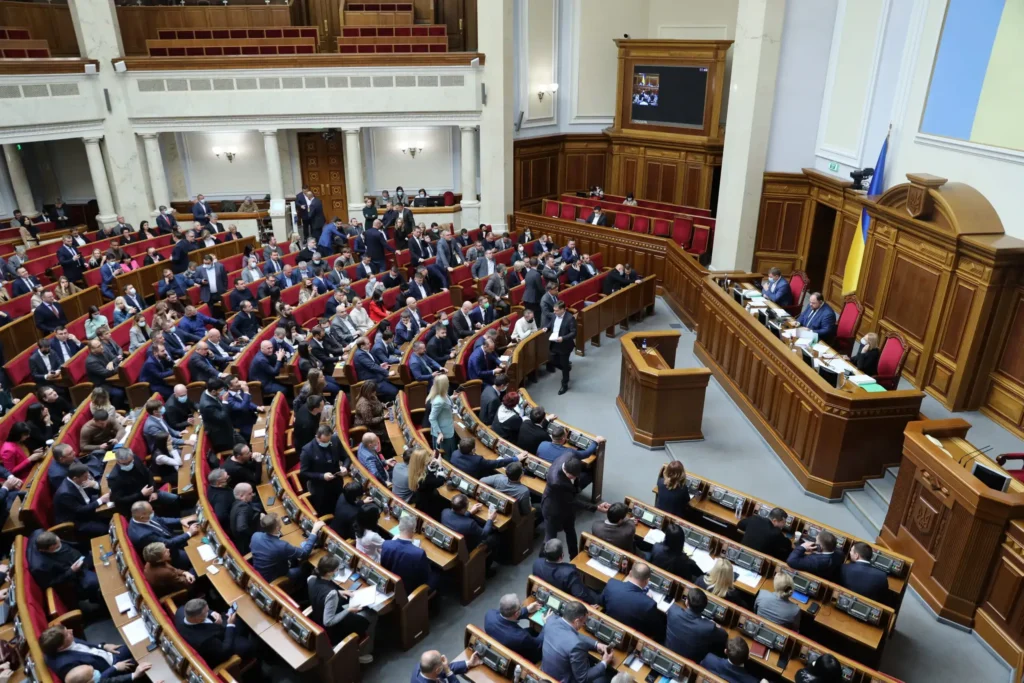
Khristenko could have made a deal with the investigation: lawyer explains what it means
27 November 2025 19:34
The AntAC, citing its own sources, reported that the case of MP Fedir Khrystenko was allegedly sent to court and that he “probably entered into a plea agreement”. Khrystenko is being tried in a joint case with NABU detective Ruslan Magamedrasulov on suspicion of high treason. The PGO or the SBU did not provide official confirmation of the data from the AntAC statement, while the AntAC assures of the allegedly “short” investigation timeframe and announces an “attack on NABU/SAPO”. Oleksandr Babikov , a lawyer and former Deputy Director of the State Bureau of Investigation, explains the situation in a commentary to [komresant ] .
According to him, the investigation into Khrystenko’s case lasted about 5 months, and this time is enough for the investigation to draw conclusions.
“I wouldn’t say that 5 months is too short a time. Cases, as they say, are different. But a single-episode criminal proceeding involving high treason can be investigated for 2-3 months, quite objectively, and this is enough time to collect evidence. Therefore, such a term does not mean anything,” the lawyer says.
Babikov adds that a plea agreement can be concluded in proceedings of any category.
“That is, the qualification (in Khristenko’s case, high treason) is not important here, what is more important is what the accused can provide to the prosecution, that is, the investigation, the prosecutor, in order to conclude a deal,” the expert explains.
Babikov separately commented on the AntAC’s “announcement” of another attack on the NABU allegedly because of the transfer of Khrystenko’s case to court. According to him, “the AntAC shapes public opinion”.
The lawyer added that even if Khristenko did indeed make a deal, this does not mean that the charges against him are dropped.
“…he remains an accused, but the punishment is agreed with the prosecutor. And then it is approved by the court. Usually, plea agreements are approved and the punishment that was agreed upon by the parties is imposed.
All investigative agencies use the plea bargaining tool. The NABU, the SBU, the DBR, the police – all of them, without exception,” Babikov said.
Khrystenko’s case
In September, the SBU arrested MP from the banned OPFL party, Fedir Khrystenko, on suspicion of treason.
Law enforcement officials clarified that the defendant had been recruited by the Russian FSB long before the full-scale invasion and was actively fulfilling the tasks of the Russian special service.
In July, according to the SBU and the Prosecutor General’s Office, the defendant was served a notice of suspicion under the following articles of the Criminal Code:
- ч. 2, Art. 28, Part 1, Part 2, Art. 111 (high treason committed by prior conspiracy by a group of persons under martial law);
- ч. 2 Art. 369-2 (abuse of influence).
According to the case file, “he is a top agent of the Russian FSB (resident), who was separately responsible for strengthening Russian influence on the NABU,” RBC-Ukraine’s sources said.
“Khrystenko was in close relations with some of the Bureau’s leaders. Among them is Ruslan Magamedrasulov, one of the heads of interregional departments of NABU detectives, who was detained by the SBU in July on suspicion of doing business with Russia,” the publication noted at the time of the MP’s detention.