Crypto businessman Nikolai Udiansky says he tried to circumvent NBU’s military restrictions with p2p payments
22 October 2024 13:09
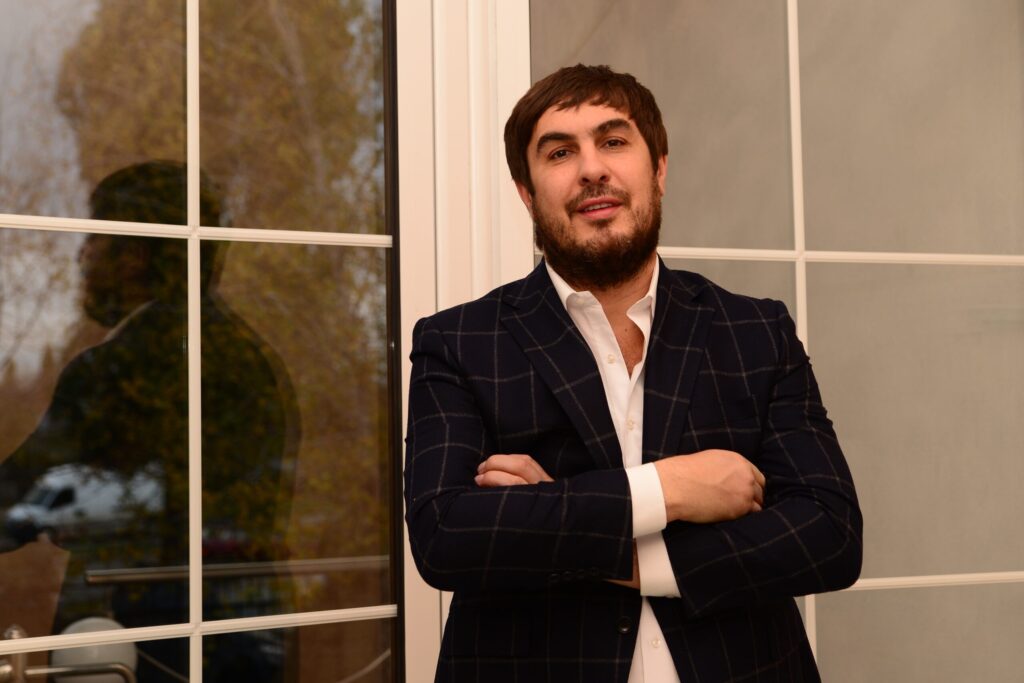
Crypto businessman Nikolai Udiansky made a self-disclosure at the N Crypto Awards 2024 conference in Kyiv in October. During his public speech, he described how, at the beginning of the full-scale invasion in 2022, he tried to save trading on his crypto exchange Qmall by circumventing the National Bank’s restrictions with p2p payments. However, this did not help stop capital outflows and stabilise trading, Kommersant Ukrainsky  reports, citing Udiansky’s own statements.
“The National Bank switched off the hryvnia, and we (trading on the stock exchange – ed.) came to zero. We tried different options. We tried everything (to restore it through – ed.). p2p, but it did not help. People started withdrawing their money and selling, a bear market,” Udiansky said.
NBU policy
As you know, on the first day of the great war, 24 February 2022, the National Bank introduced a number of bans and restrictions on the purchase/sale of foreign currency, withdrawal/transfer of foreign currency and hryvnia funds by businesses and individuals. They were approved by NBU Resolution No. 18 “On the operation of the banking system during martial law”, which was amended over the next 2.5 years with more than 60 different additions and clarifications.
Many of these restrictions were subsequently adjusted and eased. However, individuals still cannot freely buy foreign currency in non-cash form: up to UAH 50 thousand per month on a current account and up to UAH 200 thousand per month on a deposit account with one bank.
There is also a limit on cash withdrawals from any account – up to UAH 100 thousand per day – which makes life difficult for depositors, particularly when it comes to maturing deposits. There is also still a ban on transfers from hryvnia cards to foreign accounts, which previously allowed funds to be converted into foreign currency and withdrawn from the country. In addition, the NBU restricts a number of other transactions:
- p2p transfers from foreign currency cards – up to UAH 100 thousand per month
- foreign payments from hryvnia cards – up to UAH 100 thousand per month
- cash withdrawals abroad from hryvnia cards – up to UAH 12.5 thousand per week and UAH 50 thousand per month.
Many of these bans were introduced in response to various workarounds that emerged after the outbreak of full-scale war. For example, “card tourism”, when Ukrainians crossed the border to withdraw euros/dollars from hryvnia cards and then resell them at home at a more favourable exchange rate.
The NBU monitored these schemes and tried to block them promptly.
The NBU’s campaign against p2p transfers, mentioned by Mykola Udiansky, was the largest. The NBU launched a fight against what were initially called incorrect and even illegal transfers, and later introduced a total ban on p2p transfers over UAH 150,000 across Ukraine with a few exceptions. These innovations came into force more recently, on 1 October 2024. Officials explained that they were forced to do so due to the use of various schemes and as part of the fight against “drops ” (people who transferred their cards to third parties, including card fraudsters and schemers).
The authorities are now really actively fighting against transactions of the population in the crypto market using Ukrainian cards. Accounts are being blocked and closed, often on a forced (unilateral) basis. It is quite logical that this development can be considered a consequence of a significant number of workarounds, which, as Mykola Udiansky himself testified, crypto exchanges did resort to.
As a result, many consumers of banking services are suffering, as evidenced by the statistics of complaints on bank review portals.
According to the National Bank, 80,000 people have already terminated their relationships with banks as a result of the promises made. This phenomenon has become so widespread that the country’s largest retail bank, PrivatBank (over 24 million retail accounts), no longer explains its actions in each individual case, but simply publishes information about the ban on cryptocurrency card transactions on its official website.

In particular, the explanation states that “cryptocurrency transactions are temporarily prohibited” and specifies that they are considered to pose a “high financial risk”.
Banks detect such transactions during financial monitoring, a mandatory procedure. As you know, it involves not only internal checks of individuals, but also submission of reports to the National Bank and the financial intelligence agency, the State Financial Monitoring Service.
It is possible that more and more restrictions and prohibitions will be introduced in Ukraine as workarounds are implemented, as the NBU has always confirmed, emphasising the importance of the quality of financial monitoring.
Obviously, cryptocurrency operators are now under the scrutiny of the authorities. At least until the cryptocurrency market is fully legalised in Ukraine and the rules for taxation of income from relevant activities are approved, which has not yet happened.
It is now possible that in the course of this work, the National Bank and the State Financial Monitoring Service may become interested in the public statements of Mykola Udiansky quoted above.