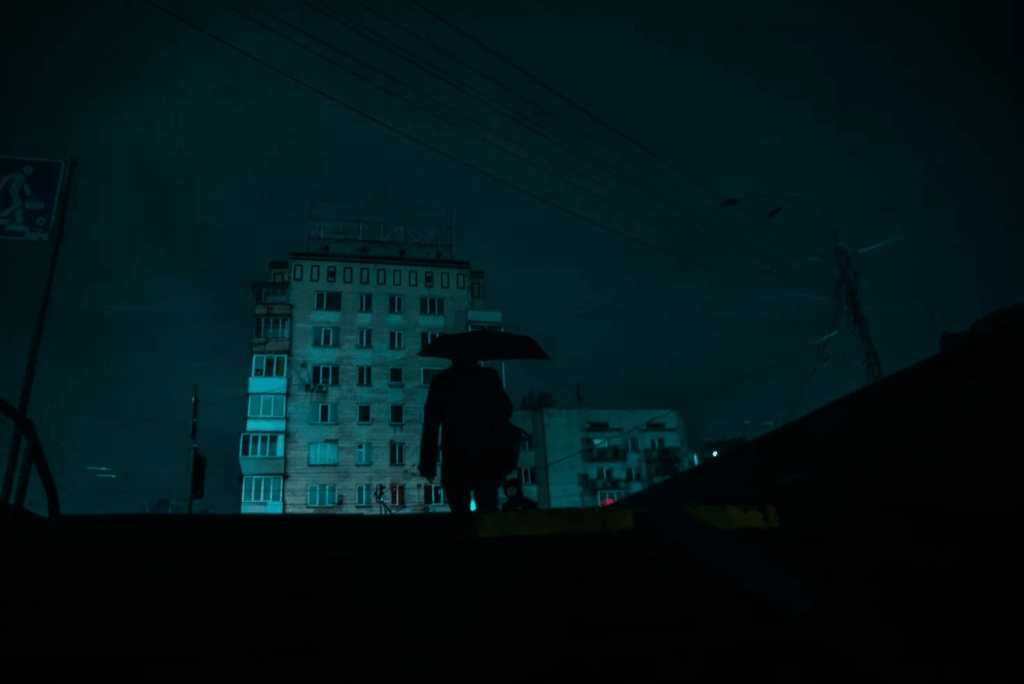
Kyiv will be plunged into darkness: DTEK announces citywide blackout
19 November 2025 22:48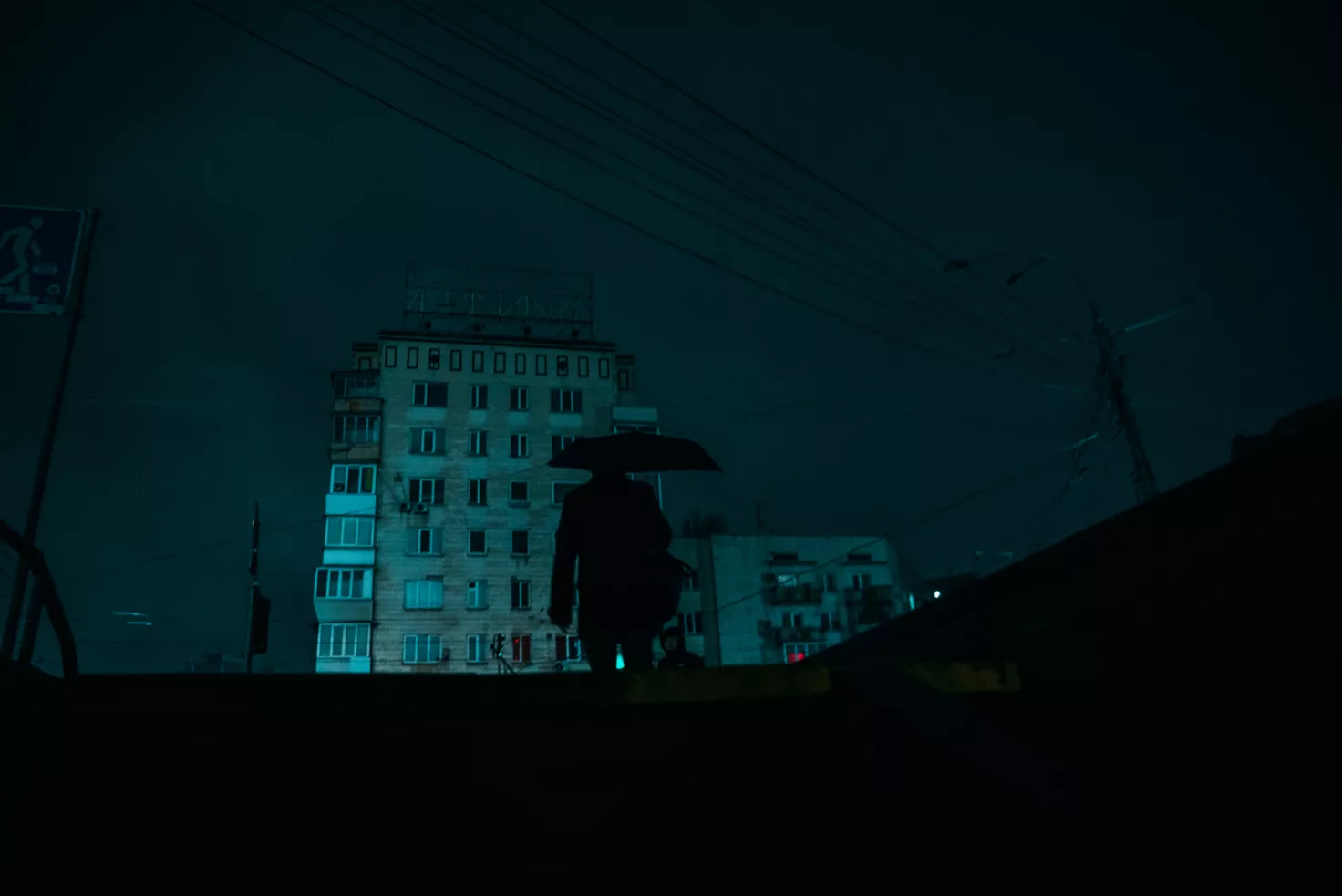 TIMETABLE
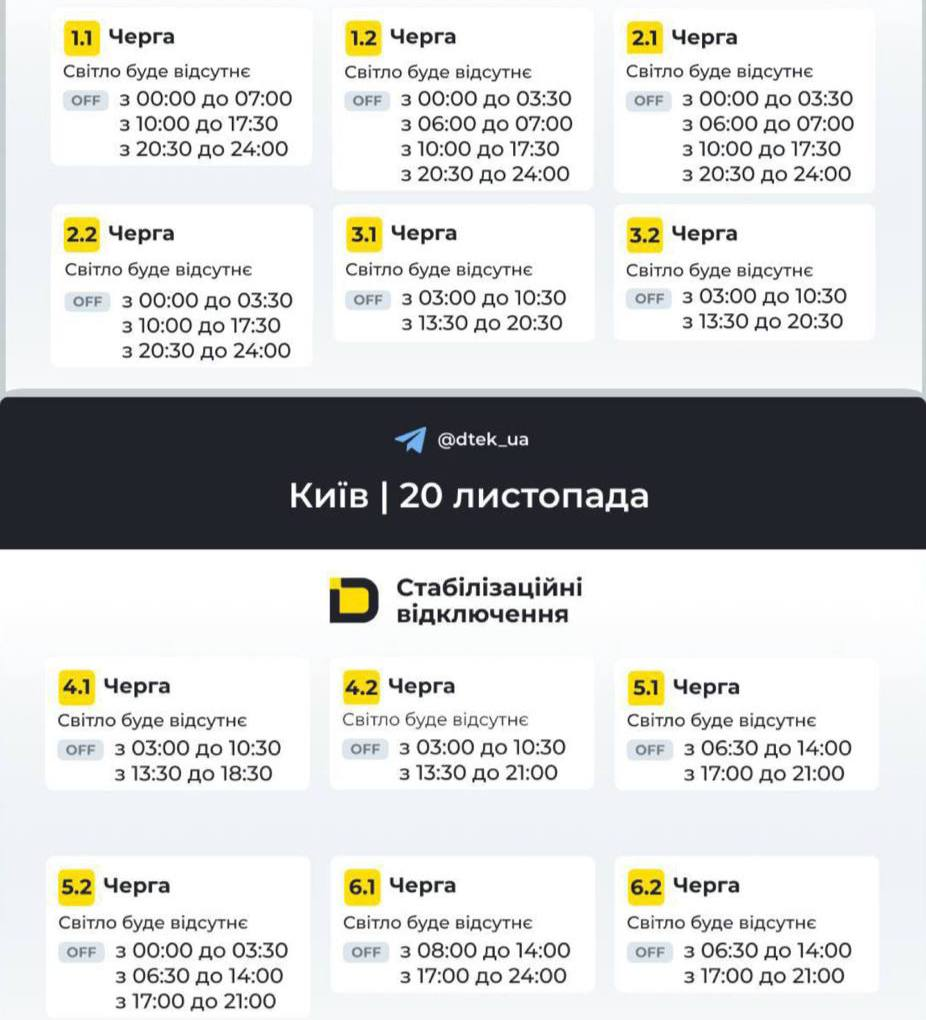
On Thursday, November 20, all of Kyiv will be without power for half an hour. This is reported by "Komersant Ukrainian" with reference to the blackout schedules published by DTEK.
All districts of the capital will experience a blackout from 13:30 to 14:00.
On average, Kyiv residents and visitors will be without electricity for 14-15 hours tomorrow.
Russia’s massive attack on the energy sector: new destruction in seven regions and transition to hourly blackouts
on November 19, Russia launched another massive missile and drone strike on Ukraine’s energy infrastructure. Facilities in seven regions came under fire: Kharkiv, Chernihiv, Dnipro, Lviv, Ivano-Frankivsk, Cherkasy, and Donetsk.
In each of these regions, power engineers are currently working in continuous emergency repair mode to restore power lines, substations and equipment that supply power to industrial enterprises, transport and household consumers.
According to Mykola Kolisnyk, Deputy Minister of Energy of Ukraine, more than 46,000 consumers in Kharkiv region are still without power supply. More than 3,000 customers are without power for a long time in Chernihiv region and more than 8,000 in Zaporizhzhia. Power outages are also reported in Sumy and Dnipropetrovs’k regions as a result of the morning shelling.
The situation in the power system remains complicated but manageable. “Despite the enemy’s intentions and constant shelling, we are keeping the system intact and are constantly working to restore power to consumers,” said the Deputy Head of the Ministry on November 19 during the national telethon “United News”.
“For the power system, this means not only physical damage but also the loss of maneuvering capacities and reserves. Some of the facilities had to be put under repair or “cold standby,” which reduced the system’s ability to cover peak loads.
To keep the power system in operation in the first hours after the attack, emergency blackouts had to be applied in some areas. This is a technical tool where outages occur without warning to prevent the entire system from collapsing.
After the situation stabilized, emergency outages were replaced by planned hourly schedules. They are in effect across the country and allow for a more even distribution of the power shortage between regions. Oblenergos publish up-to-date schedules on their websites and social media, but the power companies warn that in case of new shocks or a sharp increase in consumption, adjustments may be made even during the day.
A separate set of restrictions applies to industry and business. In most regions, enterprises are being set lower consumption limits, and some industries are being advised to shift energy-intensive operations from evening peaks to night hours or temporarily reduce their workload. For businesses, this means additional costs for flexible shift planning, the use of generators, and possible disruptions in supply chains.
Watch us on YouTube: important topics – without censorship
The transmission system operator and regional power distribution companies are urging consumers to use electricity as sparingly as possible throughout the day, but especially during morning and evening peaks. For households and small businesses, this means simple actions: postponing the use of powerful appliances, not turning on several energy-intensive appliances at the same time, and switching to energy-saving lighting solutions.
For large industry, it means more complicated steps, such as partially shifting production processes to night, optimizing shift schedules, and using generators and energy storage systems locally. The extent to which businesses and households reduce their peak consumption will determine the scope and duration of scheduled blackouts in specific regions.
In fact, every megawatt saved during peak hours reduces the risk to the power system and reduces the number of outages for both household consumers and businesses.
Energy and regulatory authorities are paying special attention to the situation around Zaporizhzhia NPP, which remains under Russian control. One of the key safety indicators of the plant is the water level in the cooling pond, which determines the possibility of long-term cooling of nuclear facilities. As of November 19, the water level is 13.18 meters. According to current calculations, this is sufficient to ensure the operation of the cooling systems in the current mode. This is a critical factor for the Ukrainian energy system: any incidents at ZNPP will not only have environmental and safety consequences, but will also inevitably affect the balance of capacities and investment risks in the energy sector.
Read us on Telegram: important topics – without censorship