NABU, SBU, and police want to be forced to pay for illegal cases, according to a draft law
5 March 15:04
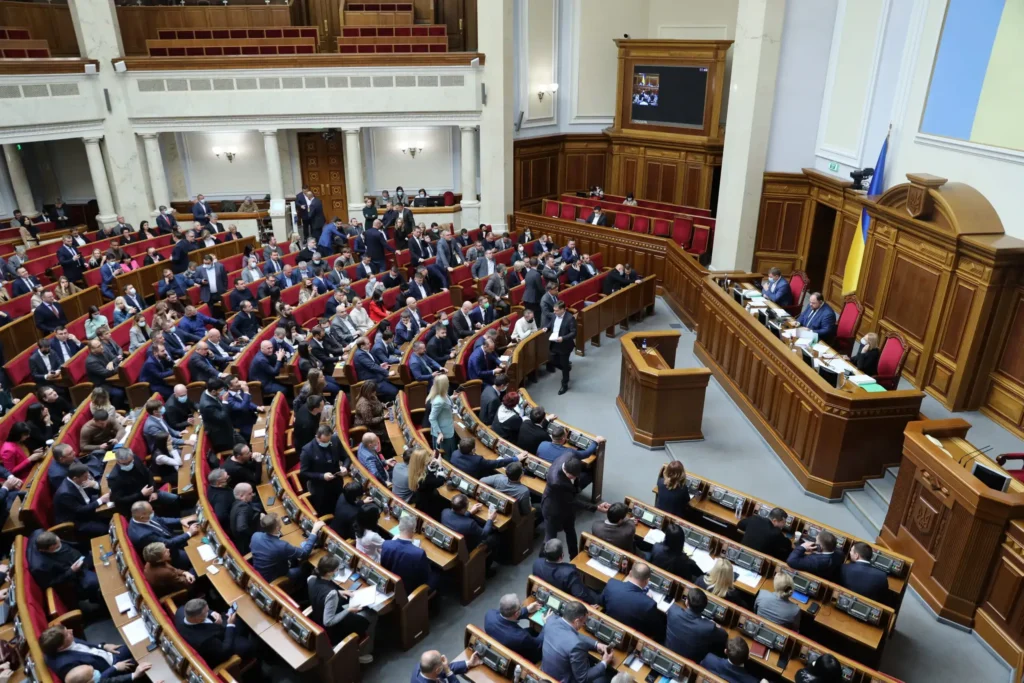
Two related bills have been registered in the Verkhovna Rada, proposing a radical change in the approach to the accountability of law enforcement officers and judges for unlawful decisions and procedural actions. The documents, initiated by MPs Anna Skorokhod, Georgiy Mazurashu, and Mikhail Sokolov, stipulate that in the event of harm to citizens or businesses, it should be compensated not by the state, but by specific officials— from their own funds and property. Komersant investigated what exactly is being proposed and how lawyers assess the initiative.
The idea seems politically understandable and even attractive to a society that has been facing law enforcement impunity for years. However, from a legal point of view , it could cause quite serious constitutional and systemic problems, as emphasized by anti-corruption law expert and lawyer Andriy Mazalov.
Personal responsibility instead of state responsibility
Today, Ukrainian legislation provides for a model that is classic for most legal systems: if a citizen suffers damage as a result of illegal actions by law enforcement officers, prosecutors, or the court, compensation is paid by the state from the budget. After that, the state can theoretically file a recourse claim against the guilty official, but in practice, such mechanisms are rarely used.
The new draft laws (No. 14351 and No. 14350) propose to “turn this structure upside down.” Instead of the state , the primary debtor should be the specific investigator, detective, prosecutor, or other official whose decisions or actions caused the harm. And they must compensate for it with their own property.
If illegal decisions were made by several persons—for example, an investigative team or a detective together with a prosecutor—then, according to the legislators’ plan, they should bear so-called “joint and several subsidiary” liability, i.e., pay compensation jointly.
Lawyers point out that this changes the very logic of the state’s tort liability.
As explained by anti-corruption law expert and lawyer Andriy Mazalov, the draft law makes the main debtor not the state, but a specific official, and this is the key conceptual innovation. However, there is a “but.” The proposed vision conflicts with the constitutional model.
Doubts arise about its constitutionality
Article 56 of the Basic Law directly guarantees everyone the right to compensation for damage caused by unlawful decisions of authorities or their officials, at the expense of the state or local self-government bodies.
According toAndriy Mazalov, this provision establishes a constitutional standard: the primary payer of compensation is the state. If the law shifts this obligation to an individual official, there is a risk of narrowing the constitutional guarantee.
In addition, such a model may paradoxically worsen the situation of the victims themselves. If compensation is to be paid by a specific investigator or prosecutor, the question of their solvency arises. As a result, a person may obtain a formal right to compensation, but in fact have no real opportunity to collect it.
Criminal liability for procedural violations
Among other things, the legislative initiative significantly expands the criminal liability of law enforcement officials. It is proposed to add a new article to the Criminal Code on illegal actions by officials of pre-trial investigation bodies, the prosecutor’s office, and the court.
A number of procedural violations — in particular, unlawful notification of suspicion, conducting searches or wiretapping without proper grounds, unlawful seizure of property, or unjustified detention — are punishable byimprisonment for seven to ten years.
Some changes are also proposed for other articles of the Criminal Code. For example, liability for unlawful deprivation of liberty, official forgery, falsification of evidence, or bringing an innocent person to criminal responsibility will be increased .
If the law is passed, detectives and investigators will effectively have an unprecedented level of personal criminal and financial liability.
Risk of pressure on judges
The bill also provides for direct property liability for judges for unlawful decisions in civil cases (if there is a guilty verdict).
According to lawyers, even under such conditions, this creates potential pressure on the independence of the court.
“The problem here is twofold.
Pressure on independence due to personal property risk. Even if linked to a guilty verdict, the very signal that “the judge pays with his own property” creates a so-called self-restraint effect: the judge makes decisions under the fear of personal bankruptcy.
The criminal law basis of the bill appears shaky, as the classic article on “knowingly unjust decisions” (Article 375 of the Criminal Code) has been removed from the Criminal Code. In other words, the draft law effectively ties the civil liability of judges to a criminal framework, which, after the exclusion of Article 375, has become much more complicated (it will be necessary to “find” another composition or prove other criminal offenses). This reduces the practical applicability of the mechanism and makes it either declarative or dangerous (because it will encourage the search for criminal law “workarounds”),” explains Andriy Mazalov.
An idea supported by society
Despite these risks, the idea behind the bill may be socially desirable. Ukrainians, especially entrepreneurs, often face situations where illegal actions by law enforcement or judicial errors cost them dearly. This leads to business shutdowns, company bankruptcies, and property seizures, which are not compensated by the state or, even less so, by the authorities involved in the prosecution.
This is precisely the argument put forward by the authors of the initiative: if officials know that they are risking their own property and freedom, this “should deter abuse.”
However, as Andriy Mazalov points out, this goal can be achieved without conflict with the Constitution.
He considers another approach to be the most legally sound: when the state first compensates the victim for the damage , as required by the Constitution, but then necessarily files a recourse claim against the guilty official—especially if intent or gross negligence is proven.
Such a mechanism would make it possible to combine two things: guaranteeing people real compensation and at the same time making the personal responsibility of officials inevitable, the expert explains .
The discussion is just beginning
The draft laws on the personal liability of law enforcement officers still have to go through parliamentary discussions, committees, and in general… it is not yet certain that they will actually reach the session hall and be considered on their merits.