“We’ll harvest half as much wheat as in 2021”: how climate and war affected the 2025 harvest
20 June 2025 12:57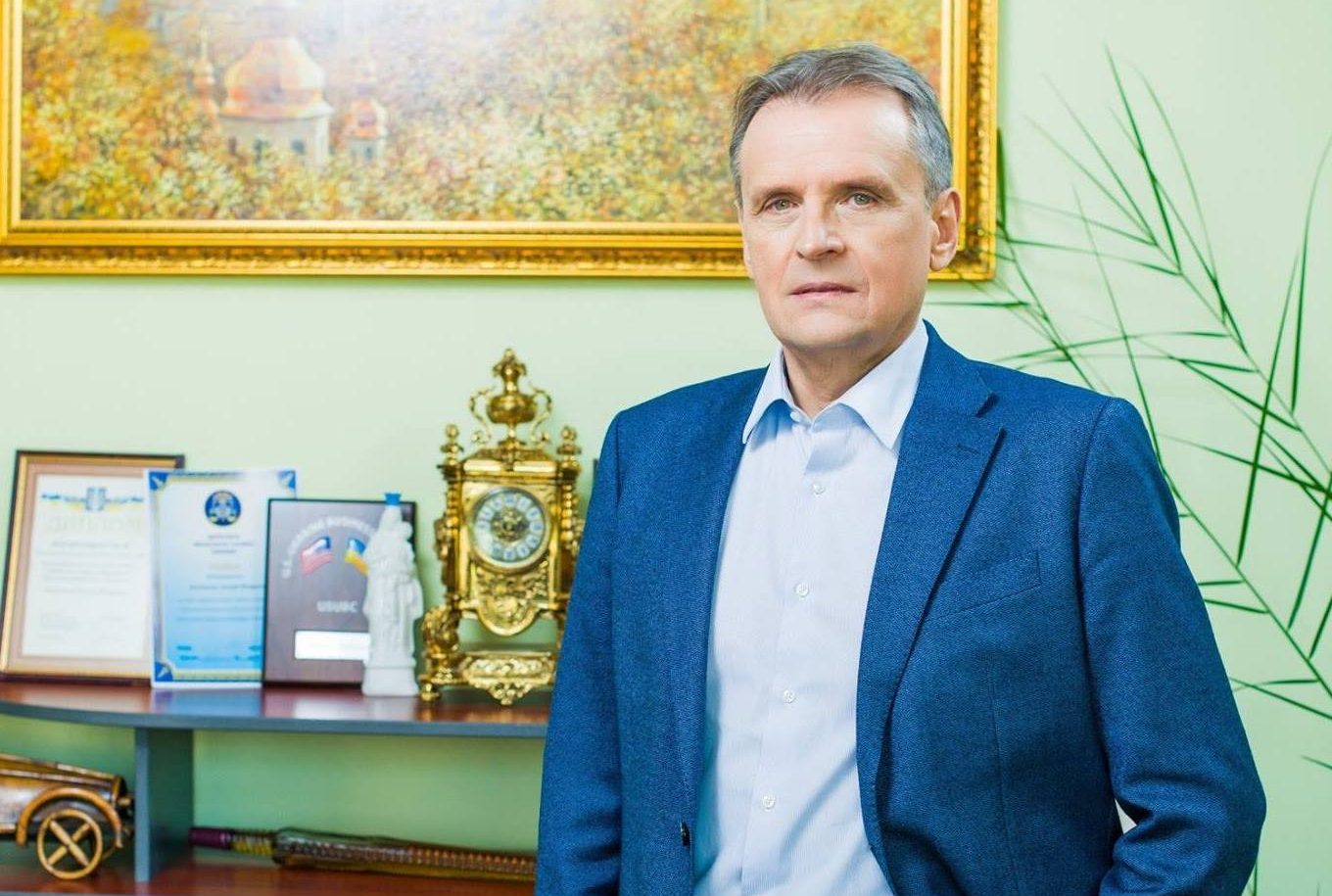 INTERVIEW
This spring has been unusually difficult for Ukrainian farmers, with prolonged rains, frosts and uncertainty over European trade quotas forcing farmers to reconsider their plans. What is happening to the crops, how much will the wheat harvest suffer, will Ukrainians have enough quality flour, and how will the rules of the game in the EU market change – "Komersant Ukrainian" asked Leonid Kozachenko, President of the Ukrainian Agrarian Confederation.
The weather is to blame for half the harvest
Let’s start with the main thing – what do you think the wheat harvest will be like in Ukraine this year? Given the abnormal spring with rains and localized frosts, should we expect a decline in the gross grain harvest?
There is no doubt that we should expect not just a decline, but a catastrophic decline in the wheat harvest. While last year Ukrainian farmers harvested 37.4 million tons of wheat, this year we will only harvest about 20 million tons. This is almost half as much.
The reasons are purely weather-related. The spring frosts hit when the grain had already sprouted and the first leaves appeared. When frosts down to -6-8°C occur during the growing season, it is almost guaranteed that some crops will be destroyed. Add to this waterlogging and rains that prevented us from fertilizing or cultivating the fields in time, and we get a critical result.
This hasn’t happened since 2002. Back then, we harvested only 15 million tons. But then there was no snow in the winter, instead there was a severe frost, which destroyed more than 40% of winter crops, and now we have a more insidious, difficult spring, which affects not only the volume but also the quality of grain. This means that even what we harvest will not always be suitable for the milling industry.
So the situation is much more complicated than just “less wheat”?
Yes, this is a blow to the entire agricultural economy. Firstly, financially: farmers have already invested in the sowing season, but it will be almost impossible to recoup these investments from this harvest. Second, there will be almost no wheat of grades 1, 2, and 3. This means that we will have to import more quality grain or flour.
Despite the war, Ukraine remains among the top 10 wheat producers. Will it be able to maintain this position in 2025, given the current challenges in the global market and political decisions within the EU?
We may still be able to stay in the top 10 because other players had similar problems with the climate. But we are unlikely to return to the top 5, as we used to be, in the near future.
Global warming affects everyone, but this year Ukraine is particularly affected. In addition, the quality of the harvest is also affected by logistics, financial conditions, and internal restrictions. Another important thing is that the share of quality wheat will decrease by 2-3 times compared to 2021.
Agricultural exports need government support
on June 5, the autonomous trade measures (ATMs) introduced by the European Union in 2022 to support Ukraine and its export potential expired. What are the implications for Ukraine of the change in the terms of trade with the EU? How will this affect further supplies of wheat, corn, and rapeseed to Europe?
Very seriously. The conditions that were in place before June 5 allowed us to supply large volumes of agricultural products to the EU duty-free and without quotas. Now, the quotas have been reduced by almost half compared to the pre-war period, and the list of restricted items has grown significantly.
These are not only grains, but also honey, poultry, fruits, and vegetables. The most reliable market for us, Europe, is becoming less accessible at the very moment when we are losing crops and need stable income.
Given the EU’s export restrictions, is Ukraine considering alternative markets, such as the Middle East, Asia or Africa? Which ones look the most promising?
Yes, and this is already happening. China, India, South Korea, Saudi Arabia, Qatar – all these countries are very interested in our products. The problem is logistics, insurance and risks. Especially in Africa: there is demand, but 90% of contracts have problems with payment.
Here, I believe we need to create a system of state support for exports – diplomatic, legal, and financial.
Читайте нас у Telegram: головні новини коротко
poland has recently elected a new president. How can this change the relations between Ukraine and Poland in the agricultural sector, in particular in the issue of exporting agricultural products across the Polish border?
I don’t think so. Unfortunately, Poland was the most aggressive in restricting Ukrainian agricultural products. They stopped railcars and trucks and dumped grain on the road, even if it was in transit to other countries. Their logic is that we are destroying their market.
They don’t want to compete with agroholdings because their farmer has 10-15 hectares and keeps three cows and five piglets. We have a completely different structure. But even now, under force majeure circumstances with half the harvest, we can give a better price. And this irritates them.
Our relations with the Poles in the agricultural sector are historically difficult. So I don’t think anything will change significantly with the new president. And it’s not about personalities.
Ukraine needs $50 billion to remain a breadbasket
The Ukrainian government has repeatedly announced a strategic shift to the production of high value-added products. At what stage is this process and do we already see concrete results, for example, in agro-processing?
In fact, it has not yet accelerated. However, the Ministry of Agrarian Policy and Food announces future positive changes in this direction. The main problem is the lack of necessary funding. Without long and cheap investments, we cannot launch deep processing. And crop losses further limit our options. We export corn – China produces lysine from it – and we buy it back. This is absurd.
We could produce it all ourselves. And not just lysine, but hundreds of other derivatives. We estimate that the potential of deep processing could increase agricultural GDP from $27 billion to $140 billion.
Given all the risks, will Ukraine be able to maintain its status as the breadbasket of Europe in the coming years? What is needed for this – investments, modernization, changes in agricultural policy?
Yes, it can, but a serious transformation is needed. We have unique black soil – more than 25% of the world’s reserves – and progressive experience. But because of the war, we have already lost up to 45% of our potential. To restore what we have lost and maximize the production of 125-130 million tons of grains and oilseeds, we need to invest up to $80 billion.
We proposed 15 years ago to establish a land mortgage bank in Ukraine with a capital of USD 50 billion. It was a fairly realistic proposal. But the project was never implemented. If we find this money, we will once again become the breadbasket of the world. If not, we will lose this position over time.
Читайте нас у Telegram: головні новини коротко