Putin and the “Truce for the Parade”: Will Trump’s diplomatic stunt work on May 9?
21 April 2025 17:28
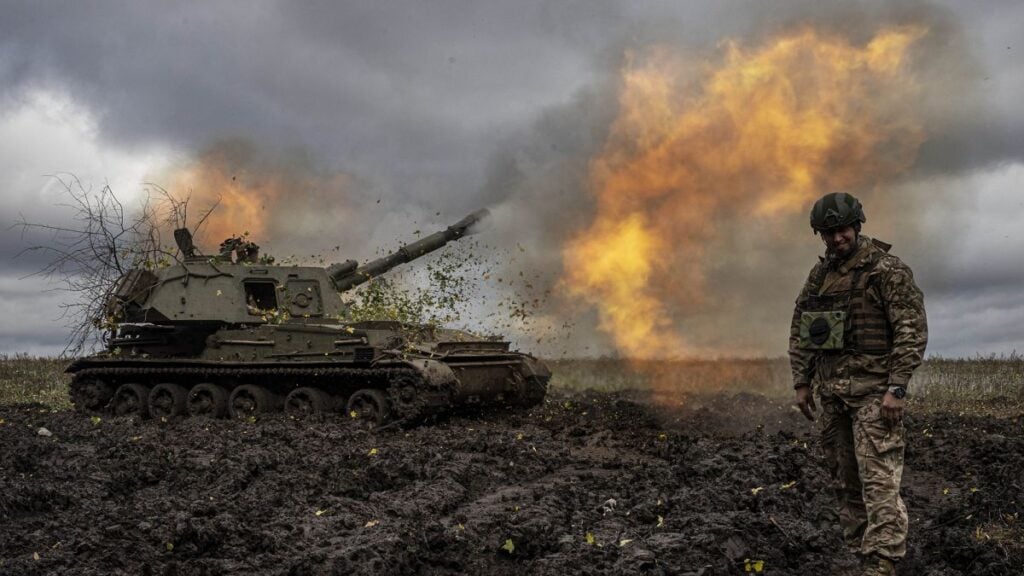
Despite the loud statements about the “Easter truce,” the frontline remained a war zone. From 18:00 on April 19 to 00:00 on April 21, Russia announced a temporary ceasefire. However, as many times before, words were not matched by actions. Once again, the Kremlin used the “humanitarian pause” to regroup forces, bring in ammunition, and evacuate the wounded, while continuing to attack in certain areas. Was it a diplomatic trick for the West or a “picture” for May 9?
Did Putin’s political move on Washington work and will the world believe in another “peace initiative” when the KABs are flying right on Easter?
Immediately after the formal “ceasefire” ended, the Russian Ministry of Defense was quick to declare that “Russian troops strictly observed the ceasefire” while accusing Ukraine of violating it. According to their version, Ukrainian forces allegedly continued shelling, using artillery and drones. The statement was made against the backdrop of new assault attacks and increased intensity of shelling along the entire front line.
Frontline reality: there was no truce
The Ukrainian military immediately debunked the myth of any ceasefire. The commander of the Third Assault Brigade , Maksym Zhorin, said that throughout the entire “truce” in Kharkiv region, active assault actions were conducted by the Russian Federation, using cannon artillery, mortars and FPV drones. His conclusion: “no changes, the ceasefire is just a fiction.”
Other military sources confirm that during the “Easter truce” the Russians continued to try to break through near Pokrovsk, especially in the area of Udachne and Uspenivka. And attempts to smuggle ammunition on motorcycles and on foot under the guise of “white flags ” are only confirmation that the “truce” was used solely for their own benefit, writes the telegram channel “Officer”.
The Ukrainian military point to cynicism: while Russia was actively transporting supplies, evacuating the wounded, and preparing for new attacks, the Ukrainian Armed Forces were not even able to carry out rotations in many areas due to constant shelling. As a result, the “truce” became another tool of military manipulation rather than a humanitarian initiative.
Interestingly, even some pro-Russian telegram channels, such as Tiny Rusy, admit that the truce is being “broken” by Russian commanders themselves. They say that for some of the commanders, war is a business, and the cessation of hostilities means a loss of control over cash flow and the possible end of impunity.
“The KABs are flying, God forbid, the holiday is over before it started,” a soldier with the call sign “Sniper” sarcastically summarizes.
And this phrase seems to describe the essence of another “Easter truce” most accurately. Only in military reports does it look peaceful – in reality, it was just a new stage of the Russian tactic of “truce for regrouping.”
Truce as a diplomatic stunt: Putin plays the peace card before Trump and May 9
The “Easter truce” declared by the Kremlin, which lasted only 30 hours, has more of a political than a humanitarian component. Despite loud statements about the ceasefire, Russian troops did not stop their assaults. However, even such a short-term pause, according to experts, allowed Putin to gain a small diplomatic advantage – at least in his foreign policy game with Washington.
According to the Wall Street Journal, this “truce” was a reaction to a warning from the United States, which, according to Secretary of State Marco Rubio, was ready to abandon its efforts to resolve the war if there was no progress.
The next day, Putin announced a short pause for Easter. Analysts called the move an attempt to “position himself as the leader who most wants peace” – without any real effort on the front lines.
Commentary
“The main audience was Trump. Because they began to put pressure on them, threatening to fight over the negotiation process, and this creates an uncertain situation for Putin,” Taras Zahorodniy
In addition, the Kremlin is trying to save face before the May 9 celebration, the main symbolic date for Russian propaganda:
“May 9 is important to him. Although there is some kind of lull, so that, you know, the guests who will stand next to him on the podium on Red Square do not look nervously at the sky. Or did not hear these alarms at that time,” Taras Zagorodnyi
According to Zahorodnyi, Putin is trying to look constructive, but the question is how well this image will work:
“He’s basically trying to play it off. Has he succeeded? Well, partly yes, and partly no, we don’t know. Although his usual tactic is that most Europeans will not believe it.” – Taras Zahorodnyi
Will Putin accept Zelensky’s proposal?
The President of Ukraine Volodymyr Zelenskyy has proposed to temporarily suspend strikes on civilian infrastructure for 30 days with the possibility of extension. Zahorodnyi answers whether it is possible that Russia will agree to this in order to “ensure a parade” in the capital
“It is possible that there will be some maneuvers on the part of Moscow, but Ukraine can, of course, promise and then say that we do not guarantee the safety of guests who will come to Moscow – and do nothing more.” – Taras Zagorodnyi
Putin continues to use “peace initiatives” not as a step toward de-escalation, but as a political tool of pressure. This time, it’s aimed at the United States to maintain its presence in the negotiation process and improve the picture on the eve of May 9. But there is no real progress toward peace.
China commented on the “Easter truce” between Russia and Ukraine: “We welcome all efforts for peace”
The announced “Easter truce” initiated by Russia did not go unnoticed in Beijing. China expressed cautious support for any steps that could help reduce the escalation in the war against Ukraine.
Chinese Foreign Ministry spokesperson Guo Jiakun said in a commentary published by Barron’s:
“China is pleased to see all efforts leading to a ceasefire, which is a necessary step towards peace. We hope that all parties concerned will continue to resolve the crisis through dialogue and negotiation.”
This statement came amidst the Kremlin’s attempts to present itself as a party that allegedly seeks peace, while shelling and assaults continue on the frontline. Chinese diplomacy traditionally avoids condemning Russia for its unleashed aggression, instead emphasizing the “need for dialogue” and “respect for the sovereignty of all countries.”
At the same time, official Beijing has not confirmed that the ceasefire is the result of peacekeeping efforts and has not directly assessed its actual implementation.
Let me remind you that on Saturday, April 19, Russian President Putin announced an“Easter truce” that allegedly provides for a halt to all hostilities in Ukraine from the evening of April 19 to midnight on April 21. At the same time, the Russian Ministry of Defense stated that the occupiers would adhere to the ceasefire, provided that Kyiv reciprocates. Volodymyr Zelenskyy said that Ukraine would mirror Russia’s ceasefire, and according to the DeepState monitoring project, the military did not feel the so-called “Easter truce” promised by the Russians in almost any area.