Russian economy in the “death zone”: how much longer can the Kremlin finance the war?
20 February 20:37
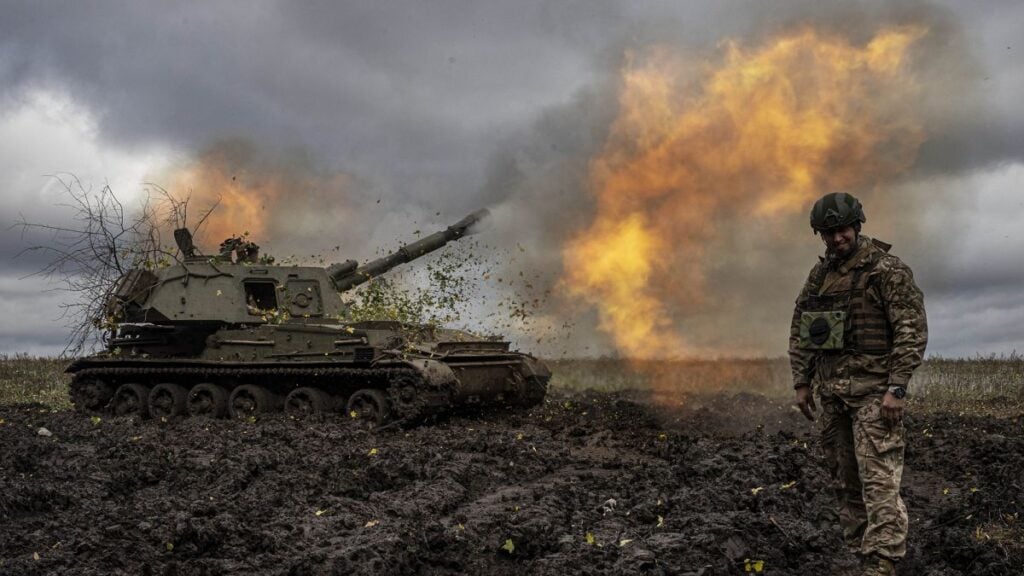
The Russian economy has found itself in a state that Western analysts are already calling the “death zone” — a point where the system is still functioning but is gradually losing its ability to self-repair and develop. This is not a sudden collapse, but a systemic condition in which the economy is still functioning, but its structure is increasingly subordinated to military needs and is gradually losing its long-term development potential.
According to experts, it will be extremely difficult to return Russia to a normal, balanced model without a new large-scale crisis. Why is Russia “stagnating but not falling”? What does this “death zone” really mean? Why are civilian sectors falling, but the system is not collapsing? And can the mobilization model become a long-term strategy for Russia?
The “death zone” as a long-term strategy of attrition
Before analyzing the Russian situation, it is worth clearly defining how economic responsibility works in a democratic society. Economist Oleg Pendzin notes in a commentary
“What is the main goal of any democratic society? To improve the standard of living of its own population, its voters, right? That is, when we talk, we take the classic version of a democratic society, and if the economic policy pursued by the ruling political force does not benefit the population, the population becomes poorer, and in the next elections, opposition forces that pursue a different economic policy come to power, and the ruling force goes into opposition,” says Pendzin
In other words, in a democracy, economic degradation automatically creates political risks for those in power.
Totalitarian logic: different priorities, different goals
According to the economist, Russia functions in a different paradigm. There, the economy is not a service for citizens in the classical sense. In systems with a rigid vertical power structure, the criteria for “success” change: control, mobilization capacity, and financing of the security forces become the top priorities.
Pendzin openly acknowledges the complexity of the economic situation in Russia, but emphasizes that this does not mean the automatic collapse of the regime.
“When we talk about totalitarian regimes, the situation here is fundamentally different. And indeed, the Russian economy is stagnating, and indeed, at the moment, the civilian sectors are showing huge losses and declines,” says Pendzin.
At the same time, he emphasizes that improving the well-being of the population is not a strategic goal for the Russian authorities.
“We must understand that for the Russian authorities, the highest criterion of economic efficiency at the moment is not raising the standard of living of their own population.”
In other words, even if civilian sectors are declining, this is not a determining factor for the political stability of the system.
Signals from Moscow: a course toward mobilization
The expert draws particular attention to the statements of Dmitry Medvedev, Secretary of the Security Council of the Russian Federation, who spoke favorably about the North Korean economic model and its possible application in Russia. According to Pendzin, this is not accidental rhetoric, but a marker of ideological readiness for an even tougher mobilization model.
“They will create a GULAG, they will create labor camps, they will turn the country into a military camp. People will receive rations on coupons, but the country will be at war,” Oleg Pendzin
This refers to the system’s readiness to sacrifice the standard of living of its citizens for the sake of military strategy.
Why Russia is not “falling”
In public discourse, the question often arises: if the Russian economy is in crisis, why is there no rapid collapse? Pendzin considers this question to be misguided, as it is based on democratic logic.
“Therefore, the phrase ‘Russia is stagnating and will not fall’ is incorrect. The Russian Federation currently has enormous problems with its economy, enormous ones,” Oleg Pendzin
However, even under such conditions, the state retains financial resources to support key areas.
“But the resources it receives from exports, which it draws from the economy, are sufficient to finance the military sector through social programs. They will continue to do so,” Oleg Pendzin
In other words, export revenues make it possible to support the military-industrial complex and social payments, which maintain basic loyalty.
The rhetoric of “trillions of dollars between the US and Russia”: who is it addressed to?
The Kremlin is talking about possible large-scale economic cooperation between Russia and the US, mentioning sums of $10-14 trillion. According to Pendzin, these figures have a clearly defined audience.
“These figures are not for the Russian audience. These figures are for the American audience,” Oleg Pendzin
The context is the US election process and political competition. The expert also mentions the Donald Trump factor, for whom demonstrating economic success is a key element of public communication.
“It must be understood that Trump has congressional elections in November. And now all the rhetoric, all the activities of the American administration are subordinated to the political race. He needs to show how fantastically he has improved the American economy. This is how they will mislead American voters with those crazy sums that have nothing to do with reality.”
As a result, according to the expert’s logic, Russia is not on the verge of immediate collapse, but in a phase of protracted structural degradation. Civilian industries are shrinking, the economy is increasingly focused on military spending, and social policy is becoming a tool for maintaining stability rather than development.
The “death zone” is a state in which the economy no longer generates qualitative growth but is still capable of ensuring the functioning of the regime. And it is precisely this difference in criteria — between the well-being of citizens and the ability to wage war — that explains why stagnation in Russia does not turn into a rapid collapse of the system.