Russian buckwheat may be in Ukrainian stores again – if the state does not close the “hole” in imports
19 June 2025 17:15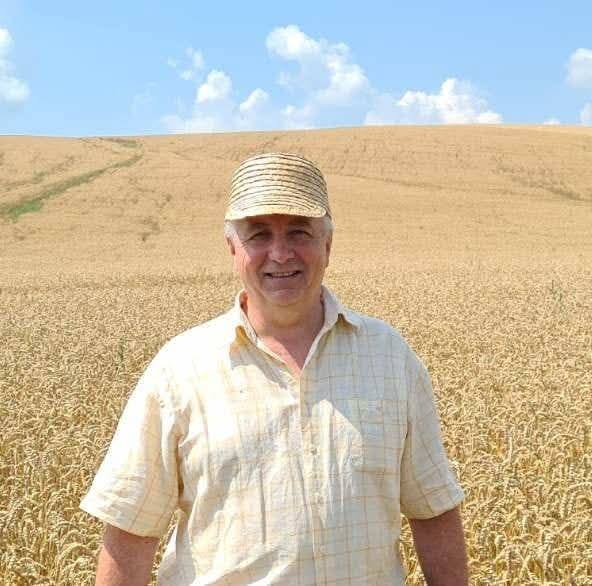
Against the backdrop of a possible crop failure, this could seriously hit small farmers and finally kill off a strategic crop that once fed half the world. Ukraine used to be one of the three largest buckwheat exporters. Today, we barely cover our own demand, and our export potential is almost gone.
Sergey Gromovoy, Executive Director of the International Buckwheat Association, told [comersant ] how Russia monopolized the global market, why buckwheat is a nuclear reserve crop waiting for a price in the fall, and how to save the industry.
– How has the situation on the buckwheat market in Ukraine changed after the full-scale invasion?
The situation began to change critically not in 2022, but back in 2016, when Russia began to aggressively seize our buckwheat market. It was an economic expansion that used dumping prices and imported buckwheat under the guise of Kazakh buckwheat.
As a result, we lost ⅔ of the area. If in 2011 we sowed up to 200 thousand hectares, in 2019 – only 60 thousand hectares. That is, there was a threefold drop. Russia then controlled up to 50% of our domestic market.
In 2022, the price of buckwheat in Ukrainian stores soared from 30-35 UAH to 90-140 UAH per kilogram. The reasons were broken logistics supply chains for Russian buckwheat, the end of the season, and a low domestic harvest. Farmers reacted immediately and planted more – up to 110-120 thousand hectares. But this year we have another decline – only 80 thousand hectares of crops.
– Will this amount of crops be enough to cover domestic demand?
Yes, it will be enough. But this is only because consumption has fallen. We are now growing only for domestic consumption – the export potential is almost lost. For your understanding: 1 hectare yields approximately 1.4 tons of buckwheat grain. If we sowed 80 thousand hectares, we will get about 80 thousand tons of cereal.
By the way, the criterion of buckwheat consumption can be used to calculate how many people live in Ukraine. The average annual consumption of buckwheat per person is currently 3-3.5 kg. So let’s do the math: 80 thousand tons / 3.5 kg ≈ 23 million people. This is the real number of people in Ukraine according to the criterion of buckwheat consumption. Since the State Statistics Service does not provide exact figures, we can rely on these figures.
– Why is buckwheat consumed so little, and how did it used to be?
Just 15 years ago, Ukrainians consumed 4.5 kg of buckwheat per year. In Soviet times, it was 6-7 kg. Our ancestors used to eat up to 100 kg of buckwheat a year 120 years ago. Now they eat 3.5 kg. And this is bad. Buckwheat is a source of iron, protein, and complex carbohydrates. But it has fallen out of favor. Unfortunately, it has been replaced by such unhealthy foods as sushi, fast food, and all kinds of muffins. But to be smart, healthy and tall, you need to eat buckwheat. Back in 1918, buckwheat was recognized as the “Queen of Cereals” at the Paris Cereal Exhibition.
– What will happen to buckwheat prices in the fall?
It all depends on the weather. Currently, we have cool nights. At temperatures of 14-17°C at night, buckwheat does not nectar, so it is not pollinated by bees. Because of this, this year’s yield may not be high. So far, this is the situation. If the heat intensifies in the summer, we can’t hope for a good harvest. In this case, we may lose even the modest 10-20 thousand tons of exports that we managed to win back.
– How profitable is it for farmers to grow buckwheat today?
This is a paradoxical crop. It is profitable, but not profitable. The average yield is 1 ton per hectare. You sell it for 15 thousand UAH, and the cost of production is 10 to 12 thousand UAH. That is, the profit is 3-5 thousand UAH per hectare.
You won’t make a lot of money on buckwheat, but you won’t lose money either. It’s grown by small farmers, either individual farmers or medium-sized farms, because agroholdings are not interested in it. The problem is the lack of a breakthrough in yields. If buckwheat yielded at least 2-3 tons per hectare, like sunflower or soybeans, it would be a golden asset. But there is another problem here: breeding work in Ukraine is in decline. Of the four institutions, none has sustainable funding.
By the way, until recently, a third of the market was based on Russian buckwheat varieties that were sown in Ukrainian fields.
This was also a lever of influence for Russia. We in the Association lobbied for their exclusion for a long time and finally achieved it: Russian varieties were removed from the Ukrainian register.
Similarly, our Association has achieved state subsidies for buckwheat producers. In 2021, we lobbied the state budget to support buckwheat producers – everyone who sowed buckwheat received UAH 1.5 thousand per hectare. The same amount was allocated for 2022, but the program was not implemented with the outbreak of full-scale war. Although the Cabinet of Ministers’ resolution remains in force for another two years, the state simply does not have the ability to fill the fund because of the war.
This was a very important stabilization support, especially for small farms. It allowed them to plan their crops and count on at least some “basic kopeck”. Because the market was constantly swinging – the price was jumping because of Russian influence and because of fluctuations in domestic production.
There was no stability, and the farmer was not motivated to work with this crop. And let me remind you that this is a strategic crop for the country.
– Is there a risk that Russian buckwheat will return to the market?
Yes, there is. Russian buckwheat has already returned to our market in 2022-2023 due to the free trade agreement with Kazakhstan. Russia built four groats mills near the border with Kazakhstan, supplied its raw materials there, labeled them “made in Kazakhstan” and brought them to us. We still have this loophole in our import legislation.
If there is a crop failure in Ukraine, buckwheat from Russia will again go to Ukrainian stores. It is twice as cheap – the cost in Russia is twice as low, the logistics are simpler, and there is government support. This is a direct destruction of our industry.
– What is the strategic role of buckwheat for Russia?
russia holds strategic reserves of buckwheat. It grows more than 1.2 million tons per year and consumes 600-700 thousand tons. The rest goes into stocks. Why? Because buckwheat is the only crop that grows on radiation-contaminated land and does not mutate. In the Soviet Union, it was grown specifically to feed the population during a nuclear winter. russia is preparing for a nuclear scenario, and buckwheat plays a role here, like fuel or salt
– Will there be buckwheat honey this year?
Perhaps in small quantities. Buckwheat honey is one of the most valuable in the world. But it requires large, homogeneous buckwheat fields (at least 100-150 hectares), and such areas are rare in Ukraine. This year, bad weather has disrupted the orchard and acacia harvests. If there is no buckwheat, there will be a failure in honey harvesting. Beekeepers are already fighting for the right to place hives near the only buckwheat areas, as is happening now near Hrebinky (Vasylkiv district, Kyiv region)
– What steps does the industry expect from the state?
Two steps:
1. To close the loophole with Russian buckwheat coming through Kazakhstan.
2. Restore the subsidy program – at least UAH 2 thousand per hectare. The CMU resolution is in place, the mechanism is in place, but there are no funds.
This is important not only economically. It is about moral support. Because buckwheat is not grown by businessmen, but by fans.