Mobile phone service will be completely cut off in the Vatican today – the Pope will be elected
7 May 2025 04:00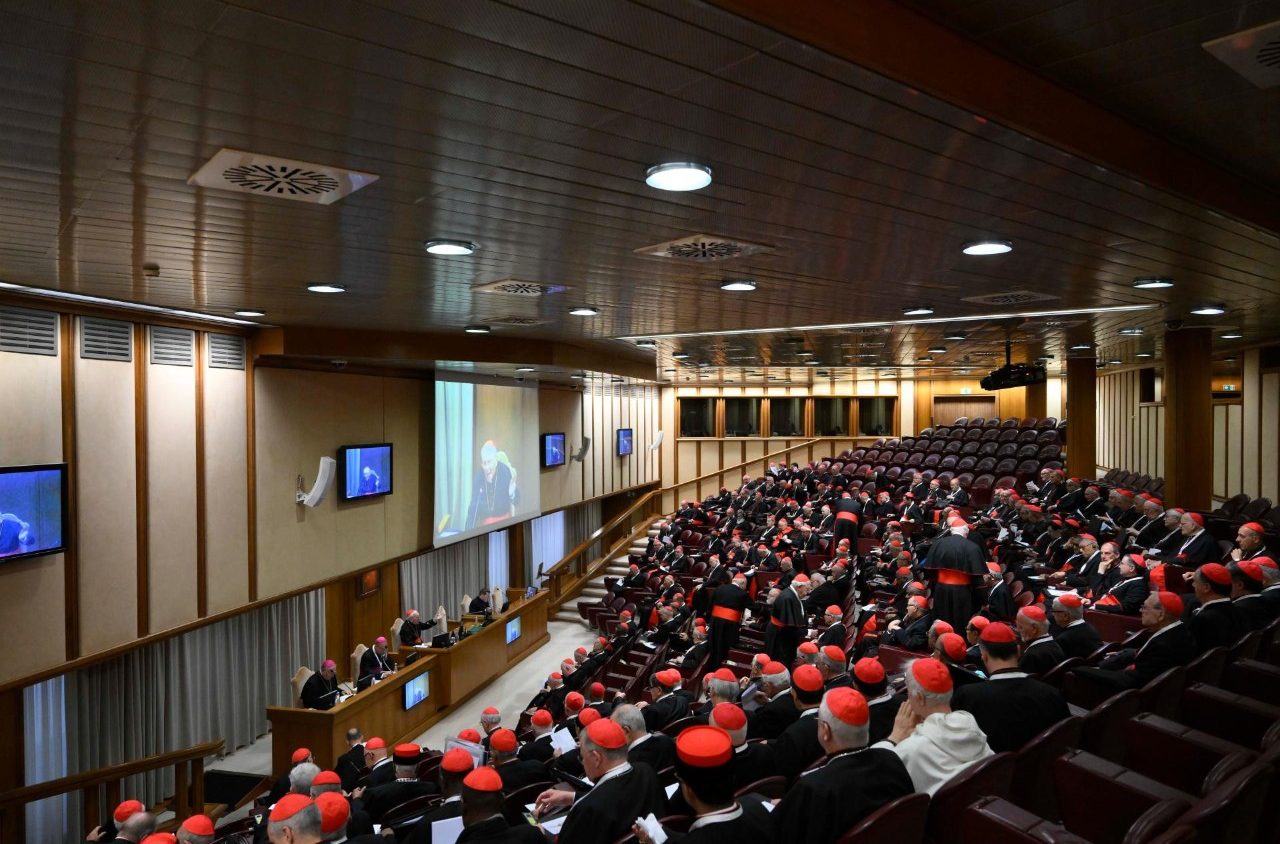
Today, on May 7, the Vatican will cut off mobile communications for the duration of the conclave, the election of a new pope. This may last for several days. This was reported by "Komersant Ukrainian" with reference to Wprost.
Mobile communication in the Vatican will be turned off today, May 7, at 15.00.
The decision to temporarily disconnect the mobile network signal was announced by the governorate of the Vatican City State. The shutdown will cover the entire Vatican territory, including St. Peter’s Basilica and the Sistine Chapel, where the conclave will take place.
The only place exempted from the ban is Castel Gandolfo, the papal residence located outside the Vatican walls.
This decision is unprecedented in the history of the Holy See – never before have such drastic measures been taken to guarantee the confidentiality of the process of electing a new pope.
The official justification for this decision is centered on ensuring complete secrecy of the vote.
This is not the first time that the Vatican has decided to introduce technological security measures during a conclave, but it is the first time that they are so radical. When Benedict XVI or Francis were elected, measures were taken to prevent the cardinals from contacting their entourage – a ban on cell phones, disabling Internet access, and even jamming radio signals in the Sistine Chapel. However, now they have decided to do something more – to completely disable the mobile signal throughout the country.
Vatican officials were notified of this move in advance by receiving an official email. This is intended to minimize chaos and facilitate the logistics of internal law enforcement operations.
No known date for the resumption of mobile communications
Although the moment of the signal outage has been pinpointed, the date of its restoration remains unclear. The governor’s office announced that “the signal will be restored at the highest speed allowed by the technology of mobile operators,” but only after the official announcement of the new pope from the balcony of St. Peter’s Basilica.
This means that if the election of the Holy Father does not take place on May 7, the interruption in communication may last much longer – even several days. This uncertainty creates additional tension, especially among the media, which will not have any first-hand information until the famous Habemus Papam is revealed.
Special security measures
Current security measures at the Vatican are identical to those in place during the funeral of Pope Francis.
The authorities are using their entire technical and logistical arsenal: drones are patrolling the air, there are checkpoints with metal detectors on the ground, no-fly zones are in effect, and snipers are on the roofs of buildings.
How is the new Pope elected?
The election of the Pope is held behind closed doors during the conclave. At the time of writing, 137 cardinals under the age of 80 can participate in the conclave, although the official limit is 120. The overwhelming majority of these cardinals were appointed by Pope Francis, which largely forms the ideological basis of the upcoming election.
“The group that elects the pope is the most influential electorate in the world,” writes the Financial Times.
Unlike the election of political leaders, the process of electing the pope is completely closed to public pressure. Cardinals are isolated, limited in communication, and vote after a series of prayers and discussions.
How does the voting take place?
Voting in the conclave is a series of secret rounds, during which each cardinal voter writes the name of his candidate on the ballot. To elect a pope, at least two-thirds of the votes must be cast (if there are 137 voters, 92 votes). If the number of cardinals is not divisible by three, an additional vote is required.
Voting rounds. Four rounds are held daily: two in the morning and two in the afternoon. After each session, the ballots are burned in a special furnace, and the smoke goes out through the Sistine Chapel chimney:
- Black smoke (with added chemicals) means that the Pope has not been elected.
- White smoke signals the successful election of a new pontiff.
Announcement ofthe result. Once the required majority is reached, the new pope chooses a name, and the cardinal protodeacon announces to the world Habemus Papam!
The process can last from several hours to several days. For example, the election of Pope Francis in 2013 took two days, while in the past conclaves could last for weeks.
Who are the favorites for the papacy?
After the death of Pope Francis on April 21, 2025, attention has focused on the papabili – potential candidates for the office of pope. Although speculation about a successor during the pontiff’s lifetime is considered disrespectful, discussions have intensified since his death. Here are the key candidates:
- Pietro Parolin (Italy, 70 years old). Vatican Secretary of State, whom the US Catholic calls “a consummate diplomat.” He was involved in the 2014 US-Cuban thaw and the Vatican’s 2018 agreement with China. His moderate views make him a favorite in times of geopolitical instability.
- Luis Antonio Tagle (Philippines, 67). A charismatic and media-friendly cardinal who could become the first Asian pope. His progressive views on social justice are close to Francis’, and his fluency in English makes him a unique candidate.
- Peter Turkson (Ghana, 76). A representative of Africa, where the Catholic population is growing. His liberal views on the environment and homosexuality are controversial, which reduces his chances as a unifying candidate.
- Peter Erdo (Hungary, 72). A conservative intellectual who is considered a compromise choice. His experience in managing the church under Hungarian autocracy could be valuable.
- Mykola Bychok (Ukraine, 45). The youngest cardinal, bishop of the Melbourne Eparchy of the UGCC in Australia. His candidacy is a “wild card” because of his youth and active position on the war in Ukraine. As Daniel Gallagher noted in Crisis Magazine, history shows that young popes are not uncommon.