Trump has set a price for the EU: it is exactly the same as for Ukraine, but there is a nuance
8 April 2025 17:38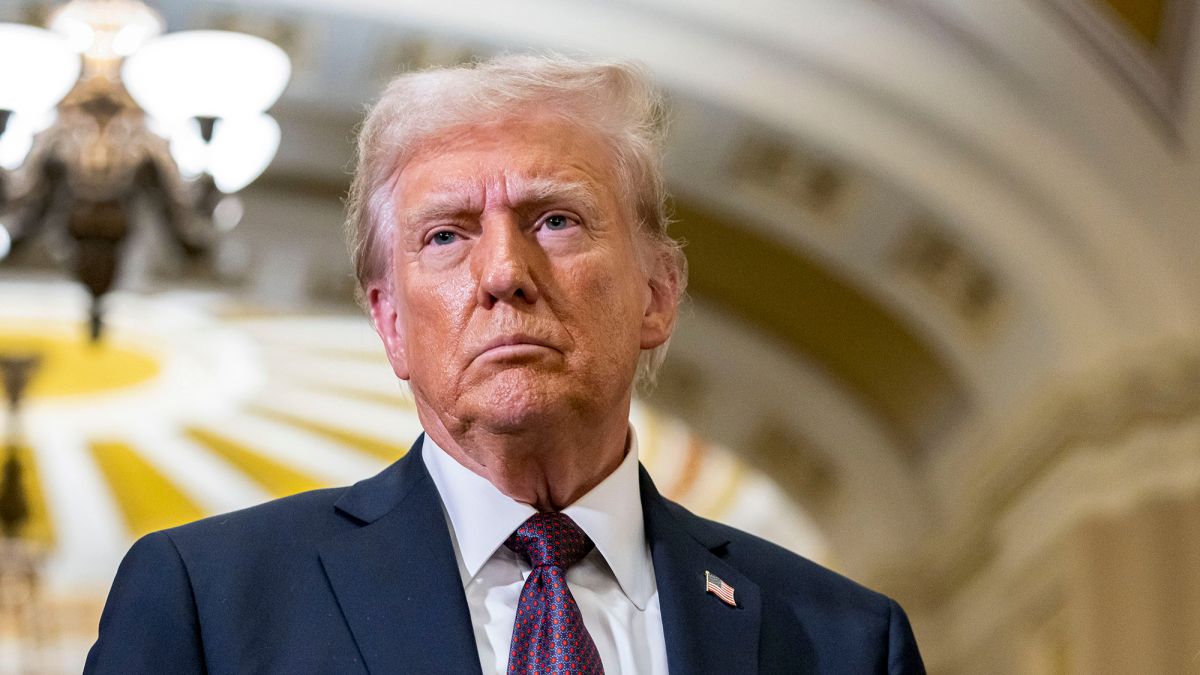
US President Donald Trump has rejected Brussels’ proposal for “zero duties” and set the EU its traditional price tag of $350 billion. This is the same money that he believes Ukraine allegedly owes the US, "Komersant Ukrainian" reports.
But there is a nuance. According to Politico, the $350 billion that Trump “presented” to Europe is the amount for which it must buy American energy. So the difference with the demands on Ukraine is that Trump is not demanding that the EU pay for any previous services provided by the previous administration. However, without this amount, Europe will not be exempt from Trump’s duties.
Trump’s statement at the White House press conference was a response to the words of European Commission President Ursula von der Leyen, who announced that the EU is ready to cancel its duties on cars and industrial goods imported from the United States if Trump takes a similar step in response.
When asked by a journalist whether such a proposal was enough to cancel the imposed duties, Trump clearly answered:
“No, it’s not enough. We have a $350 billion trade deficit with the European Union, and it has to go away quickly. One of the ways… is they have to buy our energy… they can buy it, and we can eliminate $350 billion in one week.”
Von der Leyen’s proposal comes after Trump last week imposed 20 percent tariffs on goods from the EU and at least a 10 percent levy on products from other trading partners. In response, financial markets around the world have lost trillions of dollars in value, and European stock indices suffered their biggest one-day drop since the start of the COVID-19 pandemic on Monday.
Not a bad deal for the EU
The idea of buying American energy to avoid tariffs is not new. Almost immediately after Trump’s re-election, von der Leyen proposed to start negotiations on increasing purchases of American liquefied natural gas (LNG). However, the U.S. has not responded with clarity on how such an agreement might work.
On Monday, when asked whether his global tariffs were a tactic of forceful pressure in the negotiations or a permanent measure, Trump replied:
“There can be permanent tariffs, and there can be negotiations, because there are things we need besides tariffs.”
Later in the press conference, a journalist asked Trump if there were two or three countries on his list that were getting close to lowering their tariffs, and Trump mentioned the EU:
“The European Union. Despite how badly they’ve treated us, they’ve actually removed their tariffs on cars. I think they’ve reduced them to 2.5%, and now I’m hearing maybe to zero.”
But he also noted that he wants the EU to lower its standards to allow more American goods to enter its market, calling the security measures “non-monetary duties.”
“These are duties when they set conditions that make it impossible to sell a car… they make it difficult, they set standards and tests. They develop rules and regulations with only one goal in mind: to prevent you from selling your products in these countries. And we are not going to let that happen. These are called non-tariff barriers,”
– Trump said.
Читайте нас у Telegram: головні новини коротко
Trump’s economic philosophy
Trump considers duties to be almost a key point of his economic policy, as he considers the trade surplus to be extremely important.
“A lot of people say, ‘Oh, the trade surplus doesn’t mean anything In my opinion, it means a lot. It’s almost like a profit and loss statement,”
– Trump said.
As evidence of the reasoning behind his actions, the president recalled the times when US tariffs were extremely high.
“You know, our country was the strongest from 1870 to 1913. Do you know why? Everything was based on duties. We had no income tax. Then, in 1913, some genius came up with the idea of collecting taxes from the people of our country, not from foreign countries that are robbing our country,”
– Trump summarized the philosophy of his economic policy.
Trump’s tariffs
on April 2, U.S. President Donald Trump announced the introduction of “mirror” tariffs against almost all countries of the world (except Russia, Belarus, Cuba, and the DPRK). These tariffs, according to the White House, will be half of the tariff that a particular country has imposed on US goods. For example, China allegedly imposes a 67% tariff on US goods, so the US imposed a 34% tariff on Chinese goods.
For those countries that do not impose special duties on American goods, a basic tariff of 10% was introduced.
Trump called the introduction of such trade barriers “Liberation Day” and said that this day would go down in US history as the beginning of the restoration of the American economy and greatness.
Interestingly, the comparative table released by the White House provides data on tariffs against 185 countries, but Russia is not on the list. Instead, it includes the Herd and McDonald Islands, which were subject to a basic 10% tariff. The only thing is that there is not a single person on these islands.
Читайте нас у Telegram: головні новини коротко