“You are investing money in rockets and suicide bombers that are flying towards your heads”: Rudnitskaya on the “consumption” of Russian-language content
19 January 19:29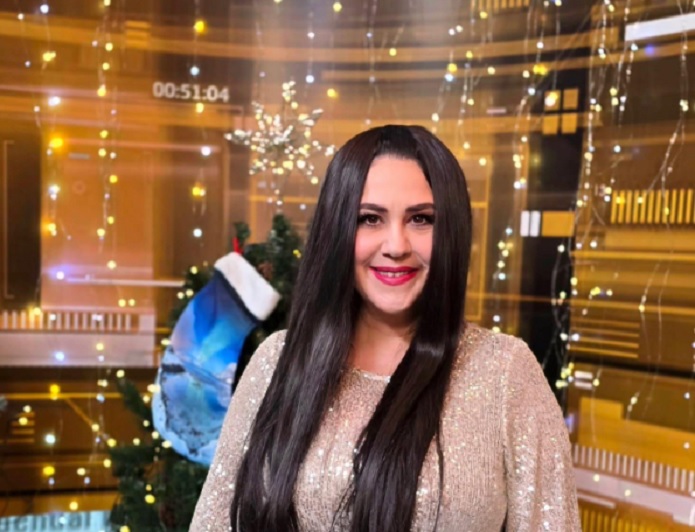
Language is not only a means of communication, but also part of the cultural and informational front. The choice adults make regarding which language to use when communicating with children directly influences the environment in which the next generation of Ukrainians will be raised. Anzhelika Rudnitskaya, a public figure, singer, and founder of the art project Territory A, spoke about this in an interview with the YouTube channel "Komersant Ukrainian".
Rudnytska admits that the topic of language is not something abstract or theoretical for her. Every day, she observes how adults continue to speak to children in Russian in public spaces, and this causes her inner resistance.
“I think about this all the time. I constantly bite my tongue so as not to grab strangers by the arm. Especially when they speak Russian with their children,” says Rudnytska.
According to her, she can understand older people for whom the transition to Ukrainian is difficult. However, she finds the situation with parents who consciously raise their children in a Russian-speaking environment unacceptable.
“When parents speak to their children in Russian, I can’t wrap my head around it. I don’t understand what else people need, what alarm bells need to ring for them to hear it,” she emphasizes.
Rudnitskaya notes that Russian is not a neutral choice or “just a habit,” but part of a hostile cultural and information space.
“Russian is the past. Secondly, it is the cultural and informational space of the enemy. If a child is raised in a Russian-speaking environment, they will consume Russian content, they will look for Russian films, listen to Russian music, read Russian books,” she emphasizes.
Rudnitskaya explains that language shapes not only information habits, but also a person’s emotional and cultural field from childhood.
“This includes the emotional, informational, and cultural fields. Language is not just a tool for communication. Language is part of a larger culture,” she emphasizes.
She drew particular attention to the economic aspect of consuming Russian-language content.
“Every time you watch Russian content that is monetized by Russia, you are investing money in the rockets and shahids that are flying towards your heads,” she stressed.