Second passports allowed, but not for everyone: how the law on multiple citizenship came into effect in Ukraine
19 January 18:31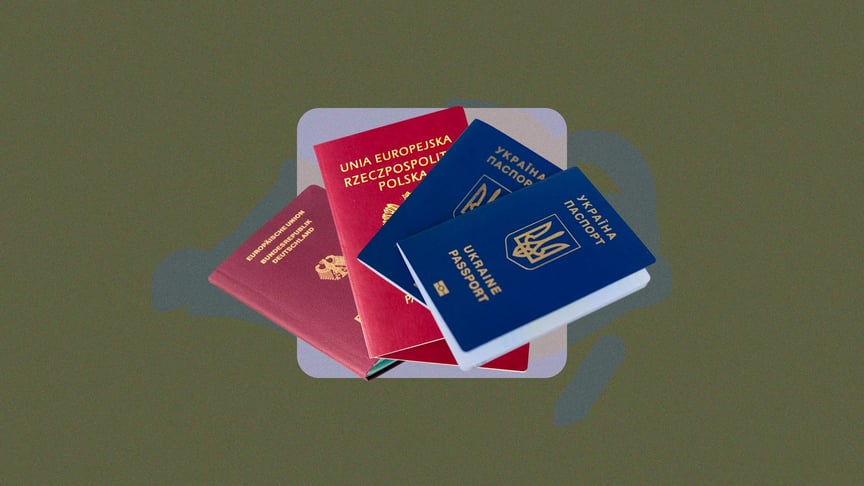
A law on multiple citizenship has come into force in Ukraine, allowing Ukrainians to legally hold passports from other countries for the first time. At the same time, the new rules leave many questions unanswered — key decisions will now depend on the government, according to "Komersant Ukrainian".
What happened
On January 16, Law No. 4502-IX came into force in Ukraine, introducing the institution of multiple citizenship. The document allows Ukrainian citizens to acquire citizenship of other countries without losing their Ukrainian passport — but only if those countries are included in a special list determined by the Cabinet of Ministers.
A similar rule will apply to foreigners: citizens of countries specified by the government will be able to obtain Ukrainian citizenship by fulfilling the general requirements of the law, in particular by passing exams in language, history, and the Constitution.
Who decides which countries are eligible
The key novelty of the law is the transfer of powers to the Cabinet of Ministers. While the first version of the presidential bill specified the list of countries directly in the text, the final version gives the government the right to form and change it without amending the law.
This means that the list of countries can change at any time, depending on political decisions.
In an interview with Censor Net, Natalia Naumenko, head of the State Migration Service, explains that when compiling the list, the Cabinet of Ministers must take into account:
- the countries’ membership in the EU;
- their position on Russia’s war against Ukraine;
- their participation in sanctions against Russia.
Earlier, President Volodymyr Zelensky named Germany, Poland, the Czech Republic, the Baltic states, as well as Canada and other countries with large Ukrainian diasporas as possible partners.
What is not regulated by law
Despite coming into force, the law does not resolve most practical issues. These have been transferred to the level of subordinate government acts.
These include:
- the procedure for performing military duty during wartime;
- pension provision;
- social benefits and medical assistance;
- mechanisms for intergovernmental cooperation.
In fact, as acknowledged by the State Migration Service, the law creates a framework but does not provide ready-made answers.
Military duty
In peacetime, men who have already served in another country may be exempt from military service in Ukraine. However, these rules do not apply to martial law and mobilization.
The Ministry of Defense has to figure out how the rules will work for people with multiple citizenships during wartime.
Pensions, social benefits, and healthcare
Social protection issues also remain unresolved. According to the head of the State Migration Service, pension and social insurance will be regulated by the Ministry of Social Policy and the Pension Fund.
The right to free medical care, guaranteed by the Constitution, is formally preserved, but the procedure for receiving payments and assistance for persons living abroad has yet to be determined by separate decisions.
Taxes and control
Tax residency rules will apply to taxes: the key criterion remains 180 days of residence in the country.
At the same time, the state has virtually no mechanisms to control multiple citizenship. Ukraine does not receive information from other countries about citizens having a second passport due to restrictions on the protection of personal data.