UA Beauty Market: Which Cosmetics Will Disappear from Beauty Salons and Store Shelves After August 3, and Why
12 June 14:40 ANALYSIS
The Ukrainian beauty industry is preparing for one of the most significant regulatory changes in recent years. On August 3, 2026, the two-year transition period will end, after which the requirements of the Technical Regulation on Cosmetic Products, approved by the Cabinet of Ministers at the request of the EU, will take full effect.
"Komersant Ukrainian" investigated what changes will take effect by the end of summer in the Ukrainian beauty market.
First and foremost, the changes affect products sold through retail chains, pharmacies, and online stores, as well as products used in aesthetic medicine clinics, beauty salons, or offered to customers in the hospitality sector.
Banned ingredients: what is disappearing from the cosmetics market
The introduction of European regulations significantly expands the list of substances whose use in cosmetic products is prohibited or strictly restricted. Compared to the previous requirements of the State Agency for Food Safety and Consumer Protection (SAFS), the number of prohibited ingredients has increased nearly fourfold and now exceeds 1,600 items.
According to Annex 2 of the Technical Regulation, a number of well-known active ingredients have been subject to a complete or de facto ban.
Tretinoin can no longer be used in cosmetic products due to high health risks. Despite its popularity in treating acne and age-related skin changes, this substance is classified as a pharmaceutical and has a proven teratogenic effect, which can cause fetal malformations during pregnancy. That is why its use is permitted only under medical supervision.
Hydroquinone, which was long considered one of the most effective ingredients for skin lightening, has also been banned. Scientific studies point to its potential toxicity to cells, the risk of developing permanent pigmentation disorders, and possible carcinogenic properties.
Products containing minoxidil and its derivatives are now also excluded from cosmetic regulation. The substance is widely used to treat hair loss, but it is classified as a medication and can affect the cardiovascular system, causing side effects such as rapid heartbeat, low blood pressure, and swelling.
A separate category of banned ingredients includes antibiotics and glucocorticoids. Their use in cosmetic products for acne or inflammation is no longer permitted due to the risks of antibiotic resistance, hormonal imbalances, and other serious side effects. Uncontrolled use of steroid substances can lead to skin atrophy, the development of so-called steroid acne, and withdrawal syndrome.
Among the new regulations is a ban on the use of trichloroacetic acid (TCA) in consumer cosmetics. Despite its popularity in professional chemical peels, this substance has an extremely aggressive effect and, if used improperly, can cause deep burns, tissue scarring, and persistent pigmentation disorders. Going forward, procedures involving TCA may only be performed by specialists within professional cosmetic or medical practices.
Benzene —one of the most dangerous organic solvents, classified by international organizations as a proven carcinogen—has also been completely banned. The substance can negatively affect the hematopoietic system and increase the risk of cancer and genetic mutations. The new regulations provide for strict control even over its residual traces in cosmetic products.
Which cosmetics will remain on the market after August 3, 2026
Cosmetics that were legally placed on the market before August 3, 2026, will continue to be sold without additional procedures. This refers to products that the manufacturer managed to officially sell or that the importer imported and cleared through customs before the end of the transition period. Such remaining stock may remain in stores, pharmacies, and warehouses without mandatory re-notification or forced removal.
Such products may be sold until the expiration date set by the manufacturer. However, if the Ministry of Health imposes additional restrictions, the deadline for their presence on the market may be limited to 2030.
A key requirement for businesses will be the ability to confirm the legal origin of each batch of goods. During inspections, businesses must provide documents confirming that the products were placed on the market specifically before August 3, 2026. These may include delivery notes, acceptance and transfer certificates, customs declarations, or other primary documents.
In addition, such products must be accompanied by documents issued in accordance with previous regulatory rules, including sanitary and epidemiological examination reports and other permits that were valid at the time the goods were placed on the market. If the origin or legality of the product’s sale cannot be confirmed, regulatory authorities may deem such a batch illegal.
However, starting August 3, 2026, any new cosmetic product entering circulation in Ukraine for the first time must fully comply with the requirements of the Technical Regulation. Otherwise, its sale will be prohibited. In this context, the decisive factor will not be the date of manufacture but the date the product is placed on the market. For example, if a cosmetic product was manufactured in July 2026 but the first sales documents were issued after August 3, such products must comply with the new requirements. In the absence of the necessary documentation, the product may be removed from the market.
The perfume retail market is under threat
One of the segments that will feel the impact of the new rules the most may be the perfume retail market. The new technical regulation establishes strict requirements for the circulation of cosmetic products, including the mandatory designation of a Responsible Person, the availability of a Product Information File (PIF), completion of the notification procedure, and the application of full labeling to each unit of goods.
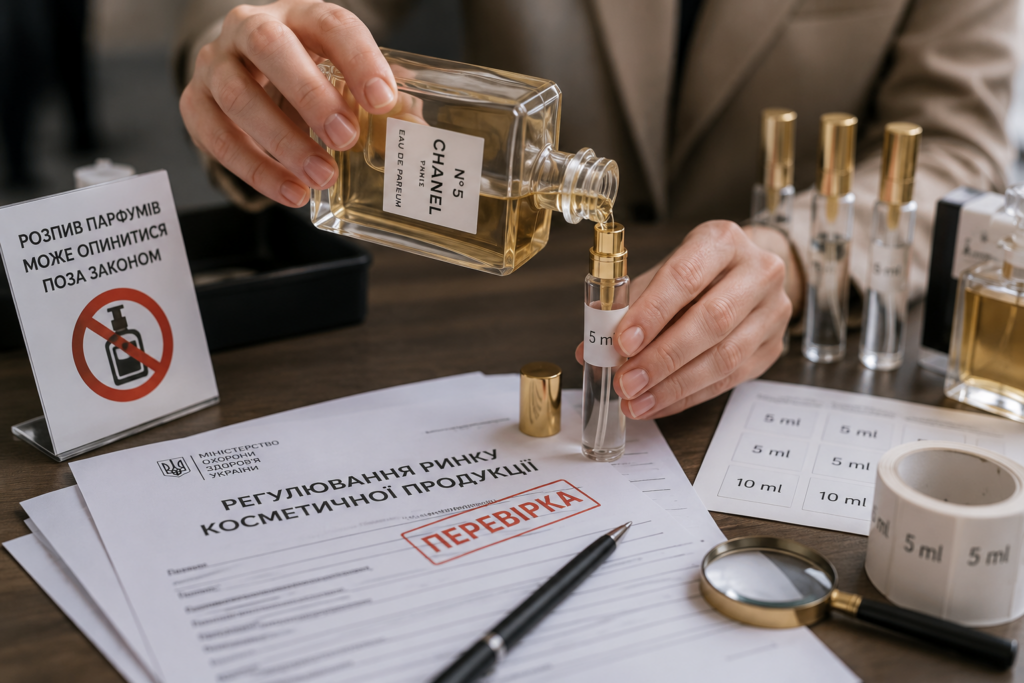
Under these conditions, the traditional practice of selling perfumes in small atomizers, obtained by decanting the contents from the original bottle, may prove incompatible with the new legal requirements. In fact, any repackaging of products into third-party containers is considered an alteration of the original product and a change in its storage and distribution conditions.
As a result, a seller or distributor who repackages perfumes risks being designated as the entity responsible for the product and, consequently, assuming the full range of obligations typically assigned to the manufacturer. This includes ensuring product compliance with safety requirements, maintaining technical documentation, and adhering to labeling regulations.
For most sellers of repackaged products, the practical implementation of such requirements appears extremely complex. In particular, this involves the need for documentary confirmation of product safety after repackaging, maintaining batch traceability, and printing a complete list of mandatory information on miniature bottles, including ingredients, potential allergens, and batch codes.
Market experts do not rule out that after the transition period ends, the sale of perfumes in the traditional open-dispensing format may come under increased scrutiny from regulatory authorities. If violations of technical regulation requirements are detected, businesses risk facing significant financial penalties, which could amount to tens of thousands of hryvnias for each confirmed violation.
Social media is divided: Ukrainians are debating the possible end of perfume sampling
The prospect of tighter control over the perfume market and the actual difficulty of selling perfumes by the spray have already sparked a lively debate among Ukrainian social media users. Public opinion is divided: some consider the new rules excessive, while others support stricter quality control.
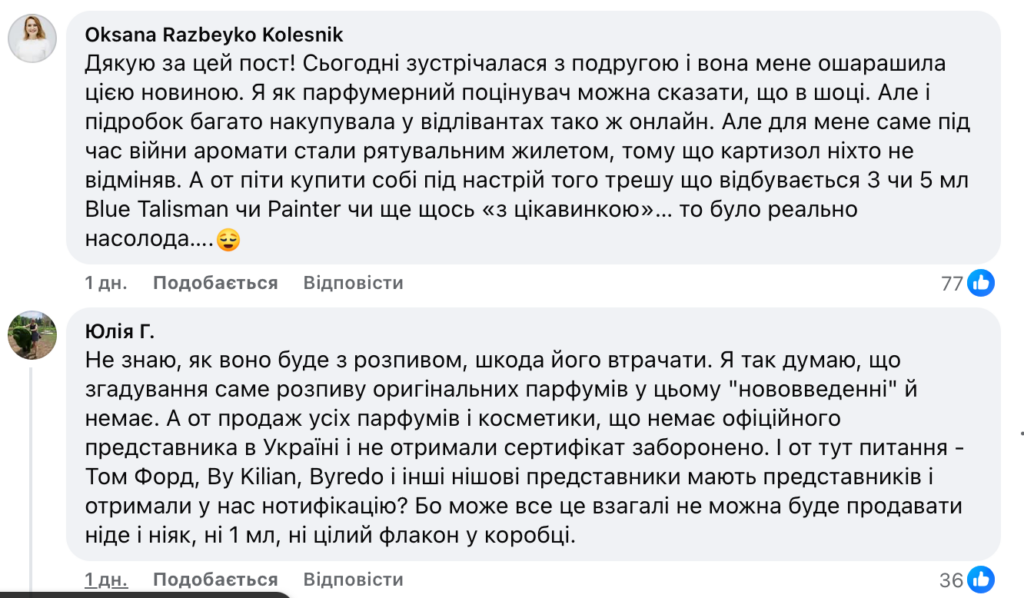
The most outrage is coming from connoisseurs of niche and luxury perfumes, for whom sample sizes have become perhaps the only way to experience expensive fragrances. Users note that not everyone can afford to buy an original 50- or 100-ml bottle, which can sometimes cost several thousand hryvnias.
Some Ukrainians emphasize that during a full-scale war, small personal pleasures are particularly important for people’s mental well-being. In their view, the chance to try a new fragrance at an affordable price helps people at least partially escape the daily stress, anxiety, and news overload. So, in the comments, users write that new fragrances have become a kind of emotional support for many. Some even claim that their favorite scents help improve their mood, reduce stress levels, and make it easier to get through difficult periods in life.
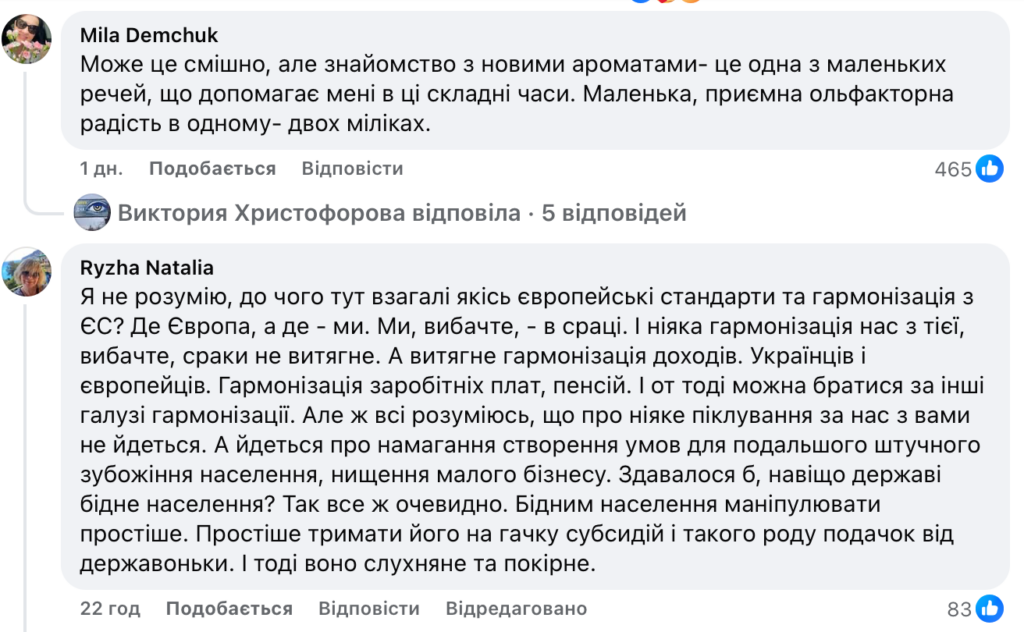
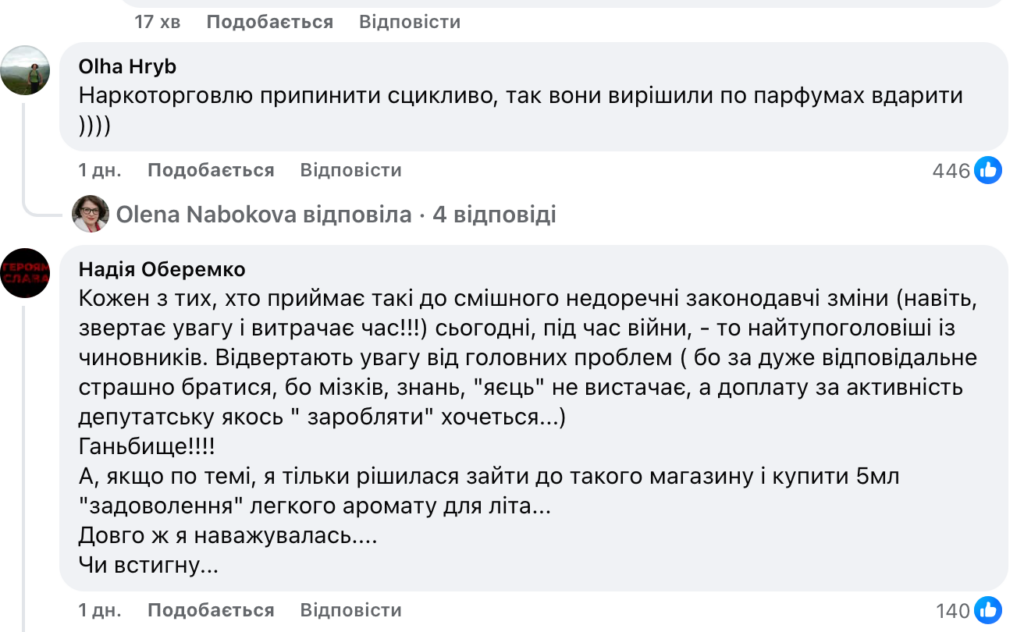
Political assessments were not absent either. Some commenters criticize government policy, claiming that the authorities are allegedly paying too much attention to regulating the perfume market instead of tackling more serious problems, such as drug trafficking.
However, many Ukrainians support the stricter requirements. In their view, the refilling market has long remained virtually unregulated, posing risks to consumers.
Supporters of the new measures point out that buyers often cannot verify the origin of perfumes after they have been transferred to different containers. This raises doubts about the authenticity of the products, their storage conditions, and compliance with sanitary standards.
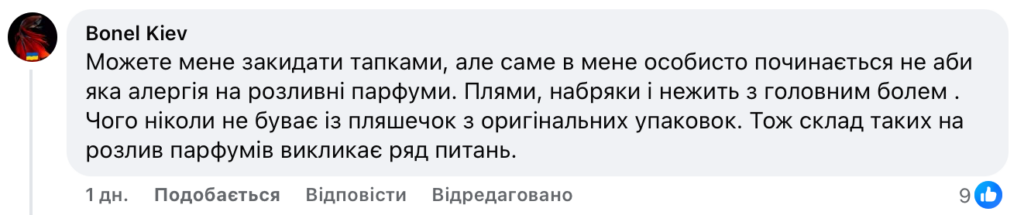
Some users also mention cases of irritation and allergic reactions after using perfumes purchased in bulk. In their view, increased government oversight could help improve market transparency and reduce the number of counterfeit products.
Notification of Cosmetic Products: What You Need to Know
Another key requirement of the new regulation is the mandatory notification of cosmetic products. This involves the electronic submission of product information to the authorized state agency prior to the product’s market launch. When registering on the government portal cosmetic.moz.gov.ua, you must provide basic information about the product, including its category, name, framework formulation, label layout, and, if necessary, photos of the packaging.
To complete the procedure, the responsible person must compile a package of documents and data, which includes:
Designation of the Responsible Person—a resident of Ukraine— who is the manufacturer, importer, or authorized representative bearing full legal and financial responsibility for the safety and compliance of the product with legal requirements.
Also, a Product Information File (PIF)— a technical dossier on the product containing information on composition, manufacturing, packaging, test results, and confirmation of the claimed properties of the cosmetic product. The documentation must be retained for at least ten years after the release of the last batch of products.
The Cosmetic Product Safety Report (CPSR) is a document that forms the core of the PIF and contains a product safety assessment, a toxicological analysis of ingredients, and the results of stability and microbiological testing. The report must be prepared and signed by an expert with relevant medical or pharmaceutical training.
Confirmation of compliance with GMP principles. Documentary evidence that manufacturing is carried out in accordance with the requirements of Good Manufacturing Practice (GMP) as per the DSTU ISO EN 22716 standard.
Information on product composition. To submit a notification, you must have accurate data on the formulation or the complete qualitative and quantitative composition. The presence of nanomaterials and CMR substances—carcinogenic, mutagenic, or toxic to reproduction—must be declared separately.
Updated labeling and packaging information. A graphic layout of the label is uploaded to the system, where the list of ingredients must be indicated in accordance with the international INCI nomenclature, and consumer information must be in Ukrainian. If necessary, photographs of the finished product are attached.
Batch identification system. Each product unit must have a unique batch code that ensures traceability of its origin andproduction history.New labeling rules: maximum transparency for the consumer
With the entry into force of the new labeling requirements, cosmetic product labeling is transforming from a marketing tool into one of the key elements of state control. Errors in label design may serve as grounds for claims by market surveillance authorities.
One of the main requirements is the use of the international INCI system, under which all ingredients must be listed in Latin and arranged in descending order of their concentration in the product. At the same time, the name of the cosmetic product, its intended use, method of application, and mandatory warnings must be provided in the official language. The regulation also establishes technical requirements for label design. In particular, the minimum height of the lowercase letter “x” must be at least 1.2 mm, and for small-format packaging—at least 0.9 mm. All information must be printed in a contrasting font and remain legible throughout the product’s shelf life.
Special attention is paid to product traceability. Each unit of cosmetic products must contain a unique batch number (Batch Number), which makes it possible to identify the product’s origin and respond promptly in the event of defects or safety violations.
The rules for indicating expiration dates are also being standardized. For products with a shelf life of up to 30 months, an hourglass symbol will be used, indicating the expiration date. If a product can be stored for more than 30 months, the packaging will feature an open jar symbol (PAO), which informs the consumer of the safe period for using the product after opening the package.