The Battle for Metal: Why There Is a Shortage of Scrap Metal in Ukraine and What to Do About It
5 January 15:22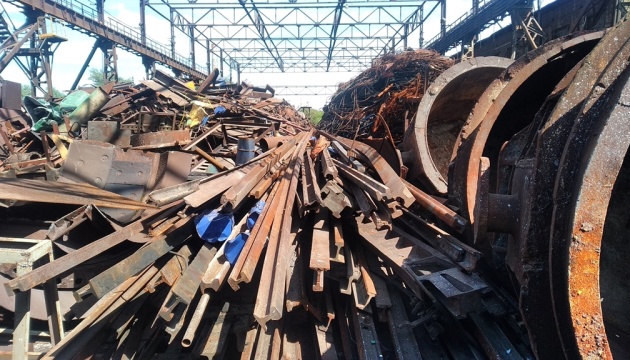 РОЗБІР ВІД
For several years now, Ukraine has been trying to curb the growth in scrap metal exports, prioritizing the interests of steelmakers. And 2026 could be a decisive year in this regard. "Komersant Ukrainian" investigated how the battle for this strategic resource is unfolding in Ukraine.
According to data for January–November 2025, Ukrainian exports of ferrous metal scrap increased by 45.3% compared to the same period in 2024, reaching 380,160 tons. This figure has already exceeded the total volume of shipments for 2024 by more than 86,000 tons. This is confirmed by calculations from the GMK Center, based on data from the State Customs Service. However, figures for January 2026 are unlikely to show similar growth, as the government has set zero export quotas for scrap metal exports from Ukraine this year, effectively banning its export.
Dmytro Kysilevsky, Deputy Chairman of the Verkhovna Rada Committee on Economic Development, explained why strategically important raw materials should be processed domestically rather than exported abroad unchecked, citing the following economic argument:
“1 ton of scrap metal processed in Ukraine into finished products generates approximately 15,000 UAH in taxes. 1 ton of exported scrap metal without duties generates virtually no taxes, amounting to only about 100 UAH per ton, since scrap metal procurement remains largely a shadow business.”
Oleksandr Kalenkov, president of the “Ukrmetallurgprom” Association of Enterprises, essentially echoed these arguments and emphasized that the government’s decision to temporarily restrict the export of ferrous metal scrap is an urgent and economically justified measure. As stated in the association’s statement, the growth in scrap metal exports from Ukraine “significantly worsened the security situation in the domestic metallurgical industry, increased the shortage of this raw material in the domestic market, and disrupted the stability of metallurgical plants.” But not everyone shares this view.
There are those who oppose it
Representatives of the domestic mining and metallurgical complex called the government’s decision to introduce a zero quota on scrap metal exports not only state-oriented but also arbitrary. And this can be seen as confirmation that the decision was not made easily and that it has both supporters and opponents. Among the latter, of course, are those involved in scrap metal exports. And their representatives have their own explanations for both the figures and the trends.
Volodymyr Bubley, president of the Ukrainian Association of Secondary Metals “UAVtormet,” confirms that over the first 11 months of 2025, exports of ferrous scrap metal increased by more than 45%—to 380,200 tons. And this, in his view, was a result of the six-month shutdown at Interpipe Steel, which created a significant scrap imbalance—over 600,000 tons, or about 50,000 tons per month. In other words, it can be concluded that the excess scrap metal was indeed exported.
“The key sources of scrap metal worldwide are, first, industry—that is, metal processing waste; second, end-of-life scrap, which consists of metal products that have reached the end of their useful life; and third, household scrap. The first source is the primary one in developed countries. In Ukraine, the metalworking industry—for example, machine building—has significantly declined. And the key source is end-of-life scrap. Its specificity lies in the fact that this source is finite, since the scrap collection industry currently operates on resources created back in the Soviet era. It is not possible to operate this way in the long term, and over time, scrap collection begins to decline. Hence the shortage. It is also worth noting that the main metalworking facilities that generated scrap were located in the southeastern regions of Ukraine, where the war is taking place,” the expert notes.
According to the Ukrmetallurgprom Association of Enterprises, there is currently a scrap metal shortage on the market, which amounted to 180,000 tons over the first nine months of last year. Oleksandr Kalenkov, president of the “Ukrmetallurgprom” Association, in an interview with GMK Center highlights another advantage of domestic enterprises using scrap metal.
“Keeping scrap metal within the country will make it possible to increase production, reduce costs, and boost tax revenues. It is clear that the state’s economic policy should be aimed at stimulating the export of processed products, not raw materials. And setting a zero quota for 2026 is economically justified,” emphasizes Oleksandr Kalenkov.
He cites the following data: metal produced from recycled scrap and exported generates 8–10 times more revenue for the budget than raw scrap shipped in transit through the EU. According to estimates by the Ukrmetallurgprom association, foreign exchange revenue losses under this scheme amounted to $0.5–1.1 billion over nine months.
Exports to the EU – Banned
For the Ukrainian government, the decision to impose zero export quotas on scrap metal exports from Ukraine—effectively banning them—was a “voluntary” one for yet another reason. It may not sit well with some in the European Union. In fact, it is already unpopular. And not only because it is administrative rather than market-driven, where prices determine everything. In Brussels, discussions with Ukrainian partners have long revolved around quotas and tariffs. But there are also those “partners” who are threatening tougher protective measures.
Michał Poluboczek, a member of the Polish parliament from the Confederation party, wrote recently on his page on the social media platform X that “Poland can no longer pretend that nothing is happening.”
“Under pressure from oligarchs and steel monopolies, Ukraine is imposing a ban on scrap metal exports, dealing a blow to the Polish and European steel industries. The result is simple: our steel mills are losing raw materials, jobs are at risk, and Ukrainian industrial complexes plan to dump steel into the EU at prices 20–25% below market rates. This is not free trade; this is economic aggression,” the Polish MP noted.
He spoke in favor of tough protective measures: putting pressure on the EU, abolishing trade exemptions for the Ukrainian steel industry, and implementing real anti-dumping mechanisms.
“This is not anti-Ukrainian sentiment. This is basic state policy. Cooperation—yes. Exploitation of Poland—no,” wrote Michał Polubochek, a member of the Polish Parliament from the Confederation party.
The concern in Poland is not accidental. It is Poland, though not the only one, that has become, figuratively speaking, a “window to Europe” for Ukrainian scrap metal exporters—to destinations like India or Turkey.
Why was this Polish transit hub necessary? It is worth recalling that Ukraine has been trying for years to curb large-scale scrap metal exports from the country. There have been export permits, quotas, and duties. For example, export duties have risen from €10/t to €180/t since 2015. But this proved insufficient to limit the volume of exports of this strategic raw material. Moreover, the zero export duty in effect under the Free Trade Agreement with the EU has opened the door for the transit and re-export of scrap through EU countries to third countries without paying duties. Experts believe that the main transit route for Ukrainian scrap runs through Poland, and they cite the following data as evidence: by the end of 2024, Polish scrap exports to Turkey had more than doubled—to 529,000 tons, compared to 228,000 tons the previous year.
As Stanislav Zinchenko, CEO of the GMK Center analytical center, notes, the export duty does not stop scrap metal exports, as opportunities for “workarounds” remain.
“Scrap is exported to Poland and from there to Turkey, which is the largest buyer. The fact is that, according to the Association Agreement, the export duty rate for scrap is 0 euros per ton. If exports were made directly to Turkey, the duty would be 180 euros. As it stands, there is both an increase in exports and non-payment of duties—consequently, the state is not receiving revenue. In the near future, demand for scrap on the global market will increase significantly, primarily from China and India. So, if scrap exports continue to grow, it will eventually turn out that Ukrainian steelmakers will be left without raw materials,” the expert notes.
It turns out that without a ban on scrap metal exports, Ukrainian steelmakers would have no raw materials, and the Ukrainian state would be left without additional budget revenue. According to an assessment by Dmytro Kysilevsky, deputy chairman of the parliamentary committee on economic development, scrap metal exports to the EU were de facto a scheme to evade duties, resulting in budget losses of approximately 3.5 billion hryvnias per year. And if the 380,000 tons of scrap exported from Ukraine in 2025 had been processed domestically, the state would have received 5.7 billion UAH in taxes.
And one more thing—as a conclusion. As experts note, restrictions on scrap metal exports, as well as its scarcity, are becoming a global trend: 48 countries worldwide have already restricted exports of ferrous scrap metal, and 38% of them have banned scrap metal exports. Incidentally, in October, the European Commission adopted the Steel Action Plan, which also considers the option of restricting scrap metal exports. At the very least, the industry association Eurofer proposes introducing export duties. Europe could already take a cue from Ukraine.
Author: Serhiy Vasylevych