Sergey Gromov: Buckwheat shortage is inevitable: what is happening with production in Ukraine
22 January 10:04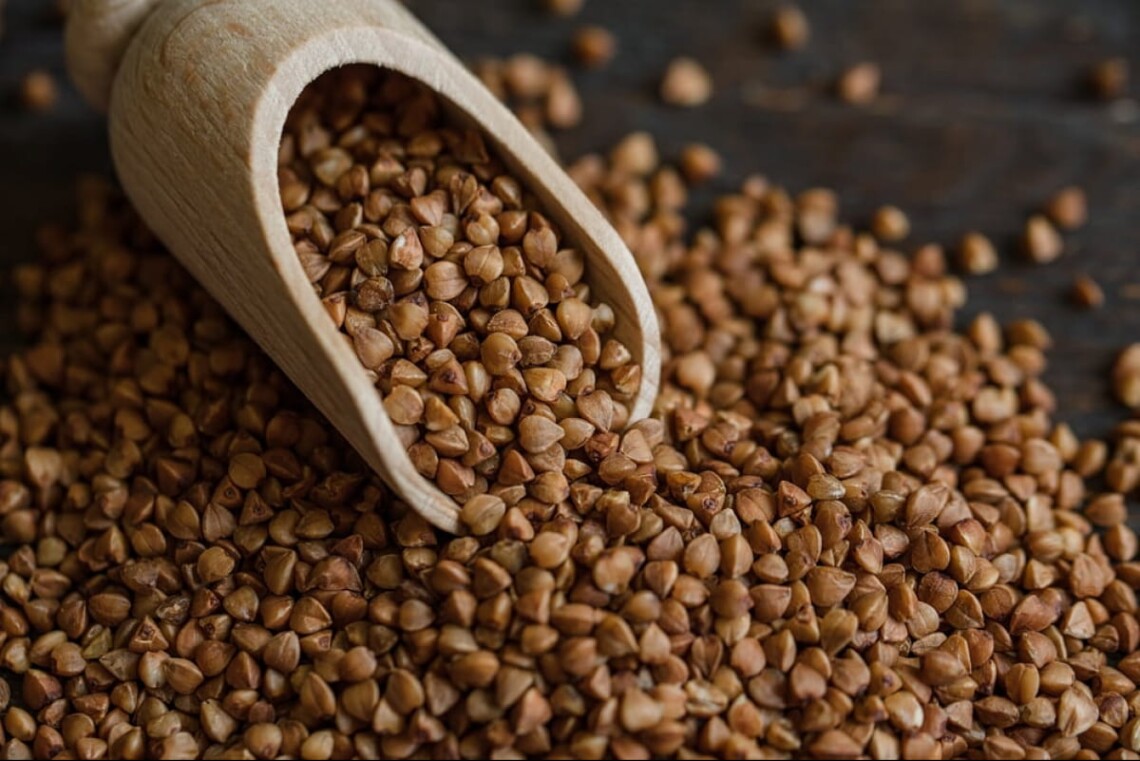 ІНТЕРВ'Ю
For Ukrainians, buckwheat is not just a food product, but an element of food security and part of the national food culture. This year, the market for this crop has come under pressure: reduced acreage, low yields, lack of government support, and the overall effects of the war could lead to a shortage of this popular crop and further price increases.
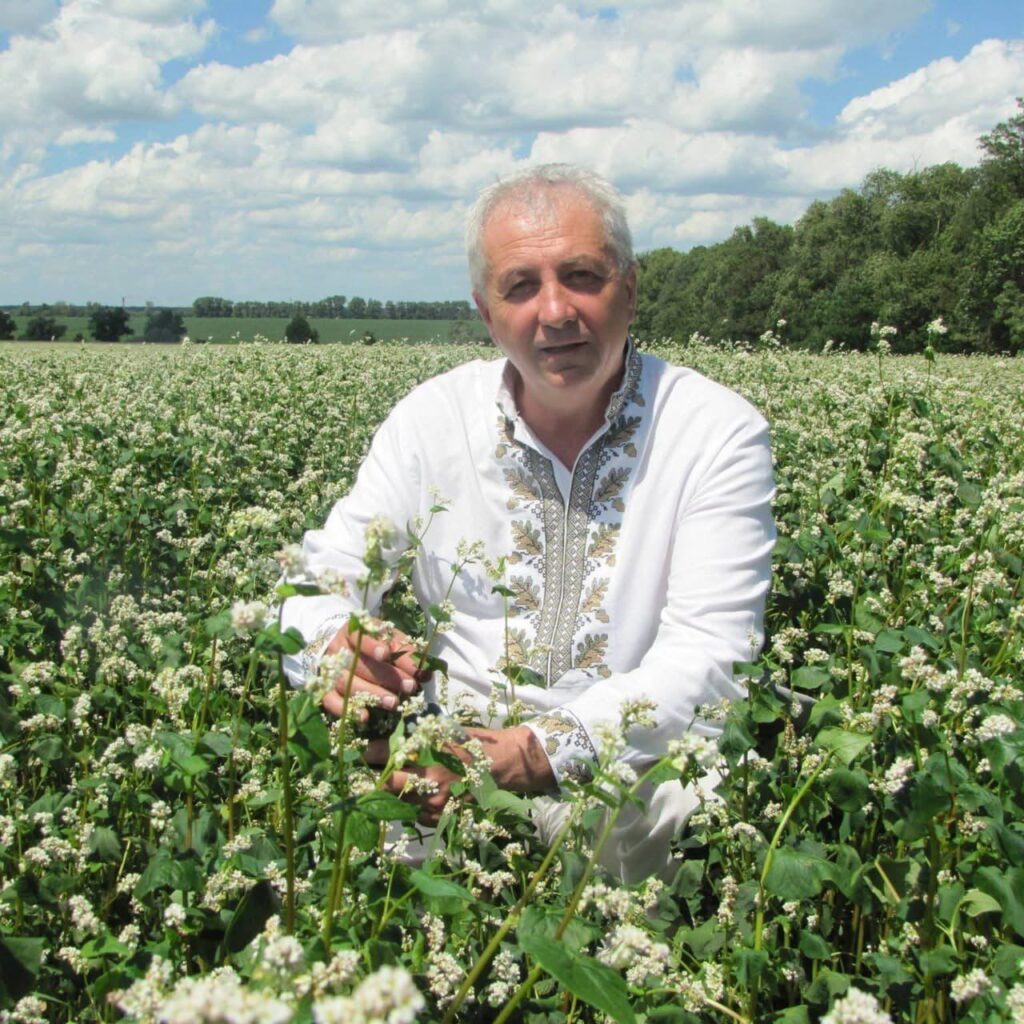
Komersant spoke with Serhiy Hroba about the balance between production and consumption, the real reasons for price fluctuations, the role of agricultural holdings and Ukrainian buckwheat in global food policy, and why the state underestimates this crop, [Komersant] spoke with Sergey Gromov, executive director of the International Buckwheat Association (an international association of scientific institutions, producers, and processors of buckwheat and its unique products).
– In the context of the war, do we have enough domestically produced buckwheat to avoid buying it abroad?
For the first time in many years, there may not be enough buckwheat. It is difficult to estimate the extent of the shortage at this time. There are two unknown factors: the population and the volume of buckwheat consumption. The population varies greatly, from the official 35 million to a more pessimistic 25 million. Before the war, consumption was around 3-3.5 kilograms per person.
Last year, 80,000 tons of grain or 55,000 tons of groats were harvested from 59,000 hectares. Dividing this by a population of 30 million, for example, gives less than 2 kilograms per person. This is not enough. Ukrainians consume about 3-3.5 kilograms of buckwheat per year. We are still consuming last year’s reserves, but closer to spring, there may be a shortage and prices will rise accordingly.
– Can you predict how much the cost will increase?
At the beginning of the season, which falls in September, buckwheat groats cost 30-40 UAH per kg in stores. Today, it is already 40-60. The price has increased by 30%. In conditions of shortage, it may be even more expensive.
I assume that from March to April, we will see buckwheat prices rise to 50-70 UAH/kg.
– And what about the regions of Ukraine where buckwheat is most widely grown in wartime conditions?
The key regions for growing and processing are Kyiv, Khmelnytskyi, Kharkiv, and Zhytomyr.
These regions were and remain the main producers of buckwheat. Buckwheat production has decreased in the Chernihiv and Volyn regions.
– Is it true that we have more Chinese buckwheat than Ukrainian buckwheat?
No, it is not true. Before the full-scale war, until 2022, it was Russia, not China, that was trying to capture our buckwheat market. At that time, there were three countries in the world that exported buckwheat: China, Ukraine, and the Russian Federation. Since 2022, China has actually become a net importer of buckwheat. Its imports exceed exports. Moreover, Ukraine has never imported Chinese buckwheat, except in 2010. Today, only Russia sells commercial quantities of buckwheat. Poland and Kazakhstan also grow significant amounts, but their export capabilities are limited. Japan remains the world’s largest importer of buckwheat.
Other countries grow and import very little.
Incidentally, the Japanese do not consume buckwheat in the same way as we do. They use it to make soba, a type of homemade noodle made from buckwheat flour. In general, the global buckwheat market is estimated at 500 to 700 thousand tons. In addition to Japan, the European Union imports up to 250 thousand tons — until recently, this was mostly buckwheat from Ukraine and Russia. Japan most often purchases Chinese buckwheat or buckwheat grown in Canada.
As for the Russians, they tried to conquer the Ukrainian market with an aggressive dumping policy, as was the case in 2019 when we had a glut of loose buckwheat from Russia at 11 hryvnia per kilogram, which covered almost 50% of our market.
In 2022, we saw with our own eyes that our market had been conquered by the Russians. Moreover, they began to oust Ukraine from the EU market, where we had previously dominated.
Russian influence on our domestic market disappeared in March-May, when all logistical ties with Russia were severed in 2022. That was when, as you remember, the price of buckwheat rose in stores, in some cases to 90-110 hryvnia.
When Russia conquered the European market and then ours, we became net importers rather than net exporters of buckwheat. At the same time, the Russians turned their attention to China.
For the past four years, the Russians have been importing buckwheat into China on a massive scale. There, the area under cultivation has been declining all this time, and imports exceed exports. In fact, there is only one country left in the world that is capable of exporting significant volumes of buckwheat — Russia.
– And speaking of the war, how has it affected the geography of cultivation? Access to land, risks of minefields, etc.?
This factor is not so significant, because the southern and eastern regions are not suitable for growing buckwheat. There were 100 or 200 hectares in the entire Luhansk region, and the same can be said about the Donetsk region. This crop prefers a more moderate climate, a forest-steppe zone… Before the war, of course, Kharkiv sowed a lot. Now part of the Kharkiv region is under occupation.
In general, over the past 25 years, Ukraine has been sowing significantly less buckwheat. While in 2000, almost 500,000 hectares were sown, today only about 60,000 hectares are sown. The area under cultivation has shrunk almost tenfold, but the war was not the main factor in these processes. The reasons are the strategic direction of our agriculture and its conquest by large agricultural holdings.
Buckwheat is a niche crop. Only 24 countries grow it worldwide. The rest import it. The international market is not that large—only 500,000 tons, not tens of millions, as in the case of wheat, soybeans, or corn. Buckwheat is a niche crop and is not traded on the stock exchange. This is the main factor affecting the economics of buckwheat cultivation.
In Ukraine, it is not agricultural holdings that are involved in buckwheat cultivation, but small and medium-sized businesses — individual farmers. At the same time, almost all of our land is controlled by agricultural holdings. About a quarter of buckwheat is grown by so-called individual farmers — in the gardens of grandmothers and grandfathers, and half is grown, roughly speaking, by medium-sized farmers.
The average buckwheat field is small, only 30 hectares. That is why beekeepers suffer, because there are no large buckwheat fields. Buckwheat is the main honey plant in June and the first half of July, when nothing else is blooming.
You cannot harvest pure buckwheat honey from a small field. Three hives are needed per hectare, and a farmer has 300 such hives. We do not have large fields where bees can be taken.
As a result, we are not getting enough of this valuable honey. Pure buckwheat honey ranks second in the world in terms of quality and benefits.
– What modern varieties of buckwheat are lacking? Is there a demand for gluten-free buckwheat among Ukrainians?
– All buckwheat is gluten-free. People just don’t know about it. We need to advertise buckwheat, not quinoa. It is the only grain suitable for diabetics.
It contains light carbohydrates that dissolve slowly in our bodies, so there is no spike in the glycemic index, meaning that sugar levels do not rise high.
In Europe, by the way, it is sold in pharmacies for diabetics.
– Are we lacking any varieties of buckwheat?
Yes, we are. The only technological problem with buckwheat is that it is a low-yield and low-income crop. Is there a difference between getting 10 tons of corn and one ton of buckwheat? From corn, you will get income from one hectare, if not 10 times, then 5 times more than from the same area of buckwheat. It is not a loss-making crop — it either has zero profitability or 500%. Because of these fluctuations, farmers either refuse to grow it or grow it as an insurance crop. Moreover, it is sown late: in May or June.
As for varieties, there are none that would allow a guaranteed yield of 2-2.5 tons per hectare. More precisely, such varieties exist, but they are not very common. These are Sofia, Syn 03/02, and Volya, but few people know about them.
Breeders are currently working on creating varieties that would yield such yields on a large scale. A similar problem existed at one time with sunflowers and soybeans. There, too, the average yield was about one ton per country, but in 30 years, the problem was solved. Breeders were able to increase yields by 2-3 times. This has not yet happened on a large scale with buckwheat.
– Apart from groats on store shelves, where else is buckwheat used? Bread, animal feed – what else can it be processed into?
– Honey, husks… When grain is taken and made into groats, the husks remain. They are unique and have a very positive effect on sleep.
They fill pillows with it and people sleep on it, and mattresses are filled with it to prevent bedsores for bedridden people.
Buckwheat also contains rutin, a substance that strengthens blood vessels and improves their elasticity. It is used by pharmacists. There are medicines for blood vessels such as Ascorutin.
In many countries, buckwheat is used as a feed crop. In the United States, locals use it to feed livestock.
Buckwheat is used to make sweets and baby food. Buckwheat flour is used in large quantities for the production of baby food. My eldest son, born in 1993 (when there was a general shortage of everything), grew up on buckwheat “Malysh”. If I am not mistaken, the mixture was produced somewhere in Poltava. Nowadays, buckwheat is also used to make instant flakes. That’s if we’re talking about buckwheat consumption in Ukraine. It is consumed less around the world. In Japan and China, buckwheat flour products are more popular. In France, by the way, buckwheat is a common product. They make something similar to our pancakes from it.
In Poland, as in Ukraine, they make buckwheat pancakes. Latvia consumes the most buckwheat in the world — almost 8 kilograms per person. Every restaurant there has dishes made from green buckwheat. It contains the most nutrients. In the Benelux countries, buckwheat is considered a medicine.
The Balkan countries eat it, but not much. The Turks also consume a little. In Israel, they make vermicelli from buckwheat, called vernix. I already mentioned that the Japanese import the most. And Papua New Guinea, such an interesting country, also consumes a lot.
How do power outages affect buckwheat production and processing? How does this affect the work of mills and groats factories? Are solutions involving the use of generators paying off?
– It’s complicated because it’s a whole technological process. The main energy consumption in the preparation of groats is steaming. You need to heat water and steam to 128 degrees to steam all the grain. Only then does it turn from green to the brown color we are all used to.
Housewives say that it is roasted buckwheat. It is not roasted, but steamed. Buckwheat is not roasted. It is steamed.
This is the main point that requires a constant supply of electricity. Factories are currently coping, but the cost of production is increasing.
I also wanted to ask about state support. What state support instruments actually work for buckwheat and which ones are lacking?
– Unfortunately, there is no state support, but it is needed. Thanks to the lobbying efforts of our Association, in 2021, 50 million hryvnias were allocated from the state budget to support agricultural enterprises that grew buckwheat. On average, buckwheat growers received 1,500 hryvnia in state subsidies per hectare. That was in 2021.
A similar amount was allocated for 2022, but the war changed those plans. The CMU resolution that helps distribute this money is still in effect, but there is no funding.
The lack of any state support is negatively affecting the industry. This year, 60,000 hectares were harvested, and even in 2022, if I am not mistaken, it was 120,000 hectares. Production volumes have fallen by almost half.
And the situation will not improve without state support. It is not even about the amounts, but about the understanding that the state understands the problem and supports producers.
Because, as we said, buckwheat is grown by individual farmers and smallholders. When they see that the state is guaranteed to help them, they will be able to plan their activities and count on this support. This is very important.
It is also important to involve state structures in buckwheat cultivation. Many of our lands are used by state-owned enterprises. The Ministry of Education has experimental farms, as does the Ministry of Agriculture, and the Ministry of Defense has its own lands that are not being used. The Agricultural Academy of Sciences has 400,000 hectares, but they also sow little buckwheat.
They could use their influence to promote the cultivation of not only buckwheat, but also other valuable crops. For example, we sow very little millet and rye. Real black bread has already disappeared. All these baked goods with added coloring are not natural breads. It has disappeared because there is no rye. We import rye.
In other words, there are many niche crops that the state could stimulate, but there is no such stimulus.
Is it advisable today to form a state reserve of buckwheat, and is it realistic to do so given the current cultivation volumes?
Good question. Look, going back to the Russian factor in conquering the global buckwheat market. Why is it doing this? Well, there is a business in buckwheat, but it is not that big. At the same time, in recent years, Russia has seen a crazy overproduction of this crop.
They have already accumulated about 1.5 million tons of surplus buckwheat that no one has eaten and that there is no one to sell it to. Where are the Russians putting this volume of buckwheat? Most likely, it is going into the formation of strategic reserves. Now the question arises: why is Russia suddenly stockpiling buckwheat? Maybe it is preparing for war, and not just any war, but a nuclear one?
Because the entire Soviet buckwheat industry in the 1970s was created for this very purpose. At that time, there was a program to study buckwheat as a crop that could grow on land contaminated by nuclear radiation. The entire buckwheat industry in Ukraine at that time developed thanks to this program. The research was classified, supervised by the KGB, and sent to Moscow. Russia has this data. Russia is doing everything it can to become the sole grain monopolist and squeeze Ukraine and China out of this market.
This may all seem like science fiction, but I lived through the period of confrontation between the United States, NATO, and the Soviet Union, when it seemed that war was about to break out. Elevators were built in the permafrost zone, and buckwheat was stored there. Studies have shown that it mutates, but recovers in the second generation and can be grown and sown twice a year. It hardly accumulates radionuclides.
I would not be surprised if the reason for the increase in strategic buckwheat reserves in Russia is precisely in preparation for a global war. We also need to build up strategic reserves of buckwheat. Unfortunately, no one cares about this.