US and Russia decide to cooperate in the Arctic
27 February 2025 09:00
According to people with knowledge of the matter, U.S. and Russian officials have identified the Arctic as a possible area of economic cooperation as part of the broader rapprochement that the Trump administration is seeking to develop with Moscow. This is stated in a Bloomberg article, "Komersant Ukrainian" reports.
Discussions include natural resource exploration and trade routes, sources said. The US is also considering cooperation in energy exploration as one of the goals.
The topic comes as Trump actively seeks to end the war in Ukraine, including direct talks with Russian President Vladimir Putin. The two sides have recently signaled a willingness to pursue business projects and cooperation, a concern for European powers and NATO allies who have sought to isolate Moscow since its full-scale invasion of Ukraine three years ago.
According to Russian Foreign Minister Sergei Lavrov, US and Russian officials plan to meet in Istanbul on Thursday to discuss restoring embassy staffing levels.
One source noted that US officials see cooperation in the Arctic as a way to create a rift between Moscow and Beijing, but cautioned that this is unlikely to succeed given how much closer Russia and China have become in recent years, especially with their “boundless” partnership since the war in Ukraine.
The Arctic, surrounded by Russia and seven NATO members – the United States, Canada, Denmark, Finland, Iceland, Norway and Sweden – has attracted increasing attention in recent years as melting ice due to climate change opens up shipping lanes and opportunities to explore potential energy and mineral resources.
Late last year, the Pentagon released a new Arctic strategy that emphasized the risk of China and Russia joining forces in the region. Under the policy, developed under Biden, the United States sought to expand its military readiness and surveillance in the Arctic in response to the “growing rapprochement” between Moscow and Beijing.
China has been increasingly focused on the Arctic in recent years, declaring itself a “near-Arctic power” in 2018 and developing interests in fisheries, energy, and transportation in the region. The prospect of new shipping routes is considered key to Beijing’s strategy, which envisions a Polar Silk Road connecting East Asia, Western Europe, and North America.
Читайте нас у Telegram: головні новини коротко

The Arctic: a dossier
The Arctic is the northern polar region of the Earth, covering the area around the North Pole. It includes the Arctic Ocean and adjacent seas, as well as the northern parts of Eurasia and North America. The total area of the Arctic is about 27 million square kilometers. Parts of eight countries are located in the Arctic: Russia, the United States (Alaska), Canada, Denmark (Greenland), Norway, Iceland, Sweden, and Finland.
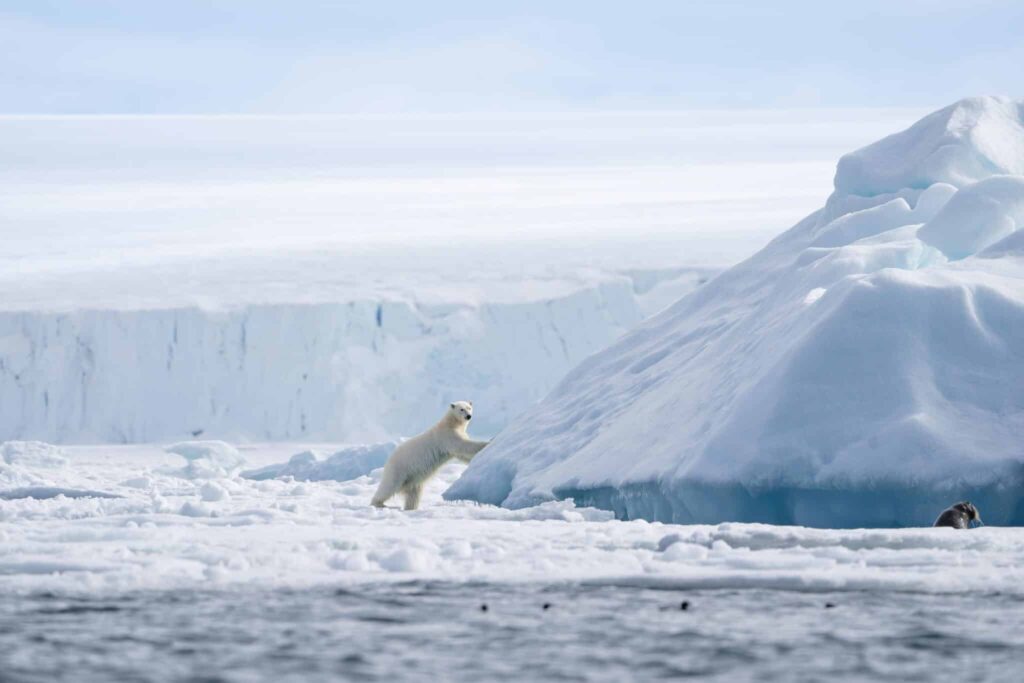
The Arctic is characterized by a harsh climate with extremely low temperatures that can reach -68°C in winter. The polar night and polar day are typical phenomena, when the sun does not set or rise for a long time. Much of the territory is covered by permafrost and permafrost. The region has a unique ecosystem with tundra vegetation and distinctive animals such as polar bears, walruses, seals and reindeer.
The Arctic is extremely rich in natural resources, including oil, natural gas, gold, diamonds, and other minerals. Due to global warming and the rapid melting of ice, the region is becoming increasingly important geopolitically. New sea routes are being opened, including the Northern Sea Route and the Northwest Passage, which is causing growing international interest and competition between states for influence in this strategically important region.