Lines at gas stations and gasoline ration cards: Is Russia returning to the crisis scenarios of the 1990s?
25 June 10:22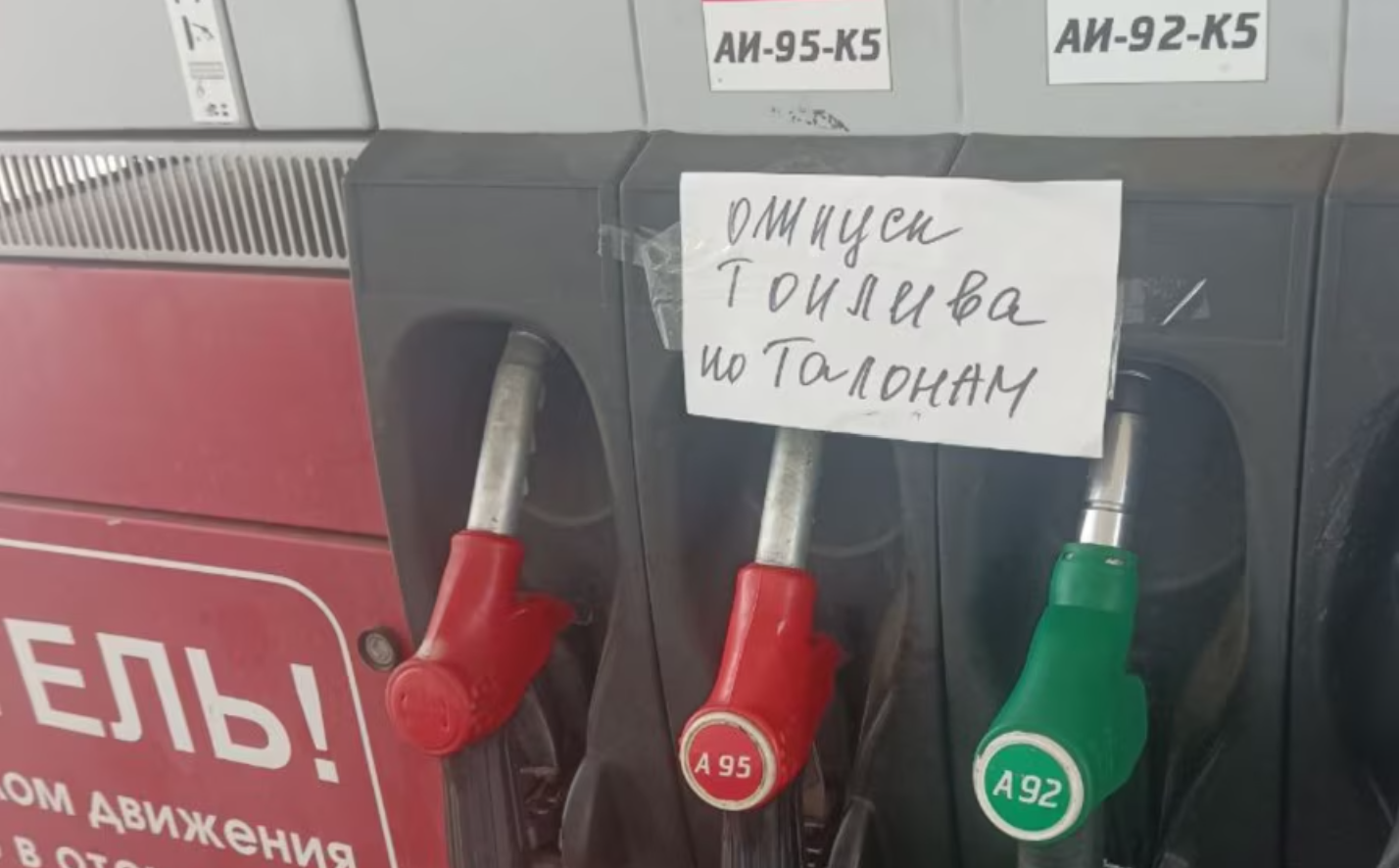 ANALYSIS
Russian regions continue to face fuel shortages. Drivers are forced to wait in line at gas stations, while many stations have already run out of gasoline.
According to reports from Russian propaganda media, shortages of gasoline and diesel are being observed in various regions of Russia. The situation is particularly dire in the Lipetsk region, where fuel has completely run out at some gas stations. Long lines of cars have formed at the gas stations that are still open.
Complaints about fuel shortages are also coming in from the Yaroslavl Region, the Stavropol Krai, Tyumen, and Cheboksary. Some gas stations are reporting shortages of the most popular brands of gasoline, and a few have temporarily suspended operations.
In the Tver Region, authorities have even imposed restrictions on fuel sales to individuals, citing the need to ensure the operation of public transportation and emergency services.
Specifically, in the Saratov Oblast, a limit of 30 liters of gasoline has been set per vehicle. In the Tyumen, Omsk, and Krasnoyarsk regions, residents are allowed to purchase up to 40 liters of gasoline in cities and up to 200 liters of diesel fuel on highways. In the Penza region, fuel is sold only directly into the vehicle’s tank: up to 100 liters of gasoline and 200 liters of diesel.
Restrictions have also been introduced in the Belgorod, Bryansk, Voronezh, Kursk, Murmansk, Novosibirsk, Vladimir, and Irkutsk regions, as well as in the Khanty-Mansi Autonomous Okrug and North Ossetia. In the Kursk and Bryansk regions, filling jerry cans has been banned, and authorities in the Vladimir region have urged residents to reduce car travel.
Long lines and empty gas pumps are being reported even in Moscow
Reports of fuel shortages are also coming in from the Russian capital. Despite attempts by some pro-government media outlets to deny the existence of problems, social media users are posting photos and videos from gas stations where some pumps are closed for maintenance and the price boards do not display current prices.
Amid the fuel crisis in Russia, interest in ways to obtain gasoline illegally has surged. While in March, users of the Russian search engine “Yandex” were searching for terms related to fuel siphoning about 4,000 times a week, last week that figure jumped to 44,000. On Google, the topic’s popularity also reached its peak—100 out of a possible 100 points.
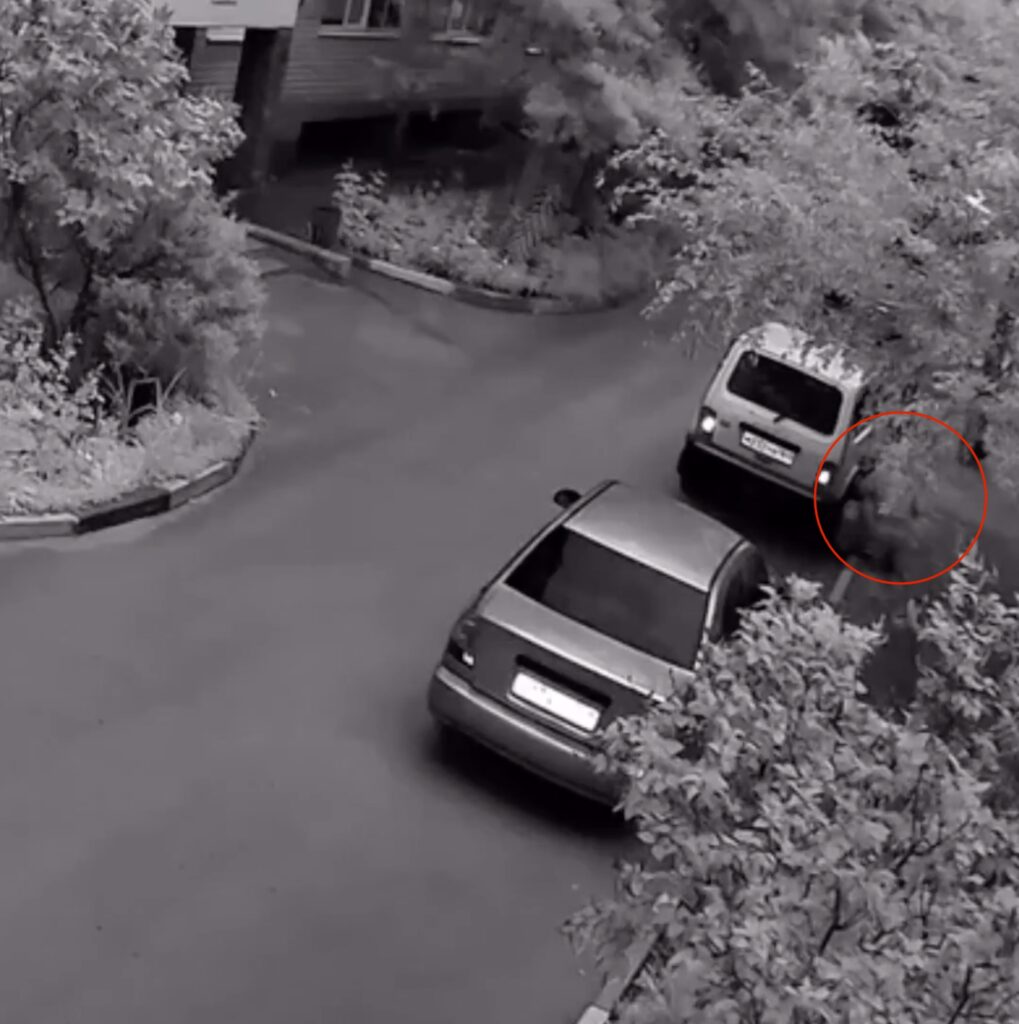
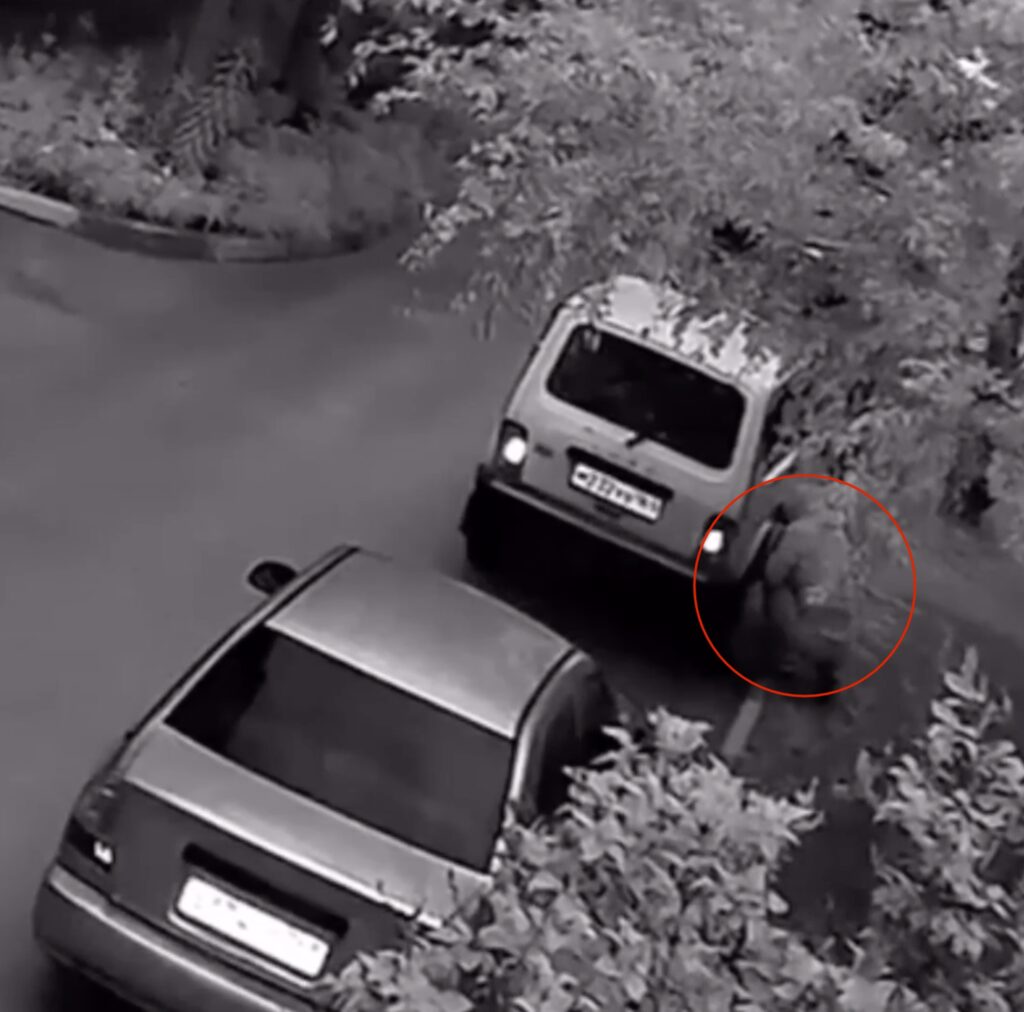
Russians have begun to increasingly recall the problems of the 1990s, a return to which Russian dictator Putin once used to scare people. Now, on social media, residents of various regions are reporting en masse about nighttime gasoline thefts. According to them, unknown individuals are siphoning fuel from cars left near homes or in yards.
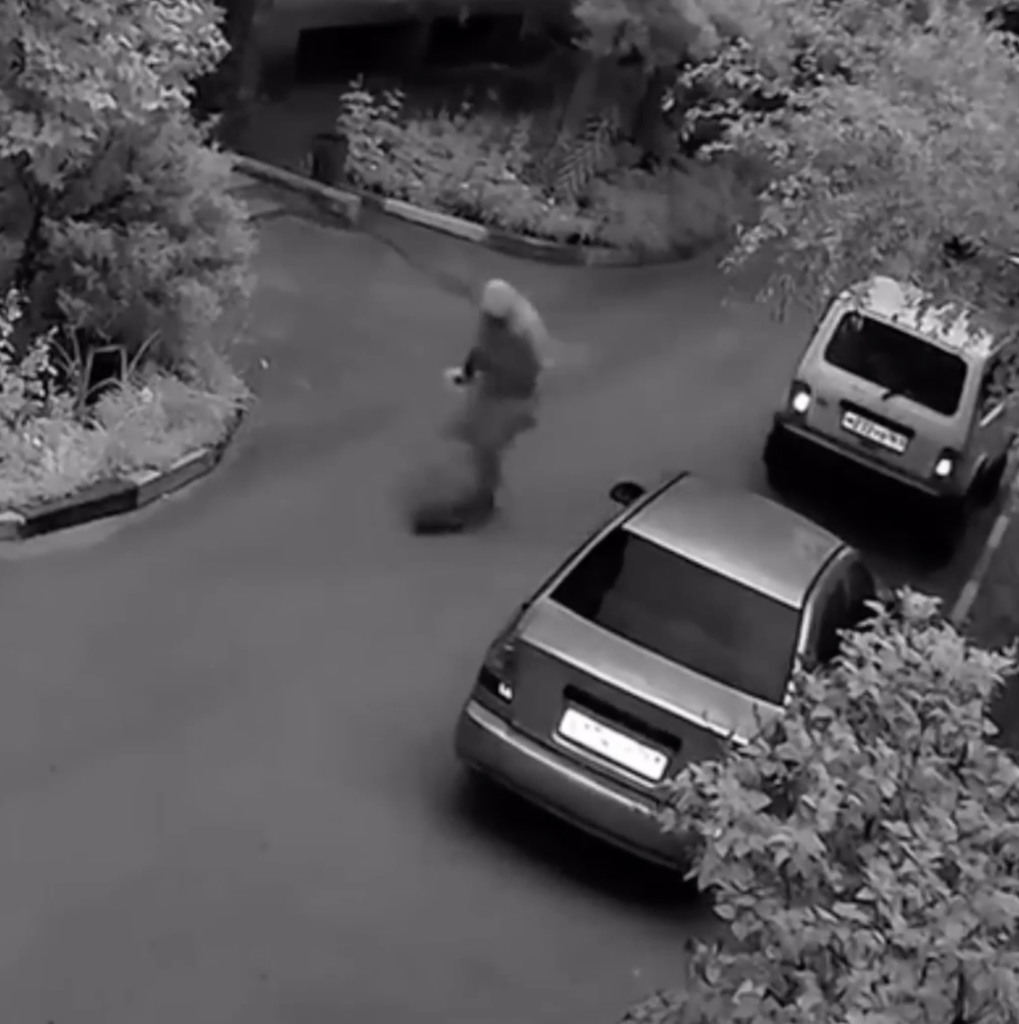
Numerous CCTV recordings confirm these incidents. The released footage shows perpetrators siphoning gasoline from parked cars under the cover of night. At the same time, modern cars often have more complex fuel systems, which make it harder to access the tanks. As a result, older car models—where draining fuel is much easier—have become the primary target for thieves.
A quarter of refining capacity has already been lost
Oleg Sarkits, an expert on geoeconomics and international trade, said in an exclusive comment to
“Russia is already facing a shortage because it cannot refine enough crude oil to meet its own needs. We’re no longer talking about export shipments, but about supplying the domestic market,” the expert says.
He emphasizes that the military sector and logistics infrastructure remain the largest consumers of fuel in Russia, and the government will prioritize supplying resources to them first.
“First, the military receives fuel, then logistics companies and the transportation infrastructure. Only after that do resources reach businesses and the general public. That is precisely why ordinary consumers are feeling the shortage more and more acutely,” Sarkits explains.
There are 38 large oil refineries of federal significance operating in Russia. As of today, more than a quarter of these facilities have been damaged or taken out of service. Consequently, the overall refining rate has fallen by more than 25%. In his view, a further reduction in production capacity could have critical consequences for the Russian economy and military.
“If the damage to the oil refining infrastructure exceeds 50–60%, Russia will face extremely serious problems in supplying the army and maintaining the functioning of the economy as a whole,” Sarkits concluded.
Crimea is implementing rolling blackouts; fuel is not being sold to civilians
In occupied Crimea, problems with electricity supply and fuel availability have also worsened. Following disruptions in the power grids, the occupying administration announced the introduction of rolling blackouts, and gas stations were effectively banned from selling fuel to the public and private businesses.
The decision was made following an emergency in the power grids, which led to partial power outages for consumers in several energy districts of occupied Crimea. Some settlements in the Northwest, Central, and South Coast districts of the peninsula were temporarily left without electricity.
The occupying authorities have also tightened restrictions on the fuel market. Whereas previously gasoline and diesel fuel were sold within established limits due to shortages, gas stations have now been ordered to serve only state agencies. The so-called head of Crimea, Sergey Aksyonov, stated that gas stations must supply fuel only to institutions responsible for the functioning of critical infrastructure and the security of the peninsula. For ordinary citizens and most businesses, fuel sales have effectively been suspended.
According to local sources, the current restrictions are the strictest since the beginning of the Russian occupation of Crimea.
Economist Taras Zagorodniy, speaking with journalists
According to the expert, the events of recent months indicate the gradual separation of the occupied peninsula from Russia’s supply system. He notes that the problems now extend far beyond fuel and electricity shortages.
“We are seeing signs of an energy collapse. Crimea is gradually becoming isolated, not only logistically but also in terms of energy. Problems with food supplies are emerging, and difficulties are arising in providing for the population and infrastructure,” Zagorodniy notes.
The economist believes that this situation demonstrates Russia’s limited ability to control and support the territory that the Kremlin officially considers its own.
“This shows that Russia can no longer fully control and hold the territories it has declared as its own. One avenue of pressure is creating conditions under which the peninsula will face shortages of energy resources and fuel,” he says.
A reduction in refining capacity could affect not only the fuel market but also entire sectors of the Russian economy, particularly the agricultural sector.